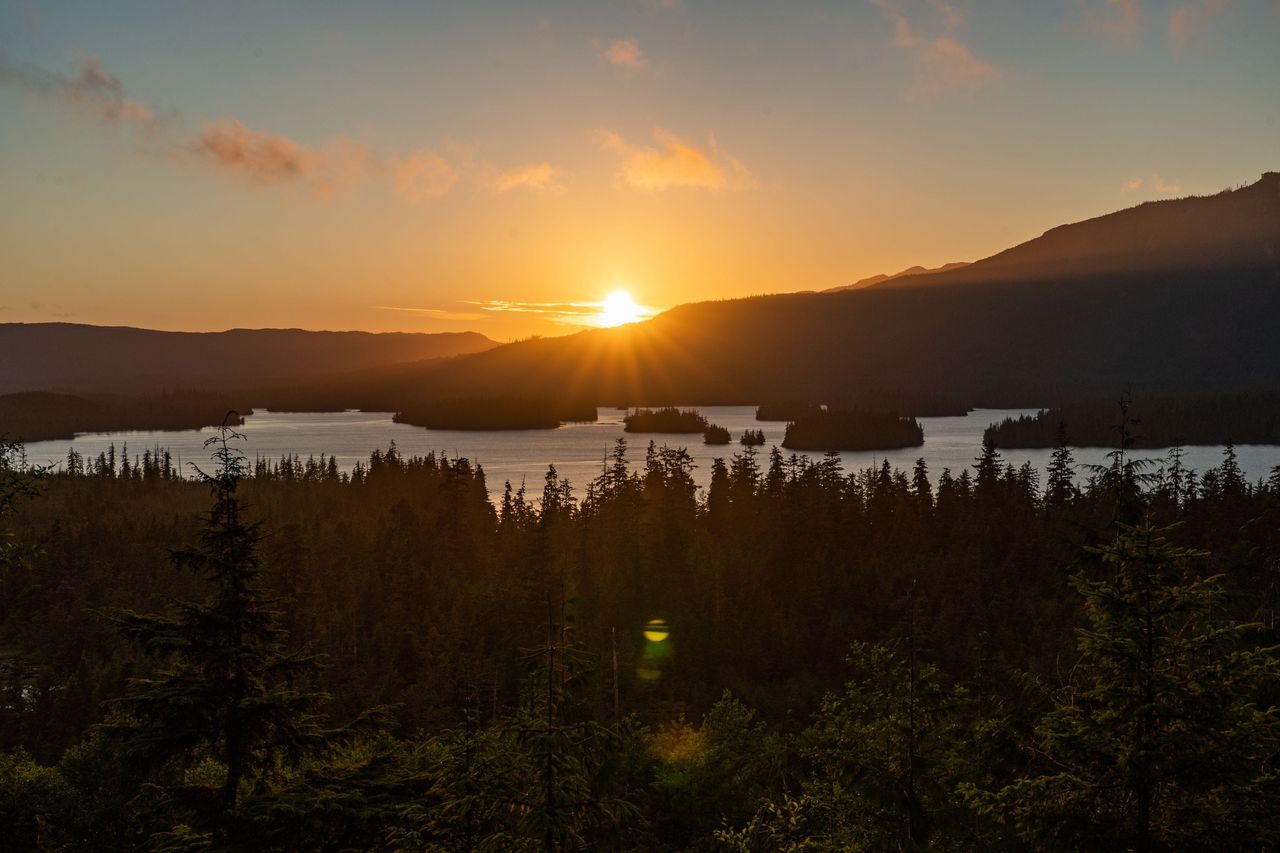
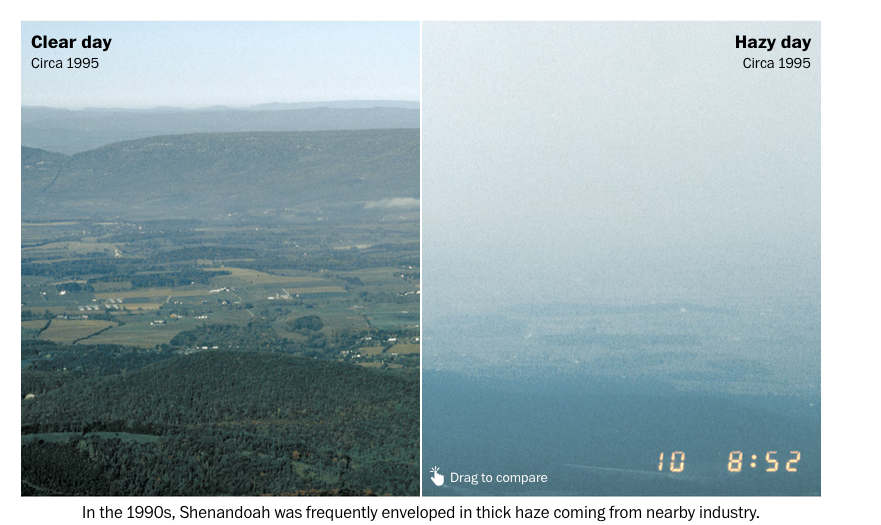
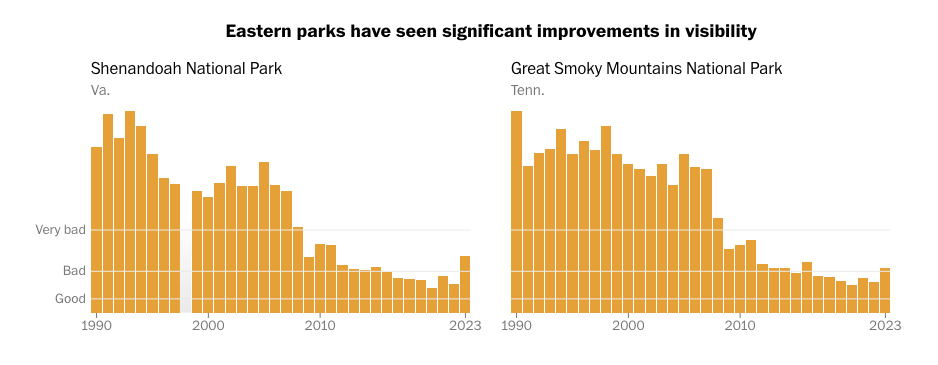
| | | | | Welcome. This week, the last of the U.S. climate negotiators and a trend toward cleaner air in national parks. But first, how we can build more affordable housing. | | The Tongass National Forest on Prince of Wales Island, Alaska. (Salwan Georges/The Washington Post) | | Congress has removed the "for sale" sign from the American West. A proposal to liquidate millions of acres of public land was struck out of the massive tax and immigration bill after unifying the left and right against it. Even Republicans admitted the provision wouldn't deliver on the promise of more affordable housing. So what would? The United States needs 4 million to 7 million more homes to meet demand. The shortage is most acute in the American West, where an ever-growing share of Americans can barely afford to put a roof over their heads. In theory, converting just 1 percent of the federal land portfolio, or about 3 million acres, into new developments could provide housing for millions of people. But many housing experts say a lack of land is not the problem (and that the vast majority of federal land is unsuitable for housing anyway). The problem is a lack of homes near jobs and services. Restrictive zoning laws, high construction costs, permitting complexity and inadequate financing for builders and buyers have all been implicated. In the West, the favorite villain in this story is California. It pretty much invented discretionary permitting and exclusionary single-family zoning (now covering 96 percent of the state's residential land) so only expensive single-family homes are built in these neighborhoods. Over time, the death-by-bureaucracy of affordable multifamily units has helped pushed the state's housing costs to some of the highest in the nation and sent people fleeing to neighboring states. "We call this the California blast zone, because of the inability to build housing," said Ed Pinto of the American Enterprise Institute. "No matter how fast [other states] build, they can't keep up with the outflow of people." But California didn't export its housing crunch so much as reveal it elsewhere, said Andrew Justus, a housing policy analyst at the market-oriented Niskanen Center. In Atlanta, where prices are spiking, building codes are almost identical to those in Los Angeles in the 1990s before changes. "It's not a unique set of challenges," Justus said. Simply selling off land won't fix the system that created the U.S. housing crisis. I spoke with experts across the West — and across the ideological spectrum — about how the region can pull itself out of this morass. Here's how we can build affordable homes again: - In-law suites are for anyone.
- Sturdy starter homes are now made in factories.
- Community land trusts can lock in low rents, forever.
- Affordable housing's higher calling: "Yes In God's Backyard."
- Change the rules of housing.
Read the full column, and write me with your questions at climatecoach@washpost.com. I read all your emails. |  | Field Sample The Federal Emergency Management Agency predicted that in the case of a severe flood, water would rise nearly to the steps of several buildings at Camp Mystic in Central Texas, with at least one building directly in the path of floodwaters. But in 2013, FEMA exempted 15 Camp Mystic buildings near the Guadalupe River from a Special Flood Hazard Area — a region where a "100-year flood" has a 1 percent chance of occurring in any given year. In 2019 and 2020, Camp Mystic successfully petitioned FEMA to exempt 15 more buildings from flood-zone designations as it expanded camp facilities. Sarah Pralle, a professor of political science at Syracuse University, said the tactic has become increasingly common as property owners seek to avoid having to pay for flood insurance or regulations on construction in flood zones. Meanwhile, the number of flood deaths each year in the United States has been rising. Read more about FEMA's flood-zone designations at Camp Mystic. | 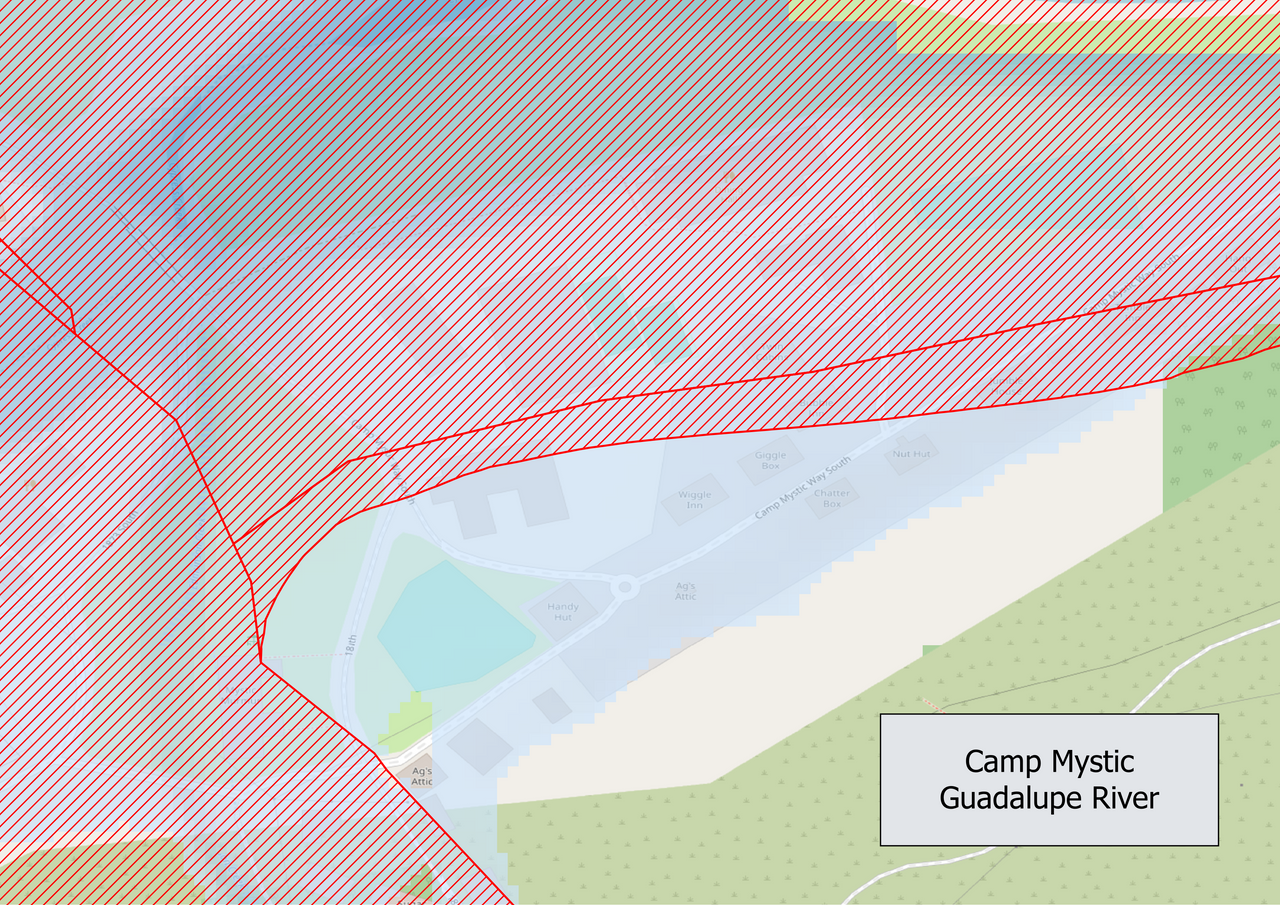 | | An illustration from First Street, a climate risk modeling firm, depicts the areas of Camp Mystic's campus near the Guadalupe River in a flood zone. The red lines encompass the areas that FEMA deems a flood zone, according to Jeremy Porter, the group's head of climate implications. Everything in blue represents the areas First Street deems a flood zone. (First Street) | Learning Curve How clean (or dirty) is the air in America's national parks? The Washington Post's Niko Kommenda found that eastern U.S. sites, which posted the worst results when haze monitoring at national parks was introduced 40 years ago, have seen the biggest improvement in visibility and air quality. | | That's thanks to the decline of coal-fired power and the introduction of improved pollution controls. Wildfires, though, are compounding pollution at sites in the West. See what the parks' pollution looks like. | The Second Degree Last week I wrote about Camp Mystic and what parents need to know about staying safe at summer camp amid extreme weather. Reader Jason Hodin suggested that parents should carefully choose their kids' camps: "Then call your local representative and demand legislation for regulatory oversight of these for-profit entities." Peter Smit of the Netherlands noted that after deadly flooding in 2021, his country had to reassess what it knew about living with water. "It is a phenomenon we did not have before," he wrote, adding, "Don't blame people or organisations for what happened. … It's something new. " |  |  | | Gail Lamere of Cape Cod, Massachusetts, sent in this photo of a skipper, a member of a group of butterflies with more than 3,500 species globally, approximately 275 of whom live in North America. While this one may look like a moth, you can see it has thin antennas with clubbed tips that are typical of butterflies, while moths have long, pointed or fernlike antennas. "You don't have to look far, just look," Lamere wrote. "Beauty is everywhere." Send me your photos and stories at climatecoach@washpost.com | | Was this email forwarded to you? Sign up here to get The Climate Coach in your inbox every Tuesday. See you next Tuesday, Michael Coren, Climate Coach | | |







No comments:
Post a Comment