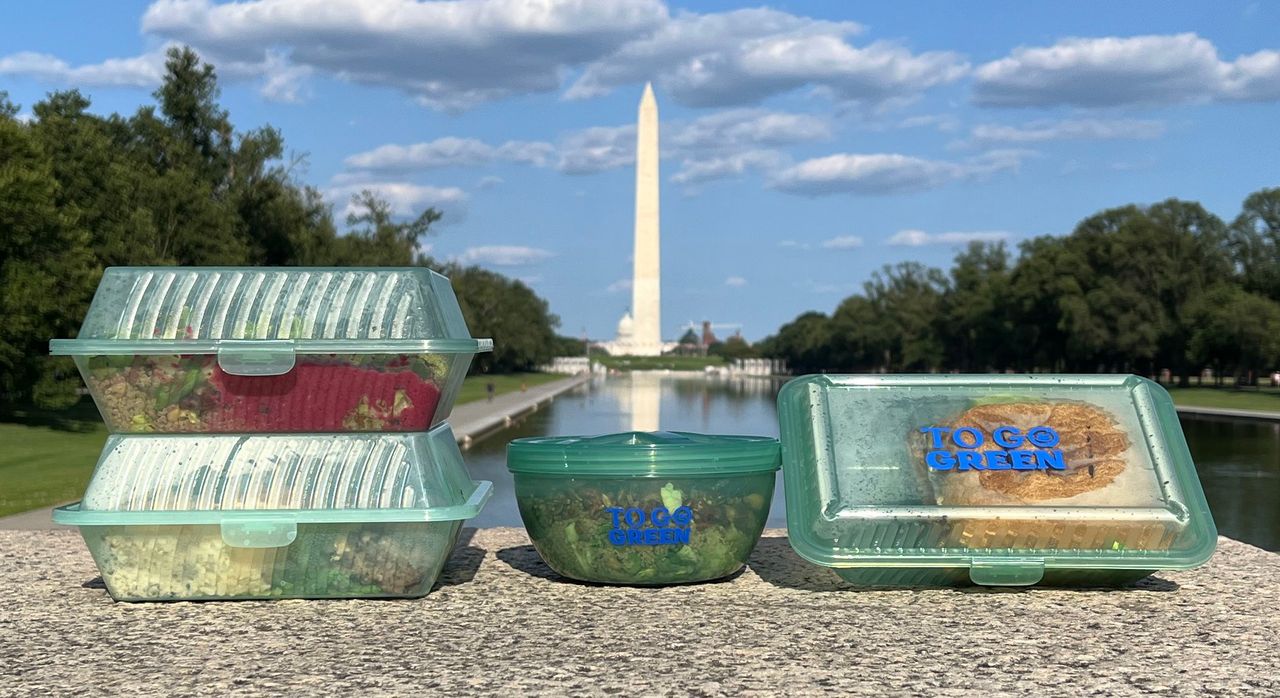
| | | | | Welcome. This week, a Spanish lagoon gets personhood and Philadelphia's transit "death spiral." But first, what would it take to get rid of disposable plastic in our take-out orders? | | To Go Green is working with D.C. restaurants to offer reusable take-out containers. (Courtesy of To Go Green) | | What's in your take-out order? Plastic. Lots of it. Most to-go food comes boxed, bagged or otherwise accompanied by petrochemicals. You ingest this unsavory stew with every bite, before the discarded packaging piles up in landfills. So over the past few months, I tried to eliminate plastic delivered to my door. In my war with single-use containers, I notched a surprising number of victories against unasked-for cutlery and tubs destined for the trash. But total triumph proved as hard as you might imagine. Help may be on the way. Society is starting to recognize — as it did with lead, asbestos and other toxic materials before — that the drawbacks of single-use plastic may not be worth the convenience. An increasing number of cities are considering laws restricting or banning single-use plastic for food. Reusable container companies are proving that restaurants can save money by ditching the disposables, while delivering fresher, hotter food without the waste. Systemic problems require systemic solutions, but you can resist the tide of plastic in your to-go meals. Here's how I cut out (most of) the plastic in my food delivery and what we are going to need to do together. How have you ditched your take-out plastics? Write with tips to climatecoach@washpost.com. I read all your emails. |  | Field Sample If the GOP passes its "big, beautiful bill," the clean energy build out will slow, if not stop. But it's likely to drive up the cost of energy in the United States. The Senate bill, as written, phases out tax credits for wind and solar power, adds a new tax on wind and solar projects built after 2027 with equipment made in China, and mandates more oil and gas lease sales as well as approval of coal production. Here's what experts say we're likely to see next: - Energy costs will probably rise as renewable incentives disappear.
- The push to "electrify everything" will stall.
- Growth of data centers and manufacturing will slow.
- Climate change and air quality will worsen.
- Competitors in the emerging clean energy industry will outpace the United States.
| 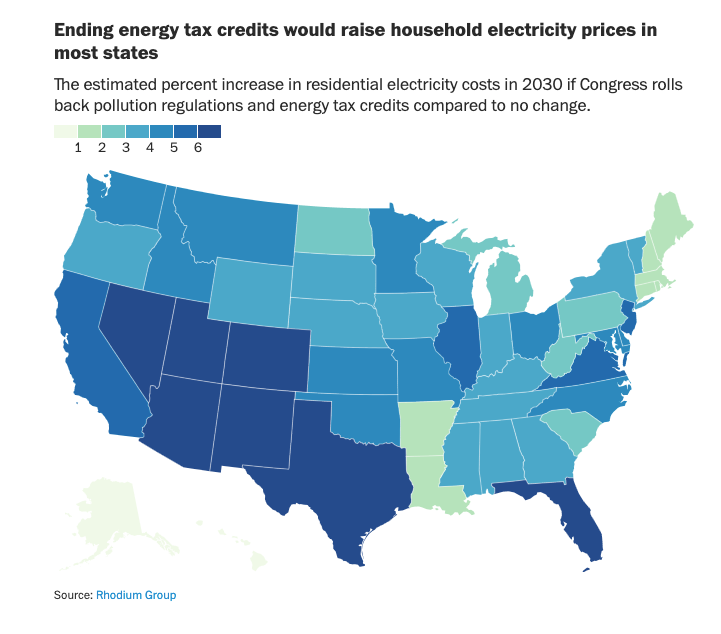 | | Proponents of the bill say the push for "net zero" emissions was constraining capacity expansion and posing reliability risks. "Ending these federal giveaways will lead to a more market-driven allocation of capital, favoring energy sources that are more economically efficient and better suited to meeting growing demand," Thomas Pyle, president of the Institute for Energy Research, said in an email Sunday. GOP leaders hope to send the bill back to the House soon for final approval to meet President Donald Trump's self-imposed Independence Day deadline. Read more about the bill's impact. |  | Learning Curve People are willing to pay more to fight climate change than you might think. In a global survey of nearly 130,000 individuals across 125 countries, 69 percent expressed a willingness to contribute 1 percent of their personal income to climate action. Only 26 percent said they would be unwilling to contribute a cent, the study published in the journal Nature found. Perhaps more interesting, people radically underestimated the willingness of their fellow citizens to do the same. In every country, researchers found a perception gap: the difference between how much individuals were willing to contribute, and how much they perceived others were. | 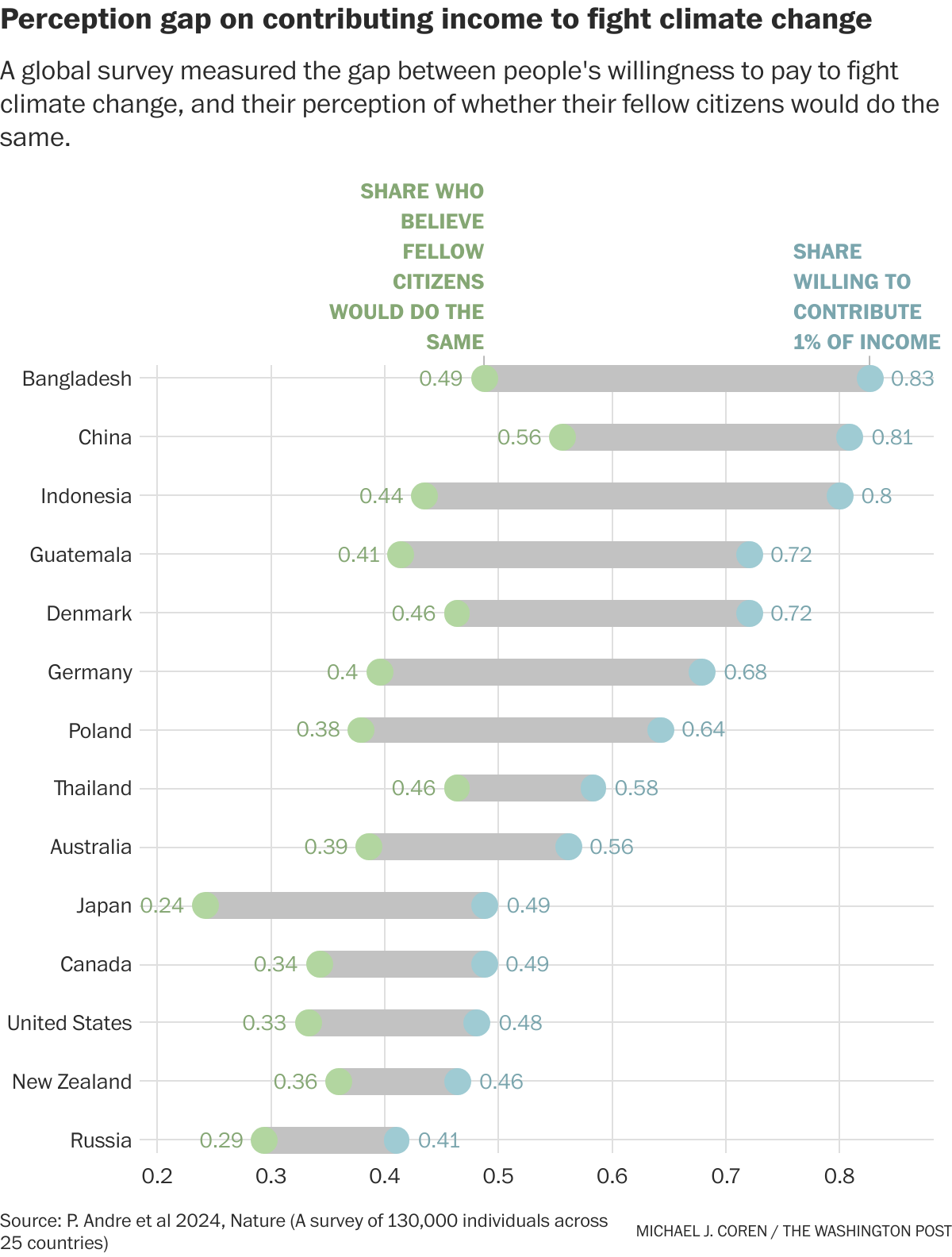 |  | | These house finches are growing up in Sara Pixon's dipladenia on her porch in River Ridge, Louisiana. "I water the plant very carefully now to not disturb them," she wrote. "They open their mouths as soon as they sense my movement nearby — but close them once the morsels don't arrive." Send me your photos and stories at climatecoach@washpost.com | | Was this email forwarded to you? Sign up here to get The Climate Coach in your inbox every Tuesday. See you next Tuesday, Michael Coren, Climate Coach | | |







No comments:
Post a Comment