| | | | | Welcome. This week, Death Valley blooms and Vineyard Wind wraps. But first, the app that's quietly reformulating America's food supply. |  | | Julie Chapon was 26 when she finally learned what was in her Nestlé Fitness cereal. "I'd eaten this cereal for 10 years," said Chapon, and she considered it to be healthy. "When I checked the label, one quarter of this product was made with sugar," she recalls. "That's when we realized we can't trust the brand and the marketing." So Chapon conceived Yuka, a smartphone app that gives users X-ray vision into the health impacts of 6 million foods and cosmetics. Scan a barcode and the app will show you a detailed breakdown of a product's ingredients based on Nutri-Score, a food labeling system developed by scientists, and the presence of additives and organic certification. (Nestlé did not respond to requests for comment. Fitness cereal has been reformulated since Chapon's 2016 encounter.) Yuka rates each product with a simple color code: Excellent (green), good (light green), poor (yellow) or bad (red). More than 80 million people, including 25 million in the United States, have used the app to scan groceries or personal care products since it launched in 2017. Yuka said it has 20 million active users worldwide each month and is financed almost entirely by user subscriptions: Premium users pay at a rate they can afford, between $10 to $50. The consulting firm BCG coined the term "Yuka Effect" to describe how the app shapes what goes in — or stays out — of shopping carts. Yuka says survey data suggests 94 percent of its users put products back on the shelf after seeing low scores in the app. That's helping to pressure manufacturers to reformulate products to improve their scores, despite objections from some experts that the app oversimplifies complex diet decisions. Read my column to learn how you can use Yuka to avoid grocery store health hazards, and join the movement forcing food manufacturers to improve their products. How do you choose your food? Write me at climatecoach@washpost.com. I read all your emails. |  | Field Sample "There is no Silence in the Earth," wrote Emily Dickinson. Now, science is proving her correct, writes columnist Dana Milbank, who went in search of Earth's symphony of infrasound. The human ear can detect sounds at frequencies between 20 hertz and 20,000 hertz. Iinfrasound is anything below that range. Recent advances in artificial intelligence, signal-processing software and miniaturized sensors mean it's relatively cheap and easy to isolate these sounds. Listen to the sounds of nature from oceans to volcanoes to jumping spiders. | Snapshot By 2015, the scarlet monkey-flower had all but vanished from Sequoia National Park. Scientists thought the creekside species might be doomed after California's worst drought in at least 10,000 years. But the monkey-flower reemerged and thrived, thanks to what scientists call "evolutionary rescue," a resiliency coded deep in its DNA. | | Scarlet monkeyflower in its natural habitat. | | Monkey-flower populations across the West Coast rapidly evolved in response to the historic drought of 2012 to 2015, according to a study published in the journal Science. "The fact that certain organisms are able to adapt just because of genetics that are already present is a great source of hope," said Daniel Anstett, a plant biologist at Cornell University and the study's lead author. "It's one more arrow in the quiver of different ways that populations might be able to survive the massive climate change we're inflicting on the planet." Read more about how a species evolved fast enough to save itself from extinction. |  | The Second Degree Last week, I wrote about how to ditch forever chemicals without getting cold and wet. Many of you had alternatives you already loved. One was waxed cotton. Although a bit less breathable than Gore-Tex, the fabric is renewable, economical and nontoxic. "Get a waxed cotton jacket in a sensible neutral color that will outlast any current fashion cycle and you will not be sorry," one reader wrote. A runner who'd completed a marathon on every continent had a different take. "Layered merino wool (Icebreaker, Merino Tech, etc.) and lightweight waxed cotton shell if raining," they wrote. "I've never owned Gore-Tex or any other fancy tech fabric. I'm too cheap and the few times I've tried Gore-Tex, I get wet on the inside (I sweat a lot). For everyday waterproof: Helly Hansen Work Wear (rubberized cotton) or waxed cotton (Drizabone) rules." |  | On the Climate Front From The Post: An expert says his plan would slash energy bills by 30 percent What a squall line is — and why they're so dangerous during thunderstorm season A record heat dome is about to hit the West — in March Death Valley comes to life during rare super bloom From elsewhere: Vineyard Wind, the country's first large-scale offshore wind project, finishes construction (WBUR) UN: Iran war should trigger faster exit from fossil fuel dependence (Reuters) As Iran war drives up gas prices, interest in EVs grows (YaleE360) Mezcal's popularity in the U.S. comes with a growing environmental cost in Mexico (AP) |  | 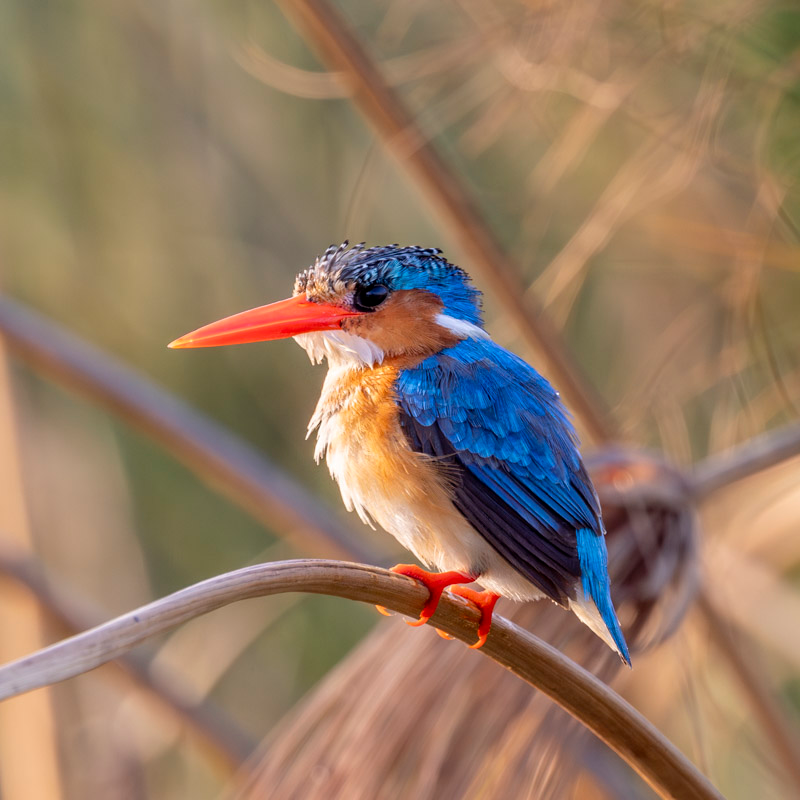 | | This malachite kingfisher was photographed in the Okavango Delta in Botswana by Wayne Smith. It is one of 13 shots of African birds from Namibia, Botswana and Zimbabwe in a biodiversity photo exhibition in Paris dedicated to saving the world's birds. Wayne recommends the International Bird Conservation Partnership, an American NGO dedicated to global bird conservation, if you want to learn more. Send me your photos and stories at climatecoach@washpost.com See you next Tuesday, Michael Coren, Climate Coach Was this email forwarded to you? Sign up here to get The Climate Coach in your inbox every Tuesday. | | |








No comments:
Post a Comment