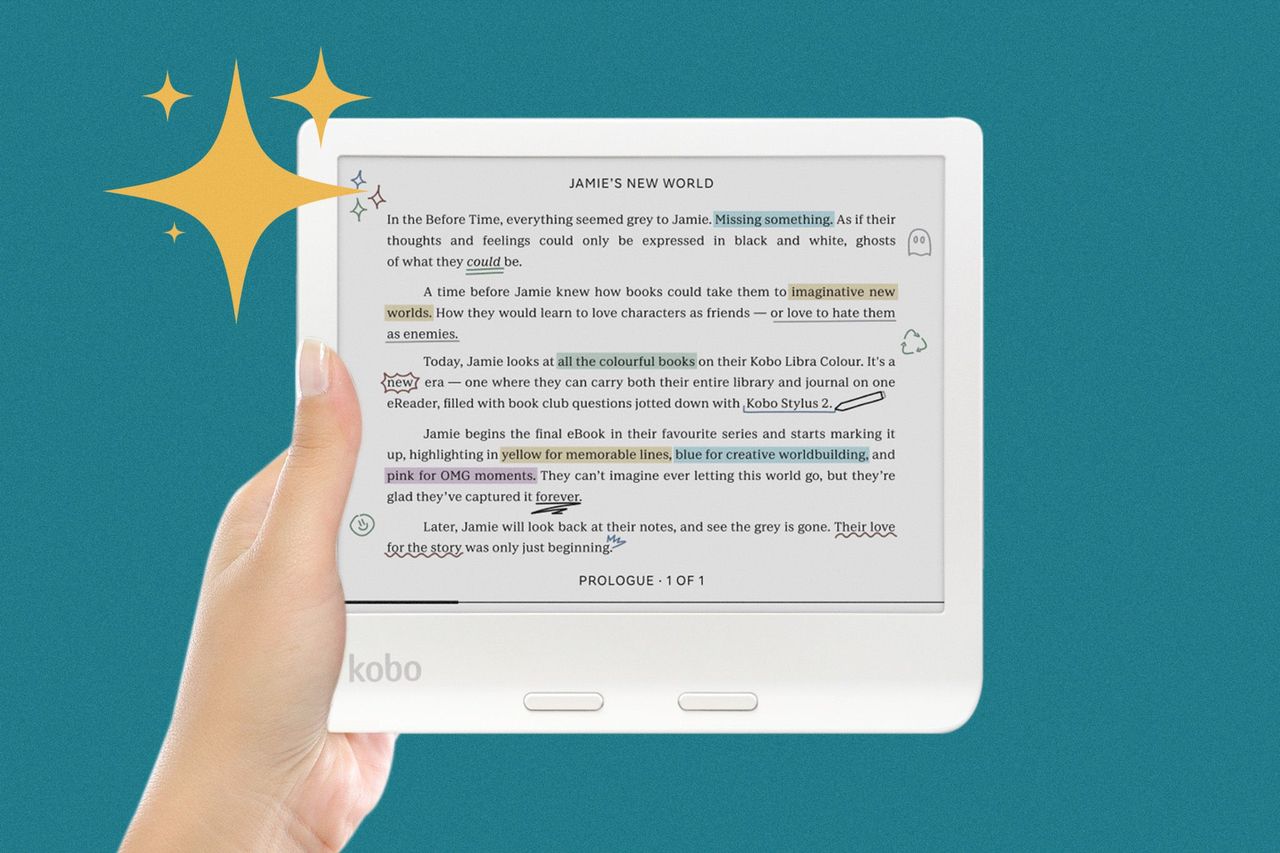
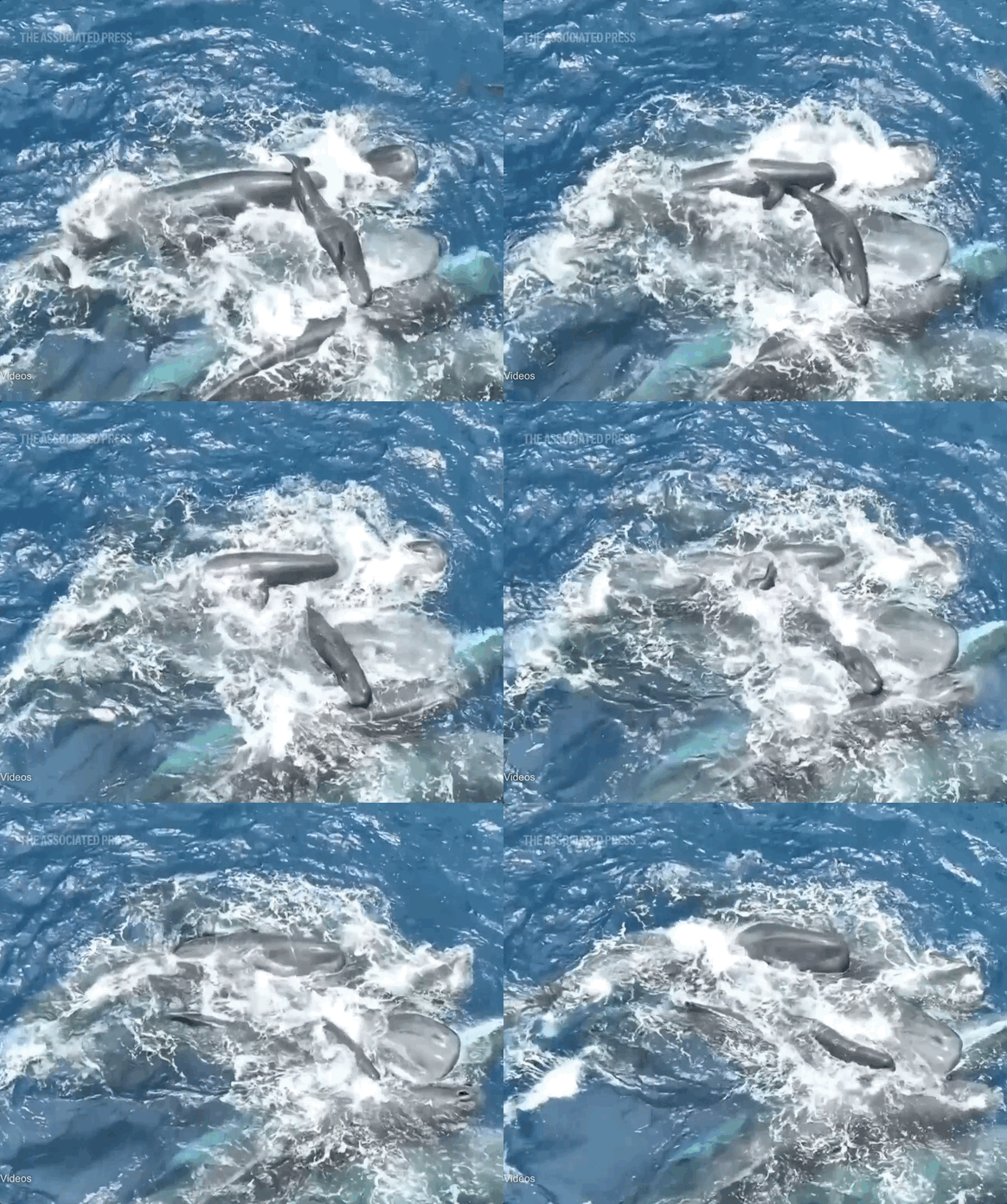
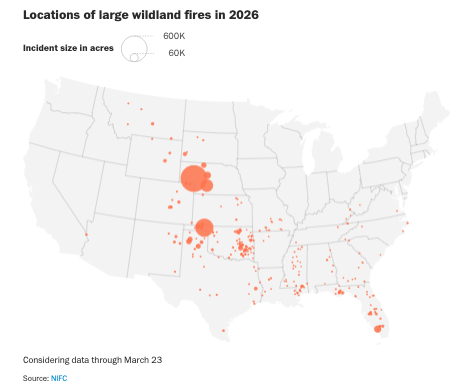
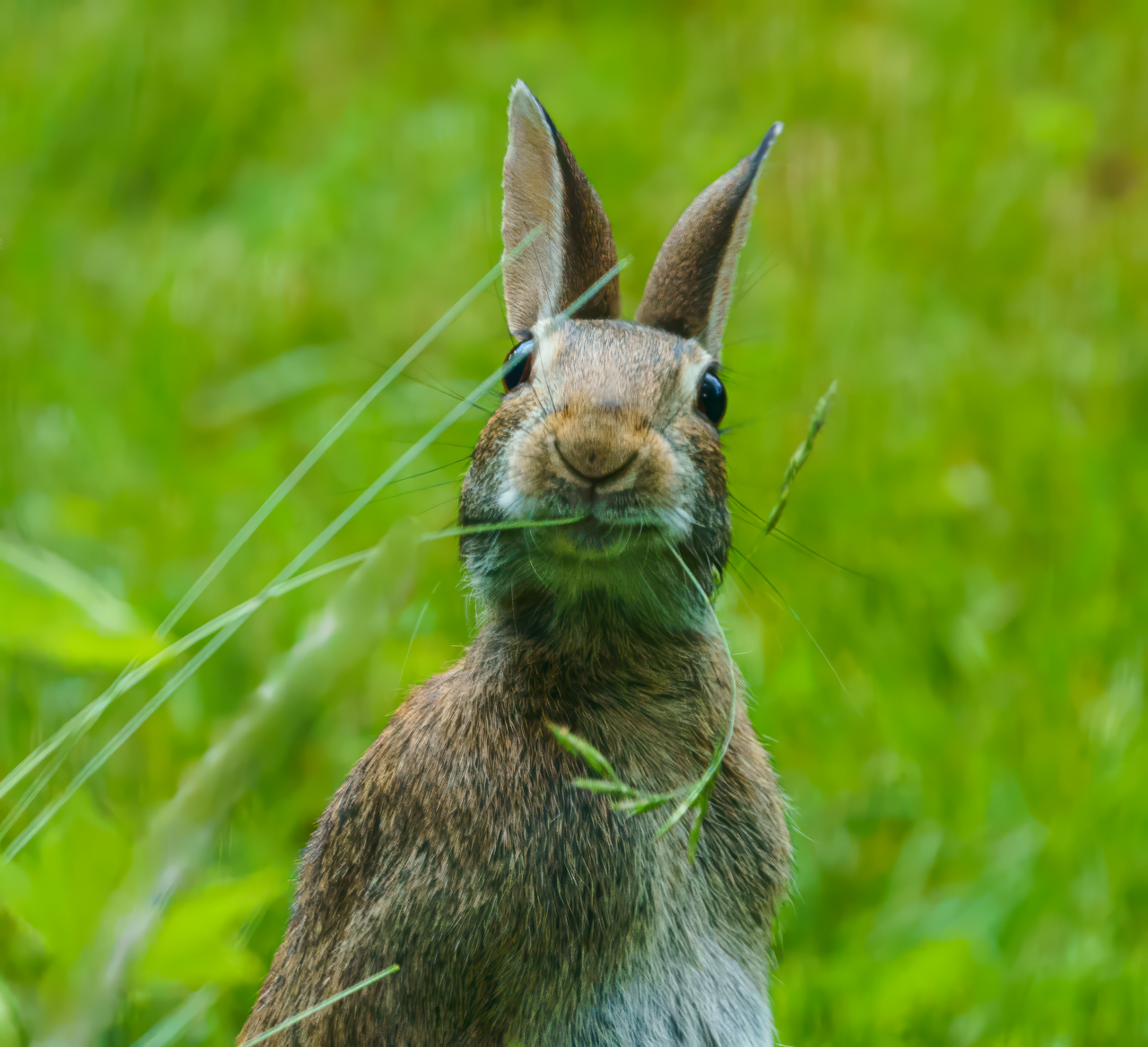
| | | | | Welcome. This week, we're featuring stories on baby sperm whales and free electricity. But first, I broke up with my Kindle. Here's why. | | Washington Post illustration; Rakuten Kobo; iStock | | Imagine buying a beautiful new car and seeing the low fuel light blink on as you drive it home. Although it only accepts Amazon's proprietary gasoline blend, that's fine. Nearly 80 percent of gas stations are owned by Amazon. Then you reach into the glove box to retrieve your purchase agreement and read the fine print. It turns out you don't own your new car after all. Amazon has the right to enter your driveway, remodel the interior, repossess it and even unilaterally change the license, for any reason at all. That, in a nutshell, is the experience of buying e-books and audiobooks on Amazon's Kindle, the most popular e-book reader on the planet. (Amazon founder Jeff Bezos owns The Washington Post.) While work-arounds exist, the company tends to limit readers' control over the digital books they ostensibly own and make it difficult or impossible to use on other companies' devices or lend to others. Amazon has even reached into customers' libraries and altered what they bought. We've ceded control over almost everything about our online experience. Nearly every keystroke, swipe and tap is now monitored, recorded and analyzed for potential profit. The Kindle ecosystem is perhaps the apotheosis of this shift. One Guardian reporter found Amazon had recorded every title, highlight and page turn on her Kindle app (40,000 entries over two years). The company's dominance sets the terms for everyone in the marketplace. Including me. Like tens of millions of others, I have owned a Kindle (a Paperwhite). Last year, it started to feel as if it owned me. The final straw was when Kindle removed my ability to download and back up my own e-books. So I went in search of an alternative. I bought a Kobo. Was it the bibliophile Eden some Kobo fans described? Not quite. The reality was messier than I expected. It turns out we can't escape Big Brother on our e-readers just yet. But a more open society is coming into view for book lovers — and perhaps all of us. Read my full column for advice on how to turn the page. How do you read? Write me at climatecoach@washpost.com. I read all your emails. |  | Field Sample Rare video footage reveals how female sperm whales work together to support the delivery of a calf and help it take its first breath. The video shows collaboration among whales from two families — an unusual example of such activity beyond primates such as humans and monkeys. Analysis of the video, filmed in the Caribbean in 2023, was published Thursday in the journals Scientific Reports and Science. | | "It was way more active than I think I had considered what a sperm whale birth might look like, and all these animals sort of actively diving under and lifting the calf into the air," co-author Shane Gero told AP. Watch how members of this species, who live in female-led societies, help one another. | Learning Curve Wildfire season has started remarkably early in parts of the western United States. Significant fires have flared up in Arizona, Colorado, Oklahoma, Kansas and New Mexico. Nebraska has already experienced historic fire activity, with four fires burning a total of more than 800,000 acres. | | "To have any fire that goes hundreds of thousands of acres in a day anywhere is very unusual at any time of the year, let alone in mid-March," said Pete Curran, a staff meteorologist for the nonprofit Watch Duty, said about the Nebraska blazes. "It got everyone's attention." Read more about why the frontier for fire risk may be expanding across the United States. |  | The Second Degree Last week, I wrote about how Big Tech may help pay your energy bills by funding new home batteries. Networks of these homes, called virtual power plants, could soak up clean energy during off-peak hours, support the grid (and demand from data centers) and lower electricity rates while supplying backup power in an outage. "No thank you," wrote one reader, Amy, summing up many people's distrust of tech or energy firms to offer a fair deal. Others wanted to control their own devices rather than let utilities manage them (most programs let homeowners decide when batteries are dispatched). Hundreds of thousands of people are still signing up for these programs. Some, like Jerry of Santa Rosa, California, a retired architect, are advocating for citywide programs. Jerry said he is pitching his city council on a virtual power plant that would connect large parking lots with solar panels. "No new expensive utility transmission spending required to 'fuel' electrified transportation," he wrote. "If we don't get busy developing our affordable local community energy tier, we're just going to continue being exploited by our existing industrial-scale Big Oil and gas and utility monopoly." |  | On the Climate Front From The Post: Trump administration to pay $1 billion to stop two East Coast wind farms. A hurricane evacuation tool was set to expire after DHS delays approval. A blind seal named Onion is thriving in his new home. From elsewhere: Britain vows to give homeowners 'free electricity' instead of switching off wind turbines (EuroNews) Wealthy investors targeting foes of clean energy want revenge (NYT) Arctic sea ice hits its lowest winter level amid unprecedented record heat (AP) As gas prices soar, countries race to deploy solar panels (NPR) — and coal (NYT) |  | | Martha Ture of Mt. Tamalpais Photography captured this portrait of a rabbit, one of the many species of wildlife near her California home. "We are in the process of replacing every square foot of lawn with native plants, pollinator-friendly plants, garden beds, orchard trees, and herbs," she wrote. "Not surprisingly, we now harbor one possum, one red fox, one bobcat, one redtailed hawk, 3 cottontail rabbits, any number of backyard birds, and a great proliferation of butterflies and moths, including the flying lobster moth." Send me your photos and stories at climatecoach@washpost.com | | Was this email forwarded to you? Sign up here to get The Climate Coach in your inbox every Tuesday. See you next Tuesday, Michael Coren, Climate Coach | | |








No comments:
Post a Comment