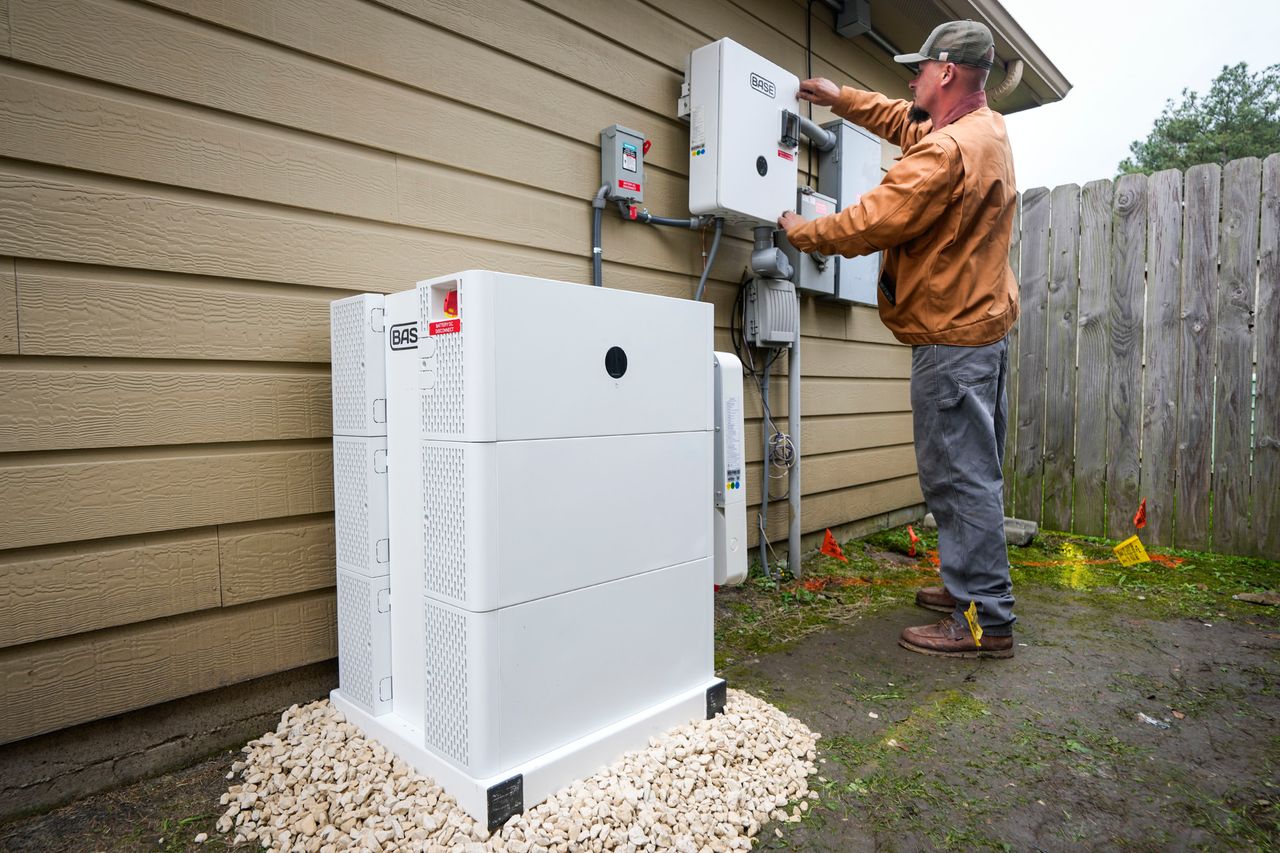
| The tech industry needs massive amounts of electricity. The most overlooked power plant in the United States isn't a gas turbine or a solar farm: It's your house. Tech companies are locked into a race to build artificial intelligence that comes down to speed and scale. AI infrastructure such as data centers, some argue, plays the role that railroads and canals did in the 19th century: The first firms to dominate will control the era's most transformative technology. Tech giants are expected to pour about $2.7 trillion into data centers and AI infrastructure in the U.S. by 2030, estimates McKinsey, more than one Manhattan Project every month, in inflation‑adjusted terms. All that new equipment needs more electricity than the grid can deliver. Google, Meta and others have resorted to modified jet engines, diesel generators and rebooting nuclear and coal plants to power their data centers, while asking electric utilities for grid upgrades. That's contributing to rising electricity prices, up 42 percent since 2020. Your home offers another solution to the energy shortage. The concept is simple. When thousands of homes are coordinated together by software into what are known as distributed or virtual power plants (VPPs), they can deliver or free up a power plant's worth of electricity for the grid by dialing down consumption from smart appliances like electric water heaters or dispatching electricity from home batteries. This approach can bring hundreds of megawatts online in months, not the years it can take to build a new power plant. Transmission lines move electricity through space to where it's needed. VPPs deliver power at the moment it's needed most. The grid tends to run at half capacity, because it's built for peak demand, so storing cheap off-peak power and discharging it when demand spikes effectively creates new capacity. Home batteries can recharge later using cheap power — often wind and solar — as demand ebbs. All the new electricity that data centers will demand, likely 60 to 100 gigawatts by the early 2030s, could theoretically come from upgrading homes with smart appliances, heat pumps and batteries and operating them as VPPs, argues Rewiring America, a nonprofit dedicated to electrification. Residential electricity prices would drop at the same time, it calculates. To make that scenario real, data center investments would need to invest in homeowners, not just new power plants. It's already starting to happen. Send your questions and stories to climatecoach@washpost.com. I read all your emails. Field Sample | 















No comments:
Post a Comment