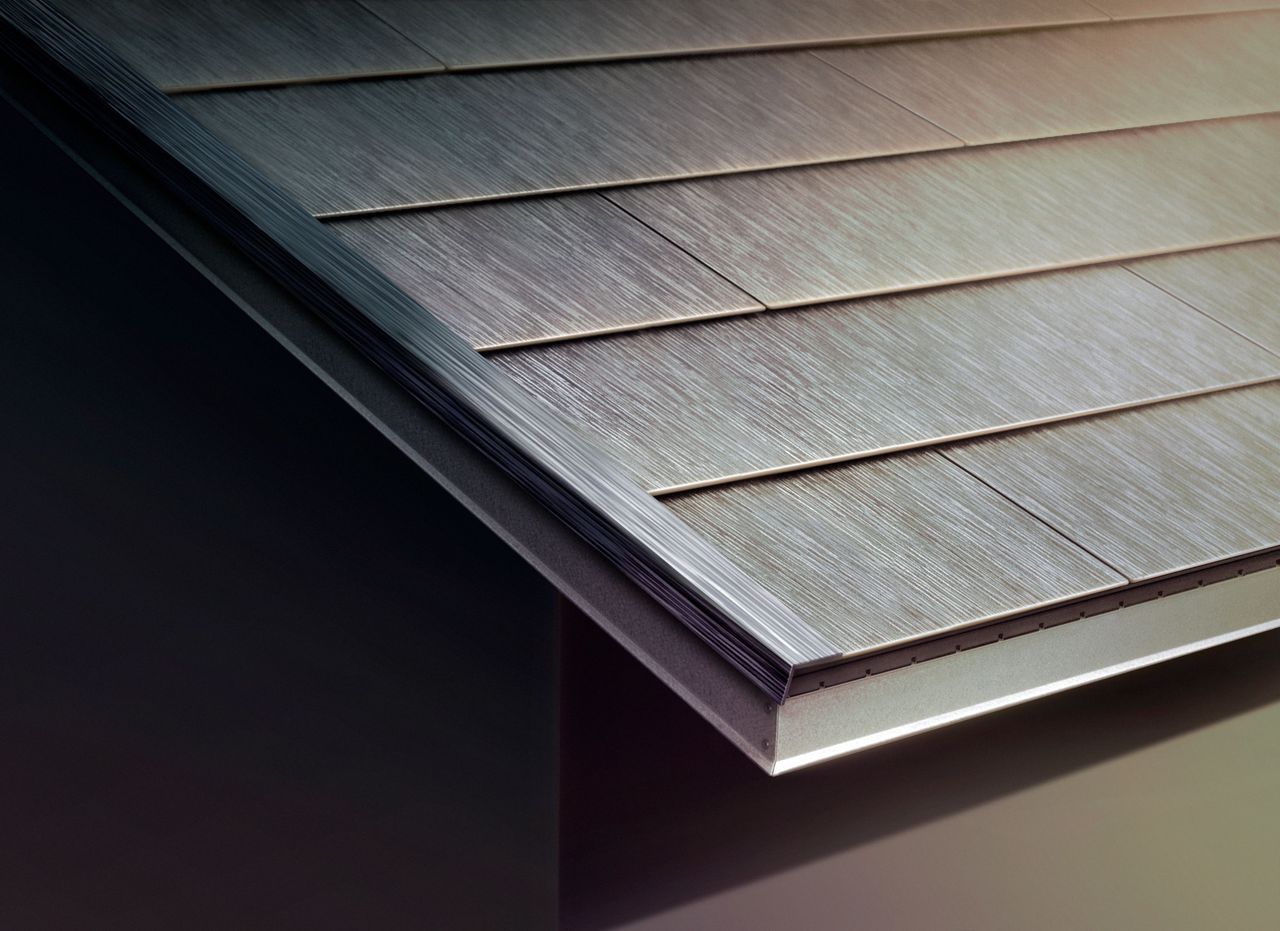
| When launching Tesla's solar tiles nearly a decade ago, Elon Musk said they would cost less than a regular roof, last twice as long and slash or even eliminate homeowners' utility bills. "Why would you get anything else?" Musk asked Tesla shareholders in 2016. We're not there yet. Conventional roofs still cost less, and most people who want solar pick panels over photovoltaics integrated into their roofs. But evolving economics and new, cheaper solar shingles hitting the market may change the equation. "If I meet with someone today, and they say 'I just want the absolute cheapest option,' just get asphalt shingles," said Ryan Rego, CEO of Isaksen Solar, a Massachusetts-based roofing company. "But I would say that the vast majority of homes that are replacing their roofs in 20 years will be getting solar roofs, and you won't even really know they're a solar roof." Like solar panels, integrated solar roofs contain a layer of silicon sandwiched between two layers of glass. But the "solar" in solar roofs is virtually invisible. They are designed to mimic asphalt, clay, metal or slate. So when might a solar roof make sense for you? Or are you better off buying panels for the foreseeable future? Read this week's column to know what to put over your head. Write me at climatecoach@washpost.com. I read all your emails. | 













No comments:
Post a Comment