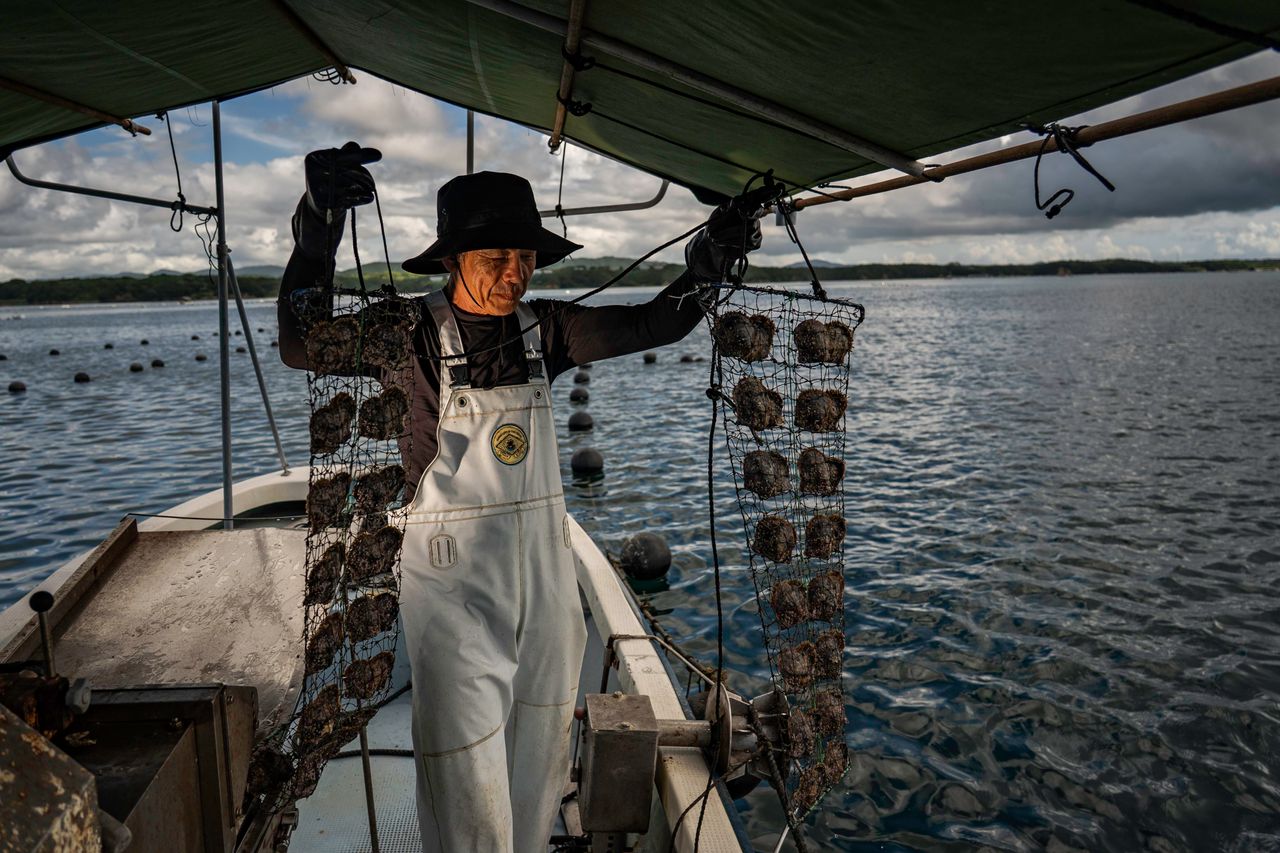
| | | | | Welcome. It's good to be back. This week, stories on pollutant-eating microbes and on saving Audrey Hepburn's pearls. But first, what climate economists say about how to donate to benefit the planet. | | (Illustration by Zachary Balcoff/The Washington Post) | | If you want to donate to organizations that help the planet, how can you get the most out of every climate dollar? Ahead of this Giving Tuesday, I asked several economists and climate philanthropists what they could teach people like me, whose donations may only have one or two zeros behind them. I share some of their specific recommendations in this week's column. While the experts I spoke to didn't always align on where to give, they agreed on one thing: Take big bets on changing the system. "We're trying to make these really big risky bets on things like geothermal, alternative proteins and clean steel," said Dan Stein, founder and executive director of Giving Green, a research nonprofit recommending high-impact climate philanthropy. "If you're going to look at our grant portfolio in 10 years, I would imagine that 80 percent of the stuff has not worked. It's pushing for a policy that didn't get passed or pushing for technology that didn't really make it. … We just need some really big wins to make it all worthwhile." Giving Green ranks climate donation opportunities based on three criteria: scale of potential greenhouse gas emission reductions, likelihood of success and funding need. In the sweet spot are relatively neglected technologies and policies that will keep reducing pollution far into the future — sort of like bank accounts that compound indefinitely over time. "You should really not optimize for certainty," said Johannes Ackva, who leads climate research at Founders Pledge, a nonprofit steering more than $1 billion in philanthropic giving. "It's much better to probably have a large impact than to almost certainly have very little impact." Read the column for more on how to donate. And write me with your questions at climatecoach@washpost.com. I read all your emails. |  | | An Eurasian Griffon, from one of India's surviving vulture species, flies across the sky in Jorbeer Gadawala Conservation Reserve in Bikaner, India. (Saumya Khandelwal/For The Washington Post) | | More than 4 million vultures once soared in India's skies. Today, just 32,000 of three key species remain, echoing the passenger pigeon's descent into extinction. Humans are paying the price. The loss of the "natural sanitary worker" has led to an explosion in the number of scavenging dogs — and tens of thousands of additional human deaths each year from rabies and other causes. | | A boy bitten by a dog receives treatment for rabies in Hyderabad, India. (Saumya Khandelwal/For The Washington Post) | | The sequence, triggered by human action that took a decade to identify, carries a warning: When we endanger other species, we endanger ourselves. Read the latest installment in The Washington Post's Species That Save Us series. | Snapshot The "Rolls-Royce of Pearls" may be at the end of the road. Pearl farmers in Japan's Ago Bay — where the lustrous "akoya" pearls are grown — are struggling to adapt to a warming climate. Waters there have warmed by 2.4 degrees in the past century, and aging farmers say new diseases have wiped out entire generations of oysters. Read more about the future of "akoya" pearls, which once adorned icons such as Audrey Hepburn. | | Akihiro Takeuchi, 60, a pearl farmer in Ago Bay. (Salwan Georges/The Washington Post) | The Second Degree It was gratifying to come back to hundreds of emails with column ideas, tips and appreciative notes. Your recommendations for future columns included how to eliminate microplastics, e-biking in inclement weather, the ethics of fireplaces, decarbonizing sporting events, deciding on home water filters and many, many more. I'll be researching and writing some of these soon. Thank you, everyone. In the meantime, you can always reach me at climatecoach@washpost.com. I read all your emails. |  | On the Climate Front From The Post: One of America's most dangerous volcanoes will soon power homes. The EPA approves new "forever chemical" pesticides on food and abandons lifesaving air pollution rule. Widely hunted sharks gain new protections. These very hungry microbes devour a powerful pollutant. From elsewhere: Wolves returned to Colorado after 80 years. What's killing them? asks Vox. Minnesotans are fighting for the "Right to Night," reports the New York Times. Connecticut banks on publicly owned solar panels, reports Canary Media. | | Winter is my dog Miska's favorite season. Unlike this Florida boy, huskies are quite comfortable in temperatures below freezing. Below, Miska shows me how to walk effortlessly on snow. Send me your winter wonderland photos and stories at climatecoach@washpost.com | | Was this email forwarded to you? Sign up here to get the Climate Coach in your inbox every Tuesday. See you next Tuesday, Michael Coren, Climate Coach | | |












No comments:
Post a Comment