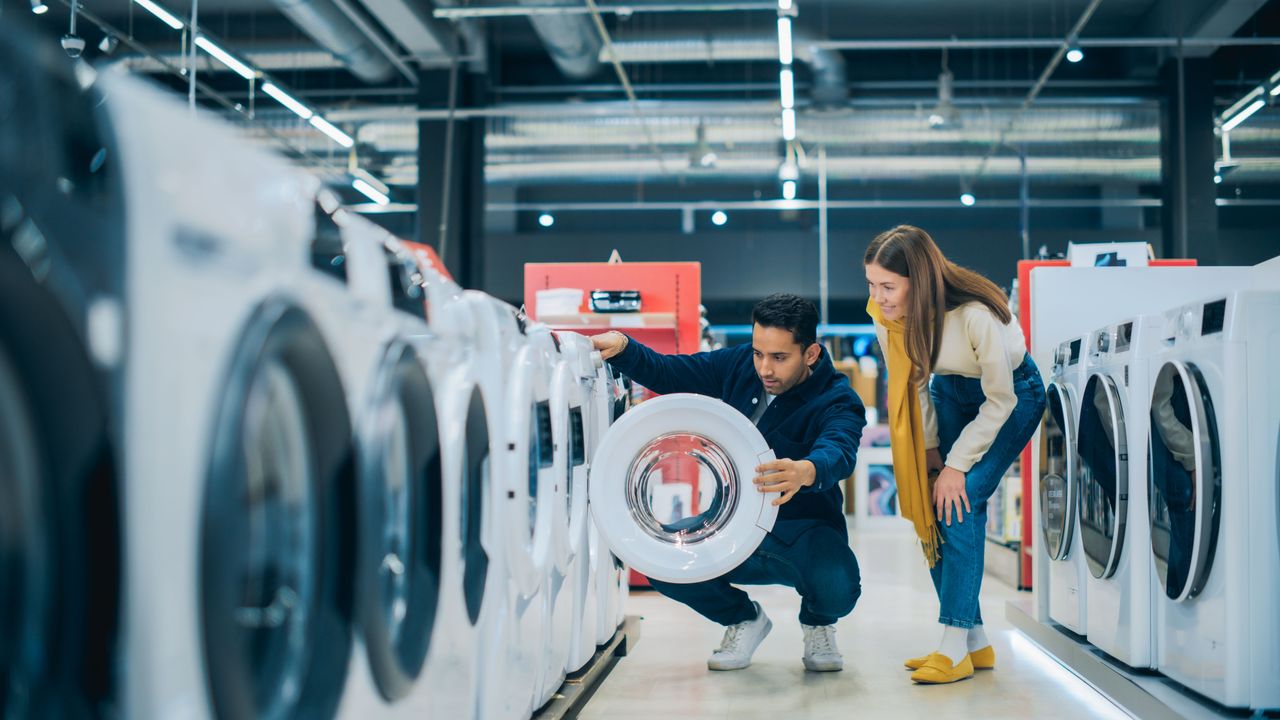
| What's extraordinarily popular, saves American families about $450 annually and may go away very soon? The Energy Star program. Like roughly 90 percent of the public, you may know Energy Star by its iconic blue stickers on high-efficiency appliances. Only efficient appliances in each category — washers, refrigerators and so on — can display the label. Americans bought more than 300 million Energy Star-certified products in 2021 alone. Since it launched about three decades ago, the voluntary certification program has shaved an estimated $500 billion off Americans' utility bills and prevented 4 billion metric tons of emissions, according to the Environmental Protection Agency. The cost to operate it? About $32 million per year. Last week, however, Trump administration officials said they were eliminating the program. The rationale? An EPA spokesperson wrote in an email that the move was part of "organizational improvements" to "better advance the agency's core mission, while Powering the Great American Comeback." The Energy Department, which also administers part of the program, declined a request for comment. Legal and political challenges are sure to follow. Indeed, companies and trade associations are lobbying to keep Energy Star. When President Donald Trump tried to cut the program during his first term, that pressure helped convince Congress to maintain funding. But the second Trump administration has proved far more willing to slash government programs and funding without the consent of Congress. Trump has made it a mission to repeal efficiency standards for everything from incandescent bulbs to showerheads. If Energy Star dies, it would mark the demise of one of America's most popular government programs — championed by industry associations, environmental groups, and Republicans and Democrats alike. "It has brand recognition and consumer trust that only Santa Claus can compete with," said Christine Egan, head of CLASP, an international nonprofit dedicated to energy-efficient appliances. "People know Energy Star as a brand that puts power and information in a single yes-or-no box … 'If you buy with this, you get a more energy efficient product that's going to cost you less to operate.'" Without that labeling, you will have to pay more and work harder to identify which appliances will use the least energy and save the most money. Can you DIY something like Energy Star? I spoke with researchers and policy experts about why Energy Star has been so successful and what we could do in its absence. Write me with your questions at climatecoach@washpost.com. I read all your emails. | 







No comments:
Post a Comment