The 120 false claims from Trump's longest rally
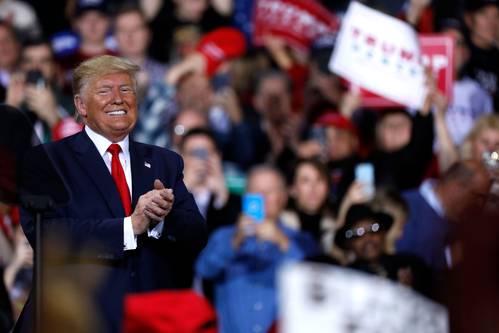
It was the Moby Dick of fact-checking assignments, a two-hour tornado of false and bewildering claims. President Trump held his longest campaign rally to date on Dec. 18, just as the House was voting to impeach him. We measured how much of what Trump said was accurate and how much was false. That meant going through Trump's often-dizzying remarks line-by-line, nearly 12,000 words in total, analyzing every statement he presented as fact. The results were not pretty: Of the 179 statements we identified, 67 percent were false, mostly false or devoid of evidence. That's 120 fact-free claims, or two-thirds of the total. It's especially remarkable that Trump's falsehood rate has been mostly consistent at these rallies — even though the events have become longer and longer over time. The last time we performed this analysis, in September 2018, we identified about half as many checkable statements at a Trump rally, but the president ended up with a similar rate of falsehoods: 70 percent. At the December rally in Michigan, Trump falsely claimed he won the state's "man of the year" award. He falsely claimed to have set military spending records. He claimed — again, falsely — that 401(k) retirement accounts have gained up to 90 percent in value during his presidency. He falsely claimed Michigan had more auto industry jobs. He inflated the attendance at his rally and made up stories about several Democratic rivals. He took credit for major legislation and economic growth trends and NATO spending that came well before he took office. And on and on and on ... For the full fact check, click here.  | Enjoy this newsletter? Forward it to someone else who'd like it! If this e-mail was forwarded to you, sign up here. Hear something fact-checkable? Send it here, we'll check it out. Did Biden counsel Obama to go ahead with the bin Laden raid?
Success has many fathers, but failure is an orphan. Which takes us to former vice president Joe Biden, who sometimes gets himself in trouble with flat declarations and evolving versions of the same story. His advice in 2011 to President Barack Obama on whether to risk an attack on the possible location of al-Qaeda leader Osama bin Laden is a case in point. The raid, executed by a Navy SEAL team on bin Laden's compound in Pakistan, was a success. But in the planning stages, Obama's top advisers diverged on whether the United States had enough solid information to risk sending in troops. In 2011, Biden and former Defense Secretary Robert Gates counseled Obama against the raid, according to various accounts, though Gates reportedly switched to yes the next morning. Biden says that after advising against the raid and urging Obama to wait for more information, the two had a follow-on conversation in the Oval Office in which Biden told him to go with his instinct. Fast-forward to a Fox News interview last week. Biden was asked, "Didn't you tell President Obama 'don't go' after bin Laden that day?" The former vice president responded: "No, I didn't. I didn't." We awarded Three Pinocchios to Biden. The people in the room say he did, in fact, counsel against the raid, and his best defense — that he later told Obama to go with his gut — hardly changes anything. For the full fact check, click here.  | Digital designers brace for the 'post-truth era'
Reporters aren't the only ones preparing for an onslaught of misinformation. UX designers (the people who create user interfaces for websites and smartphone apps) are also on the case. Fact Checker Sarah Cahlan noticed that in UX Trends' annual looking-ahead report, "designing for the post-truth era" topped the 2020 list. "The rise of deep fake videos and misinformation being used to drive political agendas makes us question our sense of reality," UX Trend wrote. They noted some examples of changing paradigms online: "A few months back, YouTube introduced disclaimer copy next to the video player UI that lets people know which company or entity is behind the content they are watching. The Guardian has added the date an article was published to its social thumbnail, to prevent users from re-sharing old news stories thinking (or pretending) that they are current." Of course, Facebook is still saying it won't stop false claims from appearing in political ads. So, baby steps. Scroll down for this week's Pinocchio roundup. | 


 Email
Email 






No comments:
Post a Comment