For decades, identitarian politics and Marxist ideology have worked relentlessly to sever the West from its religious and cultural foundations. The result has been fragmentation, resentment, and cultural exhaustion. A society taught to see itself as a collection of competing groups rather than a shared moral inheritance will inevitably turn inward and against itself.
So what are the takeaways for us?
First, we must actively push back against the idea that America is merely an economic project or a set of neutral institutions. That vision is not only false: it is suicidal.
Second, as we approach the 250th anniversary of our nation's founding, we should take seriously the task of cultural renewal. Politics often follows culture, although it may also shape it in important ways. It may be time to think boldly, even to ask whether our country needs a dedicated cultural leadership role, a kind of "culture czar," tasked with preserving and strengthening the moral and civilizational inheritance that made America possible in the first place.
For Catholics, and especially for our Church leaders, this moment calls for something more fundamental: a rediscovery of what the Church has already taught with clarity and courage. St. John Paul II warned Europe—and the entire West—that forgetting its Christian roots would come at a terrible cost. In Ecclesia in Europa, he wrote that a culture which "no longer has the courage to affirm the transcendent dignity of man… ends by losing the sense of its own identity." He insisted that Christianity is not a relic of the past but "a decisive force shaping Europe's culture" and essential to its future.
Pope Benedict XVI was equally explicit. Speaking repeatedly about the crisis of the West, he argued that reason itself collapses when it is cut off from faith. In his famous address at Regensburg, he warned that a culture which excludes God ultimately "diminishes man." Later, he observed that Europe was living "as if God does not exist," and that this practical atheism was leading not to freedom, but to moral confusion and civilizational fatigue.
Both popes understood what many modern leaders refuse to admit: Christianity is not an obstacle to Western freedom. It is its source.
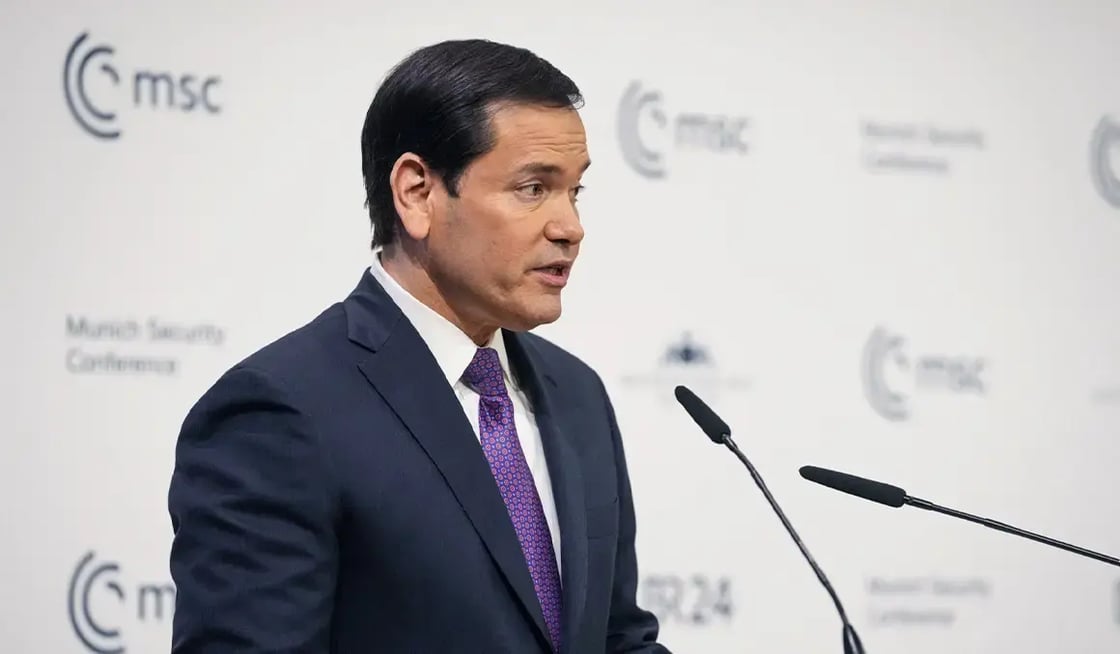
Marco Rubio's speech in Munich matters because it names this reality in a place that has spent decades trying to forget it. It matters because it challenges Americans to recover a sense of who we are, not just what we do. And it matters because cultural renewal, not technocratic management, is the real security issue of our time.
At CatholicVote, we believe this conversation cannot wait.
America 250 should not be a hollow celebration of power or prosperity. It should be a moment of honest reflection, cultural repentance, and renewal rooted in the truths that gave birth to our nation in the first place.
Cut flowers may look beautiful for a while. But only living roots can sustain a civilization.
Go forward bravely,




No comments:
Post a Comment