Every week, I answer a question from Monday's Act Four Live chat in the Wednesday edition of this newsletter. You can read the transcript of the March 12 chat here and submit...
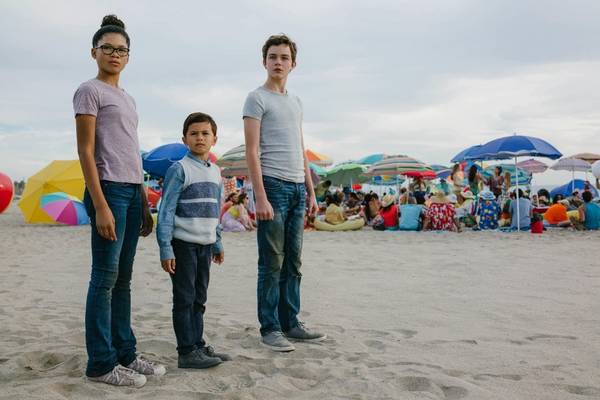
| |  | | | | Alyssa Rosenberg on culture and politics | | | | | | Storm Reid is Meg Murry, Deric McCabe is Charles Wallace Murry, and Levi Miller is Calvin O'Keefe in "A Wrinkle In Time." (Atsushi Nishijima/Walt Disney Pictures) | Every week, I answer a question from Monday’s Act Four Live chat in the Wednesday edition of this newsletter. You can read the transcript of the March 12 chat here and submit questions for the March 19 chat here. This week, a reader wonders whether some books are simply unfilmable. | | When I first saw the trailer for the movie [version of “A Wrinkle In Time"] a few months ago, I thought “Hmmm, that’s not how I remember the book.” So I reread the book and honestly couldn’t imagine how it could be filmed. Maybe it’s proof that not every book is meant to be on the big screen? | | As I wrote in my review of Ava DuVernay’s adaptation of Madleine L’Engle’s classic, “ ‘A Wrinkle in Time’ depicts wonders that L’Engle often sketches in such a way that readers are invited to fill in the details in their own minds.” That poses two very different filming challenges. First, how are you supposed to depict things like a character who appears as a shimmer and a pair of glasses floating in thin air? And second, how are you supposed to do it in a way that satisfies generations of viewers who have been filling in those details in their own heads for years? In the end, my colleague Christine Emba and I didn’t think that the sum of those choices worked — and in some cases, that they actively undermined the film’s chosen message. That’s not to say that “A Wrinkle In Time” is simply not meant to live on the big screen, just that it was always going to be a very heavy lift to get it there in a broadly satisfying fashion. | | | That said, I also recently had a moviegoing experience where I felt like the movie adaptation was much stronger and hit me much harder than the original book on which it was based. Jeff VanderMeer’s Southern Reach trilogy left me feeling puzzled. His portrait of scientists and intelligence officers trying to decipher the mysteries of an inexplicable phenomenon that seemed to be devouring more and more territory and making strange changes in the people and creatures it subsumed along the way felt like it was written with deliberate blank spots, inviting readers to fill in the images in our heads but not quite giving us enough to go on. But Alex Garland’s movie adaptation of the first book in the series, “Annihilation,” floored me:Hhis realization of VanderMeer’s ideas was more powerful and strange than I could have imagined. It was just stunningly beautiful and more deeply emotional to me than the novels were. | | Taken together, I think “A Wrinkle In Time” and “Annihilation” provide a useful reminder: It’s not so much that books or movies are superior to each other. It’s a matter of finding the right medium for the story you want to tell or the idea you want to express. | | | | | | | | | | | |





 Twitter
 Facebook


No comments:
Post a Comment