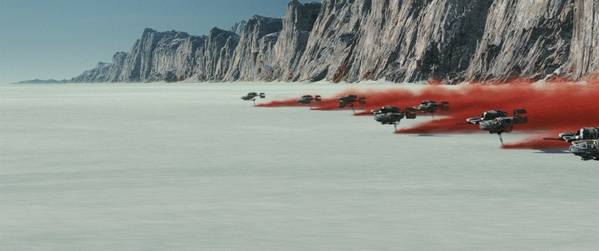
| Every week, I answer a question from the previous Monday’s Act Four Live chat in the Wednesday edition of this newsletter. You can read the transcript of the Dec. 11 chat here and submit questions for the Dec. 18 chat, the last of the year, here. And while you’re at it, check out our year-end video series, the 12 Days of Culture; we’ll be updating it every day through Dec. 22. This week, a reader wonders about why some pop culture takes off and becomes a lasting big deal, while other things flicker. What do you find to be the most reliable predictors of the shelf-life of a pop-culture phenomenon? Some flame out in a matter of months (or even weeks), while a few endure and become part of the culture at large. I don’t want to position myself as a sage of trends here, because I am but a humble and eccentric critic, championing what I love and explaining what I don’t. But I do think there’s one rule of thumb that is useful in determining whether something has the potential to take off and become a true part of the cultural canon. There are definitely highly specific works that can make it into the pantheon: I can see, for example, “Get Out,” which is highly resonant to this moment but also captured something in this moment perfectly, becoming that kind of movie. In general, though, I think that the works that become a very big deal are expansive and ambiguous enough that lots of people can see themselves in them, and that they can support multiple credible interpretations. Take something like “Gone With the Wind,” which, whatever you think about its depictions of race, the Civil War and Reconstruction, is a well-constructed epic story, both in Margaret Mitchell’s original novel and in Victor Fleming’s film adaptation. There are a lot of characters with which to identify, and a lot of ways with which to identify with them. You can make the case that it’s a brief for a lost culture, or an anti-romance that is all about breaking the spell of that culture. It’s a big, dense, roomy text, and a lot of people can find a home and meaning it in. The same is true with a lot of our iconic pop culture. There are many ways to love “Star Wars,” or superheroes, or even the anti-hero dramas that have been such an important staple of television for the past two decades. Sometimes, the ambiguities and multiple plausible ways to understand these stories may speak to weaknesses of storytelling nerve or execution. But that capaciousness is generally a good indicator of whether something will endure. |






 Twitter
 Facebook


No comments:
Post a Comment