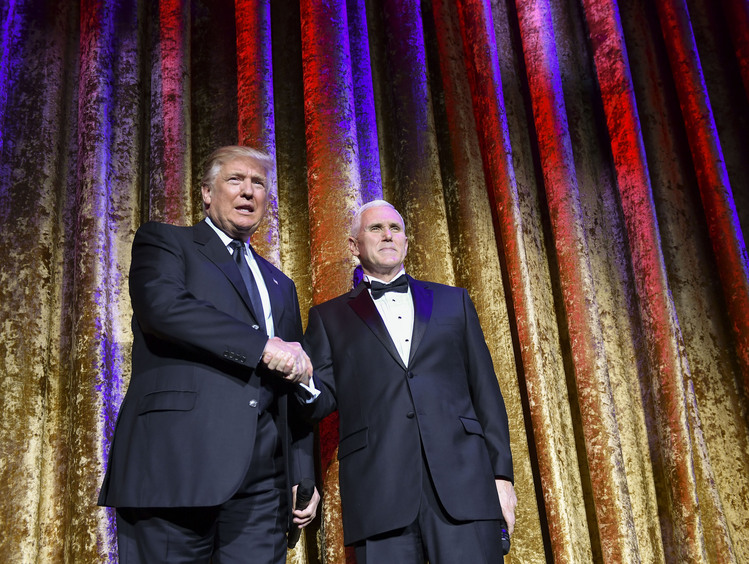
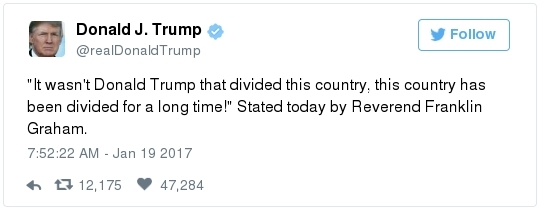
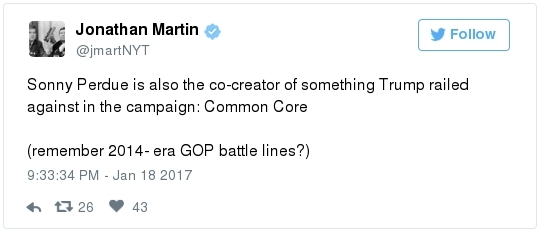
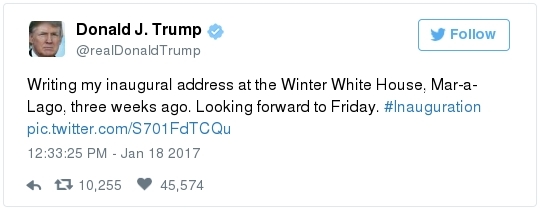
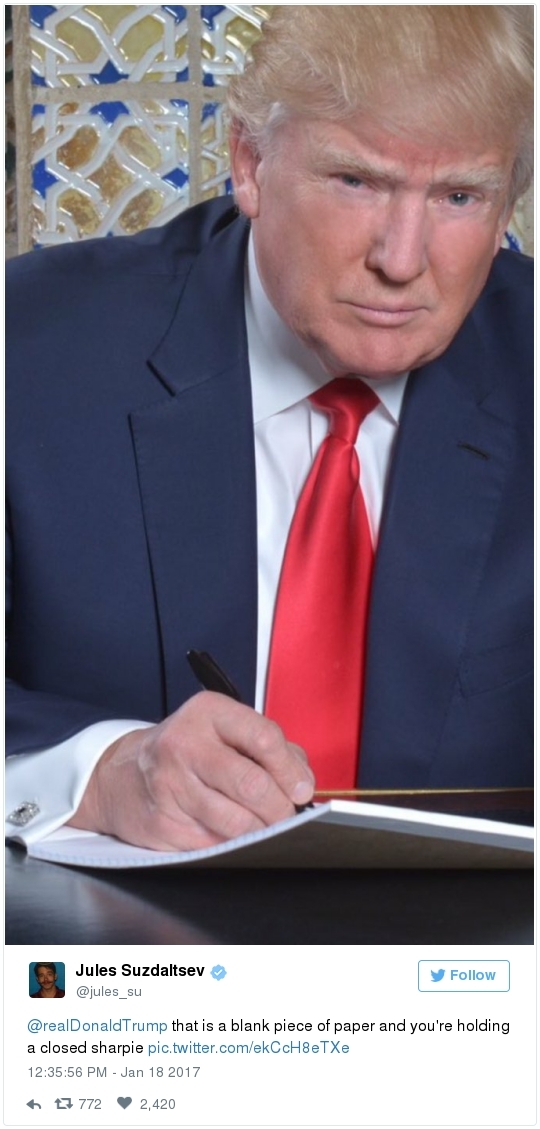
 Donald Trump and Mike Pence attend a pre-inaugural dinner in Washington. (Ricky Carioti/The Washington Post)  | | | BY JAMES HOHMANN | | with Breanne Deppisch | | | THE BIG IDEA: Donald Trump's advisers and surrogates keep saying that tomorrow will be the day when he finally – finally! – pivots to become presidential. Tom Barrack, a longtime friend and business partner of Trump who is running the Presidential Inaugural Committee, said tomorrow's big speech will focus on "the issues that unite us" and declared that the divisions from the campaign will "vanish." "What you'll hear in his address is a switch from candidate to president," he said on "CBS This Morning." Incoming White House press secretary Sean Spicer said Trump will emphasize the country's "shared values." "He wants to continue to talk about issues and areas where he can unite the country (and) bring it together," Spicer said. These proclamations come even as the president-elect himself continues to attack people like John Lewis and Jim Acosta. Speaking off the cuff for 25 minutes last night at a dinner to honor Mike Pence, Trump also couldn't help but take shots at "the haters" and the "Never Trump" movement: "They're really right now on a respirator," he told a crowd of 500. "They're pretty much gone." Trump also roasted several leading Republicans, who are now allies, during his appearance. He said picking Pence was one of the best decisions he's ever made but then needled his running mate for endorsing Ted Cruz before Indiana's GOP primary, which he said Pence had only done because "every donor he had" pushed him to. On Cruz, the president-elect added: "He was a little late to the plate, but that's O.K." Of Scott Walker, he declared: "He can be nasty, that Scott Walker." (An attendee sent an audio file of the speech to Maggie Haberman at the New York Times.) Then this morning Trump seemed to, as he has before, put the onus on others for unifying the country: -- This raises an important question: Does it really matter if Trump delivers a scripted call for unity tomorrow – and then attacks his "haters" on Twitter later in the day? It's very easy to image that the new president will deliver a speech that gets well reviewed by TV talking heads, only to step on whatever goodwill he generates by tweeting either tomorrow afternoon or Saturday morning to complain about the coverage of his coronation, to criticize those protesting against him or to whine about some perceived slight. That, then, will be what dominates the conversation. -- Trump did practice run-throughs at Trump Tower yesterday and the day before of his speech, standing behind a podium and reading from a teleprompter. He plans to do so again today. The transition team has gone out of its way to stress that the man himself is writing the speech, that it will be his words and thoughts. Trump even tweeted a picture of himself supposedly at work on the speech yesterday, though to some it appeared that he was holding a blank notepad and a closed sharpie. "The level of personal involvement is unbelievable," Spicer told reporters during his daily gaggle. "It is a Trump draft. It is written by him. It is edited by him. It is updated by him. So when he goes down and practices … he's his own editor. He's adding something here, moving something here (and) tweaking something there."  | | A short history of the inauguration | Here are 13 things we'll be watching for as he addresses the nation from the west front of the Capitol a little after noon tomorrow: Will he speak to the country or his base? Presidents don't typically use inaugural addresses to gloat, but Trump is not typical. He has, however, shown once before that he's capable of extending an olive branch. Trump promised on election night to be a president for "all Republicans and Democrats and independents." "It's time for America to bind the wounds of division," he said during the wee hours of Nov. 9. "I pledge to every citizen of our land that I will be president for all Americans, and this is so important to me." What does he say about Obama, who will be sitting there? Trump says he will open his speech by thanking Barack Obama for being so helpful during the transition. "The first line is thanking everybody, all of the presidents, including, by the way, President Obama and Michelle, who have been absolutely nice," he told "Fox & Friends" yesterday. "Melania's spent time with Michelle, and it was great. And Ivanka the other day spoke to her. The conversation was going to be a quick conversation that lasted an hour. And they got along great. So I am just thanking President Obama, and I'm thanking his very lovely wife, because they have been so gracious." Does he mention the Clintons? Hillary and Bill will be sitting there, and you can bet that there will be a lot of network cutaway shots to see how the vanquished rivals are reacting to everything Trump says. Can Trump really avoid taking a dig at the lawmakers who are boycotting his inauguration? Even if he chooses to play the part of a statesman, he may want to at least indirectly touch on the subject of doubts about his legitimacy. That could manifest itself in the form of an olive branch – or a subtle dig at the no-shows. When George W. Bush took office in 2001, after a contentious recount and an election that was decided by the Supreme Court, he sought to reassure. "Civility is not a tactic or a sentiment," Bush said. "It is the determined choice of trust over cynicism, of community over chaos." E.J. Dionne recalls that line in his column today to express concern that Trump will not show any humility in his speech: "You might say that since Election Day, Trump has chosen cynicism over trust, and chaos over community. Far from calming the country down, Trump has reminded everyone who opposed him of why they saw him as utterly unfit for the presidency in the first place. … Whatever Trump may be, he is, for so many of his fellow citizens, legitimately terrifying. This is a terrible way to feel on a day that is supposed to observe, as John F. Kennedy said in his inaugural address 56 years ago, 'not a victory of party but a celebration of freedom.'" Abraham Lincoln's election set in motion the events that led to the Civil War, but in the face of secession, he used his 1861 inaugural to plead for unity. "Every living heart and hearthstone all over this broad land, will yet swell the chorus of the Union, when again touched, as surely they will be, by the better angels of our nature," he said. How will Trump talk about what it means to be "Make America Great Again"? Aides say he plans to explicitly invoke and then define the mantra that served as his campaign slogan, in addition to elaborating on the theme of "America First." Post columnist Michael Gerson, who helped craft Bush's speech 16 years ago, writes that "low expectations are the speechwriter's friend" and offers suggestions for how Trump might usher in a period of healing: "He must define 'greatness,' not as a past condition but as a current mission. Mere nostalgia is the idealization of a time that many Americans — including women and minorities — find less than idyllic. For his speech to succeed, Trump requires not just a fabled past, but a promised land. There is nothing inherently divisive about the ideal of national greatness. And there are aspirational ways to put many of Trump's themes." Gerson concludes by suggesting some language that Trump might use in this vein, if he truly wants to be unifying. (Read it here.) How specific does Trump get on policy? Inaugural addresses are not like state of the unions. They're not meant for laundry lists. But that doesn't mean Trump won't reiterate his commitments to repeal Obamacare, build the wall, invest in infrastructure, reform the tax code, defeat ISIS, etc. "He wants to talk about his vision," Spicer said yesterday. Trump has said that he's looking to the inaugural addresses of Ronald Reagan in 1981 and John F. Kennedy in 1961 for inspiration. He is enamored with Reagan's style and remembers being inspired by Kennedy's call for the nation to mobilize the country to get a man on the moon by the end of the decade. "Both are big picture speeches that really captured the country's imagination and weren't necessarily about policy," said The Post's Robert Costa, who spoke with Trump by phone over the weekend.  | | What to expect from Donald Trump's inaugural address | Will Trump use the same kind of dark language he did at the RNC? Asked his expectations for Trump's speech yesterday, Mitch McConnell cited Reagan's 1981 address. "He certainly pointed out what he thought were the deficiencies in the country and my recollection was that he did it in a way that was not too demeaning to the people he was replacing," the Senate majority leader told USA Today. "He painted a kind of optimistic picture about what America could be in the future. It's OK to state the complaints, but I'd like to see an uplifting and optimistic portrayal about what America could be." How long will Trump speak? Spicer reiterated yesterday that he'll speak for only 20 minutes, "give or take." But I've also heard that the speech has grown longer as more people have gotten involved and suggested ideas or lines to work in that Trump likes. Trump wants to keep it as tight and crisp as possible. He doesn't want anyone to say it's boring afterwards, and he thinks it will be more powerful if it is more concise. As he tweeted in 2009, "Keep it fast, short and direct - whatever it is." Presidential biographer Doug Brinkley regaled Trump with amusing stories about previous inaugurations during a lunch at Mar-a-Lago three days after Christmas. "We talked about … how William Henry Harrison caught pneumonia after giving too long of an inaugural speech," Brinkley said afterwards. (Harrison spoke for 105 minutes and died a month after being sworn.) No matter what, Trump's speech will not be as short as George Washington's second inaugural, which was only 135 words. Will he go off script? How long the speech runs depends in part on whether Trump ad-libs. He has shown the ability to be self-disciplined when reading off a teleprompter. At the RNC, he ignored demonstrators and hecklers as they got pulled out of the Quicken Loans arena. Other times, he cannot help himself. I recall this passage from a Jenna Johnson story in March, when Trump spoke to the AIPAC conference: "Trump's prepared remarks, which were posted on his campaign website on Monday evening, are mostly written as he speaks, with a heavy dose of exclamation points and em dashes. But he deviated here and there, repeating some words for emphasis and several times adding 'believe me.' When he mentioned his book, 'The Art of the Deal,' he rattled on unscripted about its greatness, and when he mentioned that President Obama will soon be out of office, he added a curt: 'Yay,' prompting laughter and applause from the audience as he smirked." How formal will his language be? He's our first Twitter president, accustomed to speaking in 140-character staccato bursts. He can ramble, for sure, but he also speaks in short and simple declarative sentences. It would be off-brand if Trump talks like someone who he is not. Will he make any categorically false statements? Fact checkers will be watching closely, but this is a rare speech in which he can speak broadly enough to avoid running afoul of them. On the other hand, he might try to claim that he has attracted the biggest crowd ever, which he won't, or declare that he won one of the biggest Electoral College victories in U.S. history, which he didn't. How self-involved is the speech? Does he still think "I alone can fix it," or will he call for a shared sense of national purpose? Many presidents speak in terms of "we," not I. That's hard for Trump. What will be the line from Trump's speech that someday gets etched in stone? That's what every speechwriter who works on one of these thinks about. Trump doesn't use soaring language. But he's proved himself to be a master of branding. Just like he knows which of his tweets will break through on cable, he'll have a better sense than any of his advisers about what's going to be most memorable from the prepared text. Examples of unforgettable lines from past inaugural addresses: "In this present crisis, government is not the solution to our problem. Government is the problem," Reagan said. "My fellow Americans, ask not what your country can do for you. Ask what you can do for your country," Kennedy said. "The only thing we have to fear is fear itself," Franklin Roosevelt said. 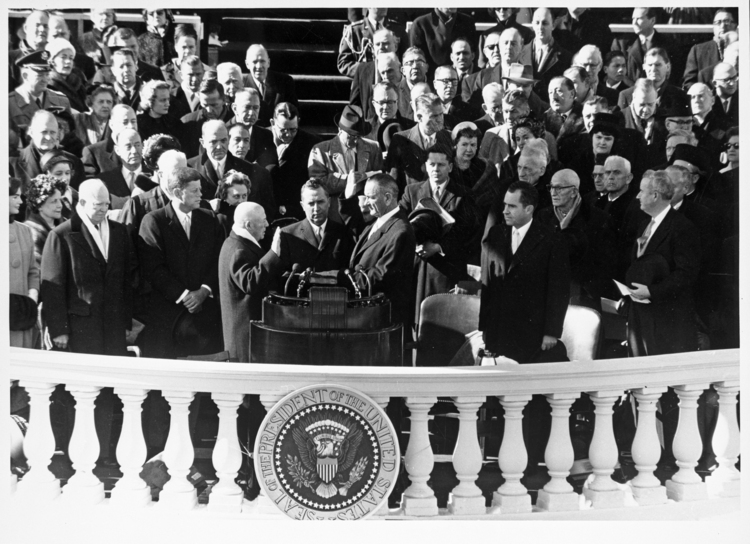 Sam Rayburn swears in Lyndon Johnson as vice president in 1961, as Dwight Eisenhower and John F. Kennedy watch from the left. Outgoing Vice President Richard M. Nixon, who lost that year, is on the right. (US Army) -- Trump modeled his Republican convention speech off Richard Nixon's, and Doyle McManus argues in the Los Angeles Times that Nixon's 1969 inaugural is actually the one most likely to be useful to Trump, because Nixon's circumstances were most similar to his: "Nixon won a three-way race with only 43% of the popular vote (less than Trump's 46%), and was seeking to lead a country bitterly divided over racial tension and the Vietnam War. He decided that what the country wanted was fellowship, not division, and on Inauguration Day in 1969, he delivered a speech that was both generous and graceful — words not often attached to the 37th president." The most memorable quote from Nixon's inaugural: "When we listen to the better angels of our nature, we find that they celebrate the simple things, the basic things, such as goodness, decency, love, kindness. To lower our voices would be a simple thing. In these difficult years, America has suffered from a fever of words; from inflated rhetoric that promises more than it can deliver; from angry rhetoric that fans discontents into hatreds; from bombastic rhetoric that postures instead of persuading. We cannot learn from one another until we stop shouting at one another." John A. Farrell, author of a forthcoming biography called "Nixon: The Life," tells McManus that the speech launched his presidency on a wave of relative good feelings. "He made a serious attempt to cast himself as a unifier," Farrell said. "It did bring him a honeymoon." RN, like DJT, was also known as a brawler when he took office. But, as McManus concludes, "Even so, that New Trump may not last. The New Nixon didn't." WHILE YOU WERE SLEEPING: 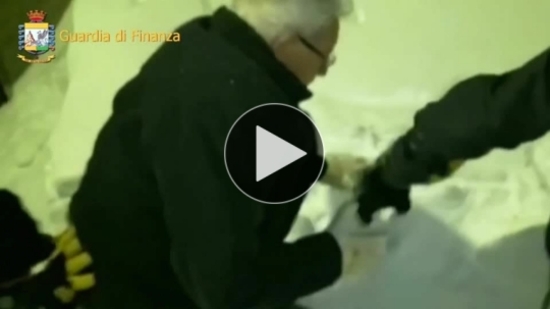 | | Rescuers save survivors of Italy avalanche | -- An earthquake-triggered avalanche buried a hotel in central Italy, trapping at least 30 people, including children, and prompting fears that "many" were dead. "Deep snow in the central Abruzzo region — which was also battered by major quakes last summer — slowed efforts to reach the Hotel Rigopiano, located off a hairpin-path alpine road at about 4,000 feet," Stefano Pitrelli, Paul Schemm and Brian Murphy report. "Some rescuers used skis, and others were dropped by helicopter after daybreak. … Images from the scene showed hallways choked with snow, which also punched into the hotel lobby and buried tall peaked roofs." Plaintive texts were sent earlier to emergency numbers by those trapped, with one couple saying they were "dying of cold." At least two have been hospitalized for hypothermia. Still, some rescuers described only silence on Thursday as they finally gained access to the resort and struggled to clear out the tightly-packed snow. -- Newly-released CIA documents expose a bitter internal feud over the qualifications and ethics of two former military psychologists who led the interrogation program, and pushed the agency to adopt methods were widely condemned as torture. Greg Miller reports: "A series of internal emails reveal that the CIA's own medical and psychological personnel expressed deep concern about an arrangement that put two outside contractors in charge of subjecting detainees to brutal measures … then also evaluating whether those methods were working or causing lasting harm. The records reveal that internal opposition to the agency's reliance on the two men was more extensive and intense than has been previously disclosed. More than 13 years after those emails were sent — and eight since the program was dismantled — the controversy has yet to fully subside." 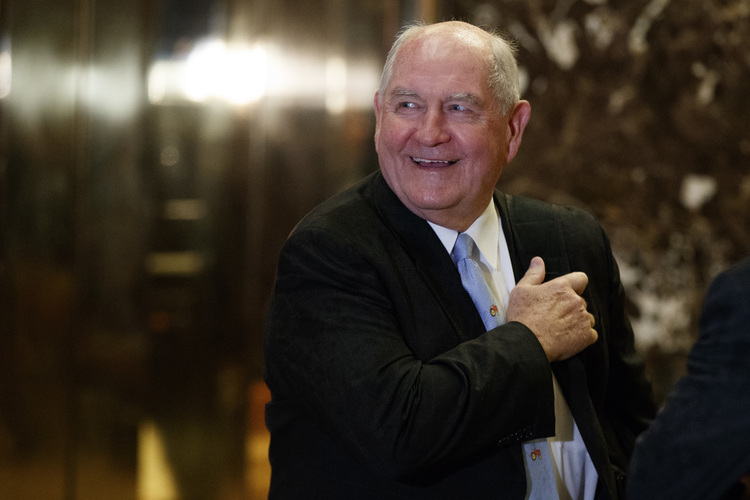 Sonny Perdue waits for an elevator at Trump Tower. (Evan Vucci/AP) -- Trump tapped former Georgia governor Sonny Perdue to lead the Department of Agriculture, the only cabinet seat that had remained unfilled. From Chris Mooney and John Wagner: "Perdue, a former Democrat who switched to the Republican Party before governing Georgia for two terms from 2003 to 2011, has a strong agricultural background, having grown up on a farm and earned a doctorate in veterinary medicine. As governor of Georgia he also took conservative stances on immigration and voting rights and drew national headlines for holding a public vigil to pray for rain in 2007 amidst a crippling drought." -- The Perdue announcement means that Trump will be the first president in three decades (since Ronald Reagan) to not have a Hispanic cabinet secretary. (Ed O'Keefe has more on the new administration's lacking diversity.) 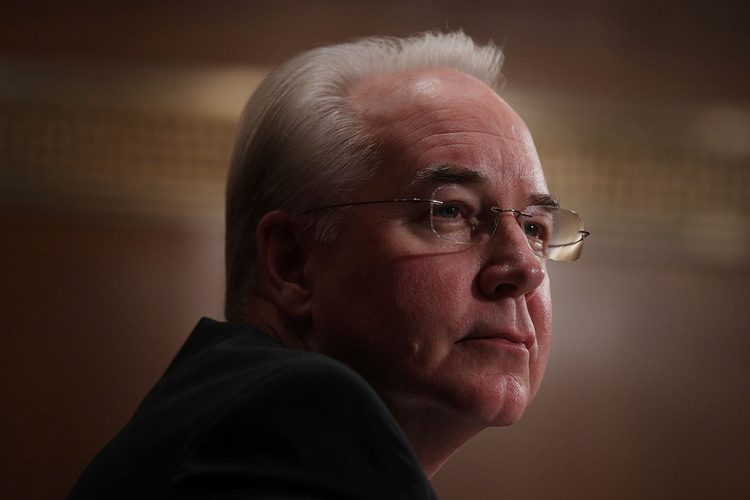 Health and Human Services Secretary Nominee Tom Price testified yesterday. (Alex Wong/Getty Images) -- Three of Trump's other cabinet nominees came under growing fire yesterday for serious ethical lapses. Karen Tumulty, John Wagner and Ed O'Keefe report: "The most serious concerns surround personal investments by ... Tom Price in health-care firms that benefited from legislation that he was pushing at the time. Additionally, Rep. Mick Mulvaney, Trump's choice to head the Office of Management and Budget, has acknowledged during his vetting process that he failed to pay more than $15,000 in state and federal employment taxes for a household employee. And Commerce Department nominee Wilbur Ross revealed that one of the 'dozen or so' housekeepers he has hired since 2009 was undocumented, which he said he discovered only recently. The employee was fired as a result, he added." "All of those are the kinds of problems that have torpedoed nominees in the past. But it is far from certain — or even likely — that any of Trump's nominees will buckle under the political pressure. That is in part because the president-elect himself has broken so many norms — notably, by flouting the convention of major-party presidential candidates making their tax returns public and by refusing to sever himself from his financial interests." Critics say that Trump's actions and those of his nominees prove that the incoming administration, despite promising to "drain the swamp," has instead ushered a new, lower set of standards into Washington. Senate Minority Leader Chuck Schumer dubbed it the "swamp Cabinet." -- House Oversight Committee Chairman Jason Chaffetz has denied a request from federal ethics watchdog Walter Shaub Jr. for a public meeting to hear lawmakers' grievances against him for criticizing Trump – but has also backed down on calling him to testify in a closed-door interview that would be "similar to a deposition," Lisa Rein reports. The two are now slated to meet Monday, along with top panel Democrat Elijah Cummings. -- Vincent Viola, the billionaire Wall Street trader tapped by Trump to be the secretary of the Army, was accused in August of punching a concession-stand worker at a high-end New York racehorse auction. New York Times' Michael S. Schmidt reports: "Police officers did not witness the episode. When officers arrived at the scene, however, the concessions worker had a 'swollen bloody lip' and said that Mr. Viola had punched him in the face … Mr. Viola, 60, a retired Army Ranger who owns the Florida Panthers hockey team, told the police that the man had pushed his wife as she tried to enter a restricted area to get water for a woman who had fainted, the report said. The concessions worker, whose name is redacted from the report, told officers that he did not push Mr. Viola's wife." Ultimately, both men declined to press charges. "Mr. Viola loves his wife and regrets the incident," a spokesman said in response to questions about the incident. -- Whistleblowers connected to a California mortgage lender once run by Trump's Treasury secretary nominee Steven Mnuchin have accused the bank of mishandling more than 1,000 applications for loan modifications during his time at the helm -- potentially costing many borrowers their homes. (Ylan Q. Mui) -- The contentious confirmation hearing for Education Secretary nominee Betsy DeVos only served to deepen concerns among civil rights advocates that she will ignore or dismiss the Education Department's role as "chief enforcer" of the country's laws in schools. "She was very clearly making no commitment to enforcing federal laws, and that's disqualifying. That's an unwillingness to do the job she has applied for," said Liz King of the Leadership Conference on Civil and Human Rights, which represents 200 groups. (Emma Brown, Moriah Balingit and Nick Anderson) 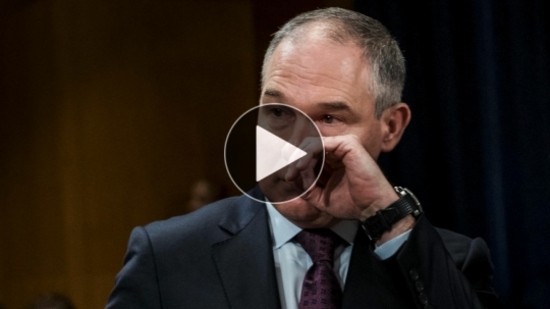 | | Key moments from Scott Pruitt's confirmation hearing | -- Oklahoma attorney general Scott Pruitt, tapped to lead the EPA, declined to say whether he will recuse himself from the half-dozen pending lawsuits that he has brought against the agency now that he's on the other side. Elise Viebeck reports: "'If directed to do so, I will do so,' Pruitt said, indicating he would follow the advice of ethics advisers on a case-by-case basis. On climate change, Pruitt said 'science tells us the climate is changing,' but said it's open 'to debate and dialogue' how much human activity is contributing to the changes. Democrats were dismayed by both answers." 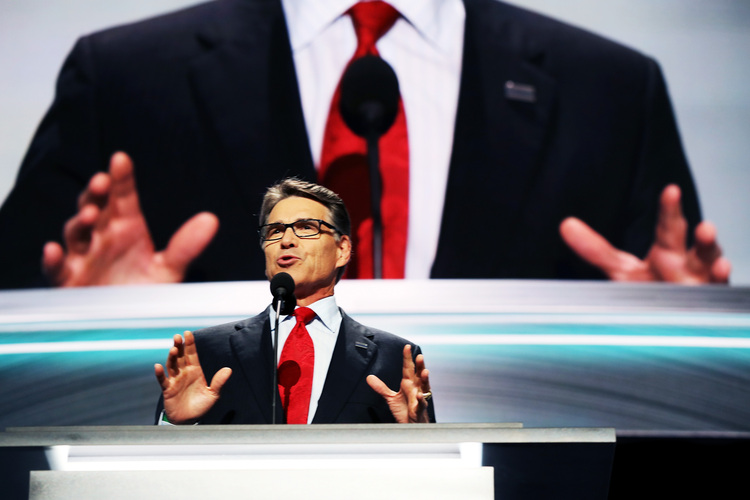 Rick Perry speaks at the RNC in Cleveland. (Joe Raedle/Getty) -- Speaking of the cabinet: The New York Times reports that Rick Perry didn't understand what the Department of Energy actually does when he agreed to lead it. From Coral Davenport and David E. Sanger: When Trump offered Perry the job of energy secretary five weeks ago, Perry gladly accepted, believing he was taking on a role as a global ambassador for the American oil and gas industry that he had long championed in his home state. "In the days after, Mr. Perry, the former Texas governor, discovered that he would be no such thing — that in fact, if confirmed by the Senate, he would become the steward of a vast national security complex he knew almost nothing about, caring for the most fearsome weapons on the planet, the United States' nuclear arsenal. Two-thirds of the agency's annual $30 billion budget is devoted to maintaining, refurbishing and keeping safe the nation's nuclear stockpile; thwarting nuclear proliferation; cleaning up and rebuilding an aging constellation of nuclear production facilities; and overseeing national laboratories that are considered the crown jewels of government science." Perry will take the reins from from Ernest Moniz, former chairman of the MIT physics department and director of the linear accelerator at MIT's Laboratory for Nuclear Science. Before Moniz, the job belonged to Nobel Prize-winning physicist Steven Chu. Key quote, from former Perry adviser and GOP energy lobbyist Michael McKenna: "If you asked him on that first day he said yes, he would have said, 'I want to be an advocate for energy.' If you asked him now, he'd say, 'I'm serious about the challenges facing the nuclear complex.' It's been a learning curve." For your radar: Perry goes before the Senate Committee on Energy and Natural Resources today at 10 a.m. 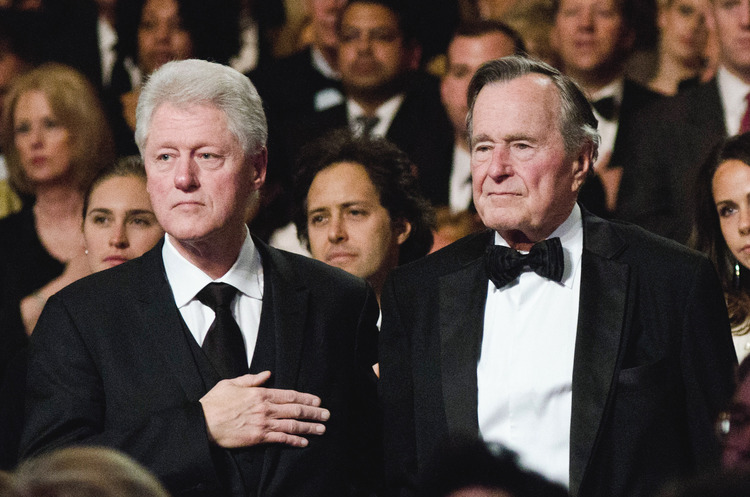 George H.W. Bush and Bill Clinton at a Kennedy Center event a few years ago. (Kris Connor/Getty) GET SMART FAST: - Former president George H.W. Bush remains under observation at an intensive care unit in Houston, after being hospitalized for an acute respiratory problem stemming from pneumonia. Staffers said the 92-year-old is"stable and resting comfortably," but gave no details on how long he will remain. Former first lady Barbara Bush was also admitted as a "precaution." (Fred Barbash and Brian Murphy)
- Rep. Tulsi Gabbard (D-Hawaii), who has charged the Obama administration with "funneling money" to ISIS and al-Qaeda-linked groups in Syria, sparked controversy after making an unannounced trip to the country this week. Aides described the trip as a "fact-finding mission" to work towards ending the years-long conflic. They would not disclose whether Gabbard met with Assad during her trip or say who paid. They promise to release more details after she returns. (Karen DeYoung)
- A Republican legislative aide in Maryland who was behind a fake news site that accused Clinton of election-rigging was fired "on the spot," after his role in the scandal was made public. His ousting comes after the 23-year-old talked openly about what he'd done with the New York Times. (Ovetta Wiggins)
- Russia and Turkey carried out their first joint airstrikes in Syria, bombing ISIS positions in and around the town of al-Bab, where U.S. jets also struck militant targets this week. The operation reflects Ankara's ongoing attempts to juggle relations with Moscow and Washington at the dawn of the new administration. (Karen DeYoung)
- A South Korean court ruled that there is insufficient evidence to arrest de facto Samsung chairman Lee Jae-yong for his alleged role in a corruption scandal that has riveted the country and led to the impeachment of President Park Geun-hye. The decision is a blow to prosecutors, who have accused him of bribery, embezzlement and perjury -- although the court decided only that Lee did not need to be detained, not that the case had no merit. (Anna Fifield)
- A suicide truck bomb killed at least 60 people, including army personnel, in northern Mali. An al-Qaeda affiliate claimed responsibility for the attack, whic comes as the country struggles to implement a peace pact between Mali's government and multiple militant factions. (Kevin Sieff)
- Iraqi forces pushed deeper into former ISIS-held areas of Mosul, tightening their grip on eastern parts of the city but still facing a looming fight against the militants across the Tigris River. It's the latest victory in a months-long offensive to resume control of the strategic northern city. (Peter Holley)
- Gambian president Yahya Jammeh refused to step down from his post on Thursday – 23 years after assuming office, and more than a month after he was formally ousted by the people. Nearby states have begun threatening military intervention, and residents have fled in anticipation of the bloodshed, but still, he's refusing to cede his post. (Kevin Sieff)
- Bomb threats were called in to more than 30 Jewish organizations across the country on Wednesday, prompting evacuations and a slew of federal investigations. Officials said they are looking into possible civil rights violations in connection to the calls, which come just one week after a host of similar threats. (Justin Wm. Moyer )
- JPMorgan agreed to pay $55 million to settle a federal discrimination lawsuit, over allegations that it charged minority borrowers higher mortgage interest rates and fees than white customers for years. (Renae Merle)
- The drugmaker Mallinckrodt agreed to pay $100 million to settle FTC and state charges related to anti-competitive behavior to preserve a monopoly on lifesaving infantile spasm medicine. (Carolyn Y. Johnson)
- Three utility workers in Florida went underground to investigate some pesky, unsettled pavement – and descended to their deaths. They were hit by poisonous gas created by years of rotted vegetation, and the fumes were so noxious that even a trained firefighter who attempted to come to their rescue became unconscious within seconds. (Samantha Schmidt)
- A federal police officer accidently shot himself in the leg while manning a traffic control booth on Pennsylvania Avenue, just four blocks from the White House. Officials said the man's pistol discharged "while it was in his holster," but he's in good condition. (Peter Hermann)
- Six sheriff's deputies in Ohio are accused of beating up a mentally-ill veteran with PTSD who was "annoying" them, putting him into a month-long coma and confining him to a wheelchair for life. (Cleve R. Wootson Jr.)
- Jeff Bagwell, Tim Raines and Ivan Rodriguez were elected to the Baseball Hall of Fame. (Dave Sheinin)
- The National Zoo said it is preparing for the departure of its giant female panda cub, Bao Bao, who will be sent back to China this year. It's part of a long-term breeding agreement struck with the China Wildlife Conservation Association, but the beloved panda – and her love of snow -- are sure to be missed in Washington. Zoo officials said they will be announcing a series of goodbye events. (Michael E. Ruane)
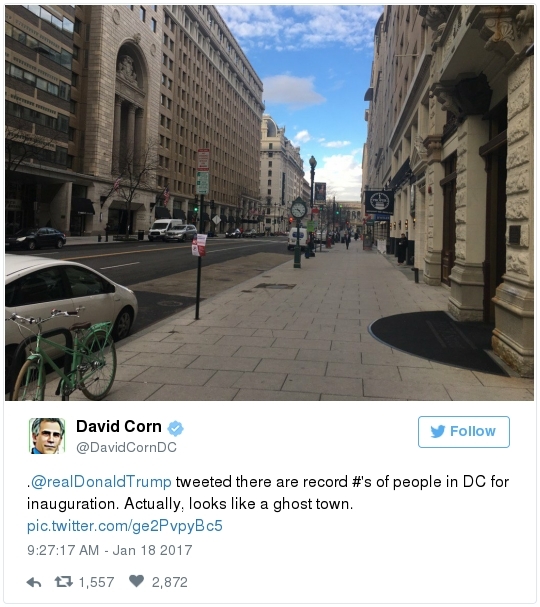
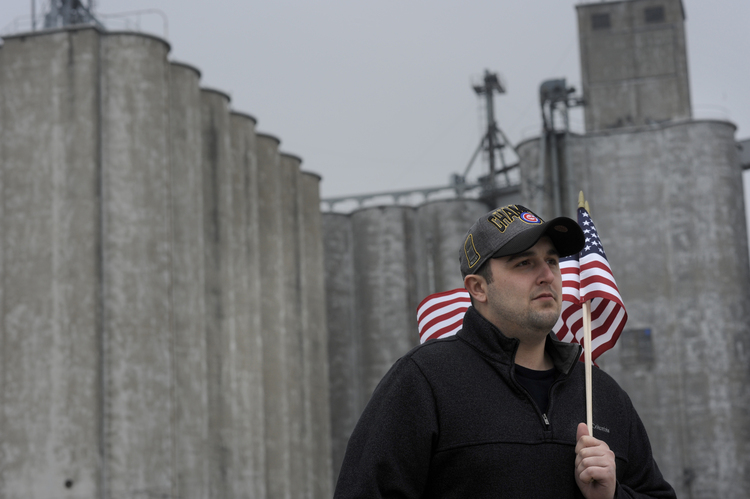 Shane Bouvet stands before a set of grain silos in his hometown. (Photo by David Zalaznik for The Washington Post) THE INAUGURATION IS TOMORROW: -- Trump is the most unpopular president-elect in the history of polling. But, but, but: It's really important to remember how many millions of die-hard supporters he still has. These loyalists, many from rural America, have faith that he actually will make America great again. They remain dazzled and want a front-row seat for Trump's ascension to the most powerful office in the world. Here is a touching story about one of them that's worth your time: "In donated shoes and suit, a Trump supporter comes to Washington," by Justin Jouvenal in Stonington, Illinois: "Shane Bouvet pointed to the towering grain silos near his parents' home in this 'little speck in America' and explained how he used to climb them to peer beyond the town's tight confines. Bouvet, 24, knew then he wanted a life outside, but the prospects for the former night watchman and single father living paycheck to paycheck seemed dim before he improbably rose from delivering signs for Trump's campaign to becoming its volunteer social media coordinator in Illinois. His work earned him an invitation to an inaugural ball near Washington." Bouvet piled into a car with friends on Wednesday and began the drive to Washington to stay at a Days Inn in Arlington: "This is pretty much the biggest thing I've done in my life," Bouvet said. "I don't get out much."  | | Protesters throw dance party in Mike Pence's new neighborhood | -- Two hundred protesters shimmied and sashayed to Mike Pence's new D.C. home last night as part of a "Queer Dance Party" to protest what they consider the incoming vice preisdent's anti-gay views. Amy Joyce and Victoria St. Martin set the scene: "Throwing glitter and waving glow sticks and rainbow flags, the protesters gathered at Western Avenue and Tennyson Street NW and danced in the street. By 8 p.m. many in the crowd swayed in unison and sang along as Whitney Houston's 'I Wanna Dance With Somebody' blared from a pair of two-foot-tall speakers. Residents from the normally quiet, leafy streets came out of their homes to watch the display.' 'We want to send a strong message to Pence that we're a united queer community," said [one organizer], above the pulsing sounds of Michael Jackson and Madonna. "We've always stood united. There's always space to dance.'" -- Trump's inauguration is shaping up to be Washington's smallest in years. Maura Judkis reports: "Every four years, the city comes alive with a flurry of unofficial celebrations, ranging from chummy state-society affairs to exclusive corporate shindigs to cash-bar mixers open to anyone. But although it's hard to predict the size of the crowds that will greet [Trump] at his public events this week, it seems increasingly clear that the after-hours revelry will be markedly muted. Not only is Trump hosting only three official balls — far fewer than his predecessors at their first inaugurals — but the spillover festivities appear smaller and fewer. Several of the city's great halls are going unrented. Far fewer big-name celebrities are headed to town. And while many events are reportedly sold out, others are still looking to fill their rooms." -- The weather forecast for Inauguration Day is dreary. If you're heading downtown for the swearing-in ceremony or the parade, the Capital Weather Gang suggests wearing warm clothes, a waterproof outer layer, and a poncho rather than an umbrella – the latter are prohibited by the Secret Service and will generally be more of a nuisance on the crowded National Mall. (Saturday will be 10 degrees warmer and there's less chance of a drizzle.) -- The Women's March on Washington just released its list of speakers, which includes everyone from civil rights era icon Angela Davis to liberal activist Michael Moore and D.C. Mayor Muriel Bowser. Check it out here. -- No matter whether you're coming Friday or Saturday, expect gridlock. We made an eleventh-hour tip sheet of everything commuters and tourists need to know before planning their weekend travel. Check it out here. (If you're walking, give this guide a read.) 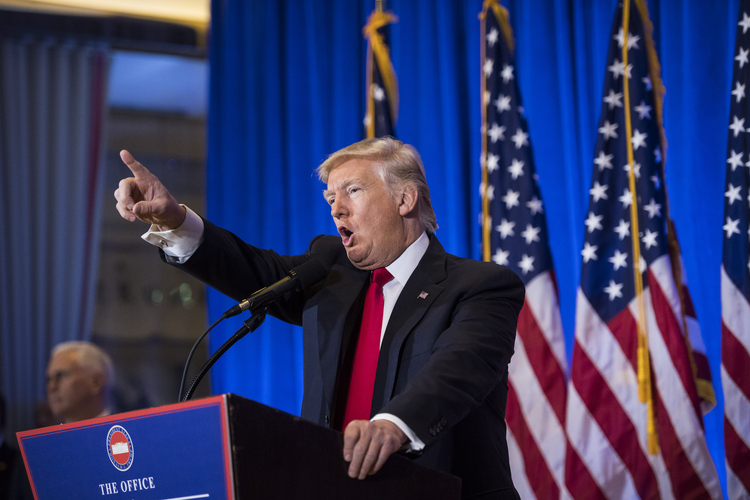 Trump holds a press conference last week. (Jabin Botsford/The Washington Post) THE TRUMP TAKEOVER: -- How will Trump spend his first day? "In rally after rally, and speech upon speech, he built a verbal skyscraper of campaign promises about what he would do on his first day in the White House," Ashley Parker writes. "Begin building a wall at the nation's southern border. End the 'war on coal.' Label China a currency manipulator. The list went on and on. But now, as Trump prepares to take the oath of office Friday, his Day One executive actions and policy plans are a closely held secret, another prop in the Donald Trump show waiting to be unveiled with his trademark flourish and fanfare. And, his aides are playing down how much will be done during that first day, while also sending conflicting signals about whether the real work of governing will begin Friday, when Trump officially becomes president, or Monday, his first full workday in the White House. "A speech Trump delivered in October in Gettysburg, Pa. … will serve as a blueprint for his initial policy prescriptions [according to aides]. There, in the shadow of the Civil War battlefield, Trump promised on his first day in office more than a dozen actions, ranging from the less likely — proposing a constitutional amendment imposing term limits on members of Congress — to the more plausible — withdrawing from and beginning to renegotiate key trade deals. Trump aides have yet to clarify, however, how many of his first moves will be actual executive actions that will take effect immediately and how many will be grand proclamations that may take time to fully implement." -- The Donald is trying to "put the bully back into the bully pulpit," Philip Rucker writes: "The Trump strategy is to change the behavior of corporations — not to mention the intelligence community and other creatures of Washington — through force of intimidation. [And] corporate America has quickly adapted to Trump's new posture. Fear permeates 'C-suites,' where executives are trying to come up with ways to please the incoming president and avoid his wrath …" "Trump understands that if you change the culture, the behavior follows," said Newt Gingrich. "He wants to create a Trumpian environment so that boards go into a meeting saying, 'No, we're not leaving the U.S.' "Trump is a modern-day [Teddy] Roosevelt, who from the White House in the 1900s demonized banks, railroads and other businesses he viewed as insufficiently nationalist. 'Roosevelt's bully pulpit was very ardently about going after companies and wealthy people that weren't putting America first …,' said [presidential historian Douglas Brinkley]. In the century since Roosevelt served, Brinkley said, no president has used the bully pulpit to strong-arm companies in such a relentless and aggressive manner — until Trump. 'Other presidents would show up at the Harley factory and say, 'This is made in America. Isn't that wonderful?'' Brinkley said. 'But they would never go into a mano-a-mano war about bringing jobs back to America, not since Theodore Roosevelt.'" -- Mike Pence said the GOP does NOT yet have bill to replace the Affordable Care Act, but that he has "seen a lot of great ideas" and that Trump's transition staff and Republican leaders are "getting very close" to having a replacement. From "It's being crafted right now," Pence told CNN. "We're getting very close. We expect to have that plan come forward in the early days of the administration." His remarks come just days after Trump told The Post in an interview that his health care replacement plan "is very much formulated down to the final strokes." He also sought to clarify Trump's promises of "insurance for everybody," saying it is really about "making insurance affordable for everyone." -- With Obama leaving, congressional Republicans have already begun moving to gut D.C. laws. Aaron C. Davis and Jenna Portnoy report: "Congressional Republicans are making an aggressive push to gut the District's progressive policies, introducing bills in recent days to repeal the heavily Democratic city's gun-control measures, undo its new law allowing physician-assisted suicide and ban the District from using local tax dollars to provide abortions for poor women. The bills have begun arriving on the eve of Obama's departure from the White House [and] … will soon be in the hands of [Trump]. … Conservative House members said they think that Trump will not impede the will of a newly emboldened Republican-led Congress. Democrats have regularly accused Republicans of using their oversight to impose their ideological will — and to score points with their constituents back home. "Given that Russia interfered with a national election and millions of Americans are about to lose their health-care coverage, it boggles the mind why Republicans think interfering in our local government is the best use of their time," (Mayor Muriel) Bowser spokesman Kevin Harris said. -- Politico's Michael Kruse asked a group of Trump biographers to offer predictions for how he will run the country. "They feel confident predicting that he will run the country much as he has run his company: For himself," Kruse synthesizes. - Tim O'Brien: "The whole thing has been a vanity show from the second he ran to the Republican Convention. I think we can expect to see the same on Inauguration Day. He's been unable to find a clean division between his own emotional needs and his own insecurities and simply being a healthy, strategically committed leader who wants to parse through good policy options."
- Michael D'Antonio: "[One] thing I think that we have overlooked as we see Trump trying to delegitimize others is what I suspect is a feeling he has inside that nothing he's ever achieved himself has ever been legitimate. And even his election was with almost 3 million fewer votes than his opponent. So he has this deep fear that he is himself not a legitimate president, and I think that's why he goes to such great lengths to delegitimize even the intelligence community."
- Gwenda Blair: "When he's awake at night, I don't think it's because he's awed or concerned about the responsibilities on his shoulders. It's because there's somebody he wants to get even with and how are you going to do it."
-- Trump followed through on his obligation to pay $25 million to settle the Trump University lawsuit, Politico's Josh Gerstein reports. The payment, transferred yesterday, will be put into escrow until a judge makes a decision on whether to approve the settlement, and a hearing on the deal is set for the end of March. -- Chris Christie claimed in a radio interview that he would have landed a top White House job if only his wife would have let him. The governor of New Jersey said he "would have" to have made a two-year commitment to serve in the administration. "He didn't offer me a job that I thought was exciting enough for me to leave the governorship. Now why is that hard to believe?" Christie told CBS Sports radio. "Mary Pat made really clear she wasn't coming to DC if I went." (CNN) 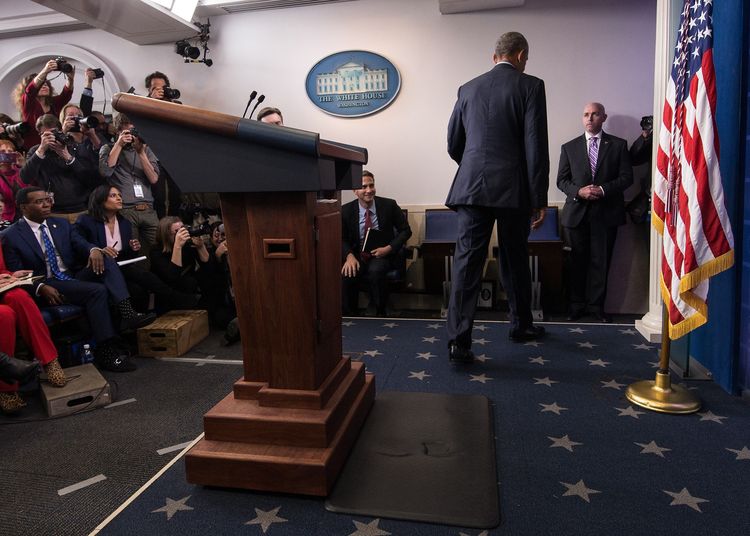 Barack Obama walks away at the end of his final press conference at the White House. (Nicholas Kamm/AFP/Getty Images) OBAMA'S FINAL DAYS: -- Obama held the final news conference of his presidency, using the occasion to defend some of his recent policy moves and foreshadow the future of his life in politics. David Nakamura and Juliet Eilperin report: Obama told reporters he does not expect to weigh in on day-to-day policy debates, but said he would speak out whenever he felt America's "core values" were threatened, listing examples such as voter suppression, stifling free speech or "rounding up" young undocumented immigrants. -- POTUS's final message as president sounded remarkably like his first, Greg Jaffe writes in an analysis of the presser: "'Hope in the face of difficulty,' he preached in a speech to the 2004 Democratic National Convention in Boston. 'Hope in the face of uncertainty. The audacity of hope … a belief that better days are ahead. That was the message that Obama returned to again and again in his final news conference as president. 'I believe in this country,' he said. 'I believe in the American people …' In his very first news conference as president in 2009, Obama described himself as 'the eternal optimist.' 'I think over time, people respond to civility and rational argument,' he said. 'I think that's what … people around America are looking for.' [But] in his final news conference, Obama chose to ignore the ample body of evidence that he may have been mistaken." -- The Obama administration imposed new privacy restrictions on the CIA designed to limit the use of information on Americans that is swept up during its investigations. The restrictions, announced just two days before Trump is sworn in as president, force the agency to purge personal data of Americans it comes across during investigations within five years. There was previously no such restriction in place. (Greg Miller) -- Obama appointed Senior Advisor Valerie Jarrett and National Security Advisor Susan Rice as Kennedy Center trustees this week, filling the last two vacancies on the arts center's prestigious governing board. Each of the 36 presidentially-appointed members serves a six-year, unpaid term. (Peggy McGlone) -- "Kids at Barack Obama Elementary have known only one president. Many fear the next." Theresa Vargas reports: "Overnight their world had shifted, and now the students at Barack Obama Elementary had a pressing question for principal Megan Ashworth: Would the name of their school change? For those who attend and live around the Prince George's County school named for the country's first African American president, the shift in power will not only evoke intense emotions — it will also cut at their identity. This is Obama territory, one of the nation's most affluent, majority-black communities, where residents speak of the 44th commander in chief as they would a relative. For eight years here, there has been a shared sense that no matter what happened, the man who occupied the White House cared about them. Now, that is about to change, and the trepidation about what Trump might do runs deep … 'I feel okay because I know God is always with me at all times,' a boy named Iyan wrote [in his journal]. 'But at the same time terrefied because Donald J. Trump can do anything.'" -- Behind Obama's decision to commute Chelsea Manning's sentence, by Missy Ryan, Sari Horwitz and Julie Tate: "From the moment a military judge handed down a 35-year prison term for Chelsea Manning in 2013, President Obama and some administration officials saw the sentence as excessive. 'Nuts,' said one person close to Obama. They said Manning … should be punished for her crime. But while Obama, a former law professor, was known for his tough stance on government leakers, he had also advocated for changing America's often harsh, inconsistent sentencing practices. On Wednesday, Obama addressed his decision …'Let's be clear: Chelsea Manning has served a tough prison sentence,' he said. [And] long before Manning's attorneys submitted a second clemency request in November, Obama had considered the notion of 'proportionate sentences' in evaluating the soldier's case, as he had in decisions to grant clemency to more than 1,300 drug offenders … In his decision to commute Manning's sentence, Obama knew he would face criticism ... 'But he felt strongly it was the right thing to do.'" MORE ON HOW THE THE WORLD IS ADJUSTING TO A PRESIDENT TRUMP: -- With the transatlantic relationship on the line, European leaders are trying to put a brave face on Trump's new world order. From Griff Witte, Michael Birnbaum and James McAuley: "They may hold the American president-elect in profound disdain, a feeling many haven't bothered to conceal. But through gritted teeth, they insist that the ties anchoring the globe since World War II will endure — if not with much warmth, then at least through the sort of transactional relations Trump can understand. That theory, however, will be put to the test as tweets and interviews turn into policy and action. Serious tensions have erupted between Europe and Washington before … But rarely have Europeans felt that fundamental values may be so deeply in opposition. 'It's where interests and values intersect where we're going to find problems,' said Robin Niblett, director of [a] London-based think tank … 'If our values stand for anything, it's open, democratic societies and open markets. If America moves away from those, that's pretty fundamental.'" -- NATO Secretary General Jens Stoltenberg pushed back hard against Trump's criticism of the Western military alliance as "obsolete," saying that the alliance is "constantly evolving" in the face of modern security threats, including terrorism: "There is strong bipartisan support in the United States for the U.S. commitment to NATO," Stoltenberg said during a roundtable with journalists. The pushback was the latest in an extraordinary public spat between the defense organization and the incoming leader of the free world just two days before he assumes office. (Michael Birnbaum) -- The FBI and five other law enforcement and intelligence agencies – including the CIA, NSA, and Justice Department – have collaborated for months in an investigation into Russian attempts to influence the election, including whether money from the Kremlin covertly aided Trump. McClatchy's Peter Stone and Greg Gordon report: "Investigators are examining how money may have moved from the Kremlin to covertly help Trump win, the two sources said. One of the allegations involves whether a system for routinely paying thousands of Russian-American pensioners may have been used to pay some email hackers in the United States or to supply money to intermediaries who would then pay the hackers … The working group is scrutinizing the activities of a few Americans who were affiliated with Trump's campaign or his business empire and of multiple individuals from Russia and other former Soviet nations who had similar connections, the sources said." Meanwhile, the "informal, inter-agency working group" began to explore possible interference last spring, "long before the FBI received information from a former British spy hired to develop politically damaging and unverified research about Trump." -- The Kremlin extended Edward Snowden's residency permit to let him stay until 2020, when he would be eligible to become a Russian citizen, now that Obama has definitively chosen not to pardon him. From Andrew Roth in Moscow: "With the inauguration of America's new law-and-order president set for Friday, the former acting director of the CIA wrote in an op-ed that returning Snowden to the United States, a point of conflict between the Kremlin and the Obama administration since 2013, would help cement a potentially fruitful personal relationship between Trump and Russian President Vladimir Putin. 'What better way for President Putin to cement the personal tie than to give the President-elect a high-profile gift — Snowden,' Michael Morell, the former CIA official, wrote in the Daily Cipher, an online publication focused on security. 'At the same time, what better way for President Putin to poke his finger in the eye of his adversary Barack Obama than to put Snowden on a plane at the very moment Mr. Obama is no longer president?' The release could recall the decision by Iran in 1981 to release dozens of American hostages after 444 days of captivity on the day that Ronald Reagan delivered his inaugural address as president, embarrassing his predecessor, Jimmy Carter, Morell wrote." -- Mitch McConnell made it clear he does not share Trump's warm feelings toward Russia or his skepticism about NATO, but the Kentucky Republican refused to criticize Trump's comments about John Lewis. In an interview with McClatchy yesterday, he previewed how he'll message around Trump: "What I intend to do is speak for myself, and not speak for the president-elect," the Senate Majority Leader said. Pressed on what he thought of the Lewis comments, McConnell said, "That's the same question you've asked me twice. . . . I don't have anything to say about it." Asked whether he remained concerned that Trump needs schooling on issues, McConnell asked his own question. "Why don't you ask me what my position is on things and you can draw your own conclusions?" he asked. He was more specific on Russia and NATO. "They're a big problem," he said of Russia. And NATO "is the most important military alliance in world history and is more important than it ever was."
 | | Key moments in the confirmation hearing of Nikki Haley for U.N. ambassador | -- South Carolina Gov. Nikki Haley deviated from Trump on several foreign policy issues during her confirmation hearing as ambassador to the United Nations, expressing skepticism about working with Russia, optimism about NATO, and "unequivocally" shooting the idea of a Muslim registry or ban, which Trump has never completely disavowed. (Anne Gearan and Sean Sullivan) -- Trump's national security team has gotten a slow start, the New York Times' Mark Landler reports: "The Obama administration has written 275 briefing papers for the incoming Trump administration: nearly 1,000 pages of classified material on North Korea's nuclear program, the military campaign against the Islamic State, tensions in the South China Sea, and every other kind of threat the new team could face in its first weeks in office. Nobody in the current administration knows whether anyone in the next has read any of it. Less than three days before President Obama turns the keys to the White House, and the nuclear codes, over to [Trump], Mr. Trump's transition staff has barely engaged with the National Security Council … [and] the chronic upheaval in Mr. Trump's transition, a delay in appointing senior National Security Council staff members, and a dearth of people with security clearances have deprived the Trump team of weeks of prep work on some of the most complex national security issues facing the country."  | | Key moments from Wilbur Ross's confirmation hearing | -- Conservative columnist George F. Will expresses serious concerns about some of Trump's cabinet picks in his column today: "As transitioning gives way to governing, Trump will continue to flabbergast. The past really is prologue, so we have been warned." He focuses on two examples: - "The Washington Examiner's Tim Carney reports that Trump's choice to be commerce secretary, Wilbur Ross, who was a registered Democrat until nine days into the transition, has praised China's central direction of its economy using five-year plans. Ross favors a U.S. 'industrial policy' whereby government would 'decide which industries are we going to really promote — the so-called industries of the future.' Ross's confidence in government's clairvoyance and planning dexterity might reflect the fact that, as Carney reports, he has done well by buying steel and textile companies that then profited from tariffs on steel imports and from textile import quotas. Perhaps these views are not shared by Trump's choice to be director of the National Economic Council — Gary Cohn, another Democrat — or by Trump's choice to be treasury secretary, Steven Mnuchin, whose party affiliation is not publicly known…"
- "The most riveting moment of the transition … was when Rex Tillerson … told the Senate that China's policy of building and militarizing islands in the South China Sea is 'akin to Russia's taking of Crimea' and that America should tell China that 'your access to those islands also is not going to be allowed.' China might not quietly accept this U.S. Navy blockading of the islands. … Combined with Trump's tweeted promise to prevent North Korea from making good on its vow to test a ballistic missile capable of reaching the continental United States ('It won't happen!'), Tillerson's statement indicates that the Trump administration might soon be militarily active."
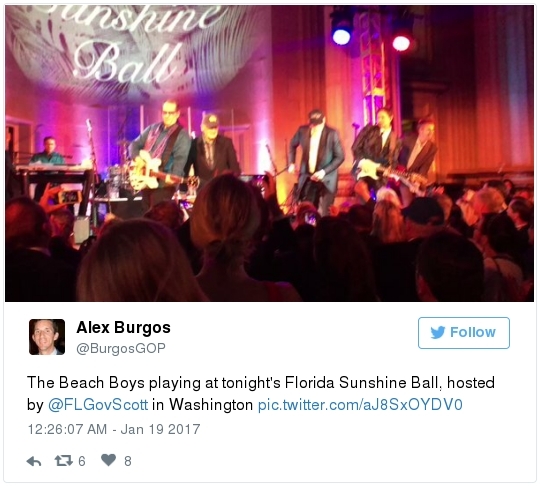
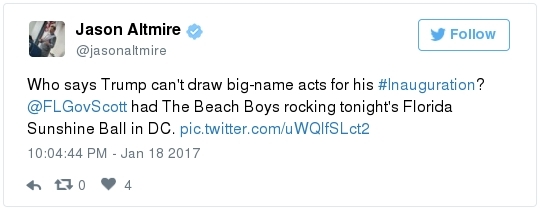
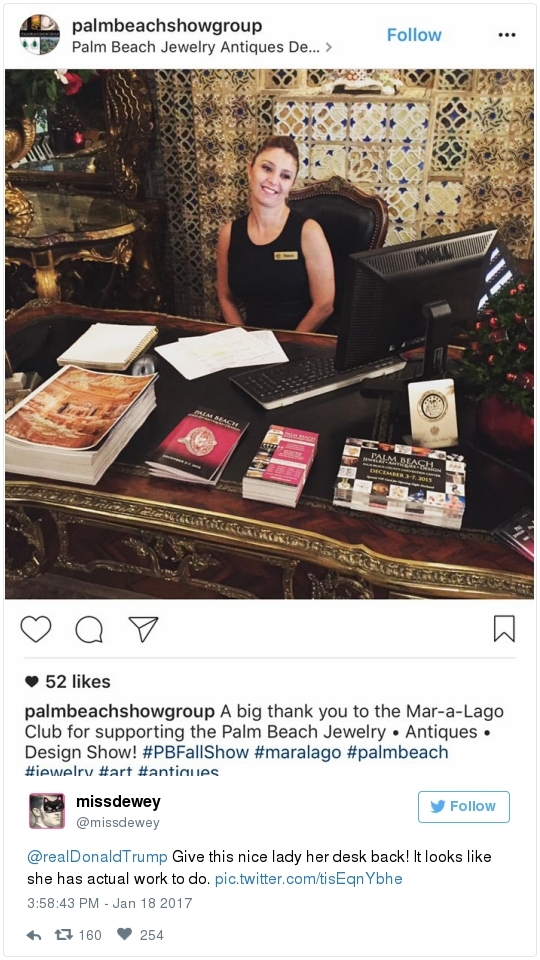
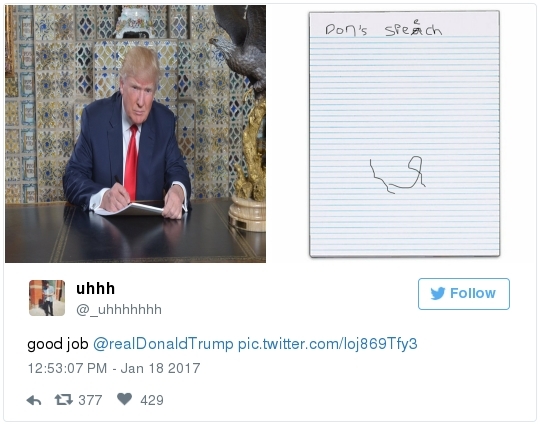
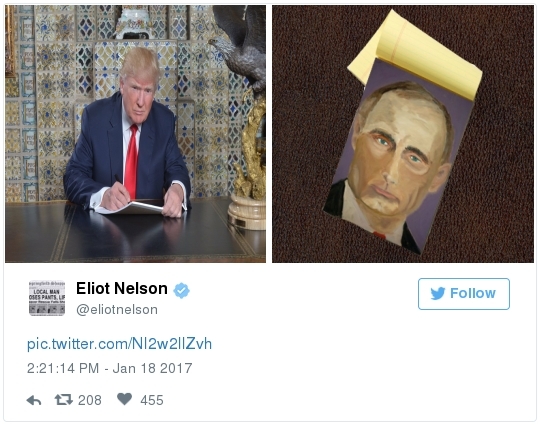
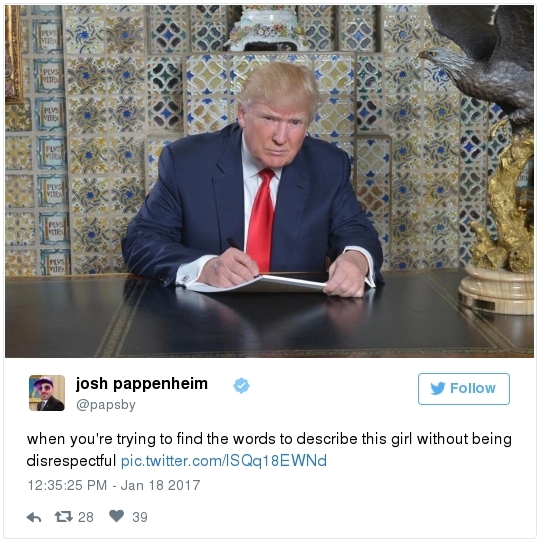
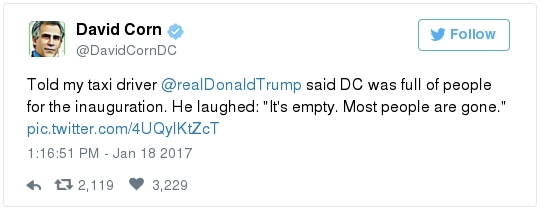
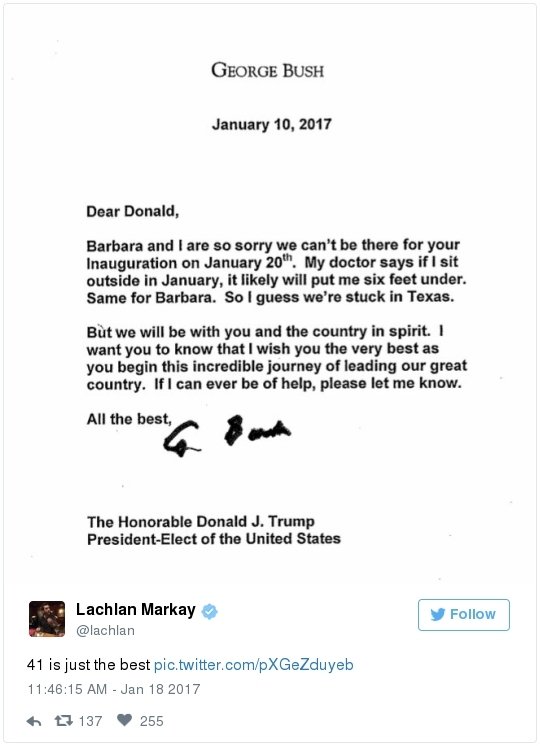
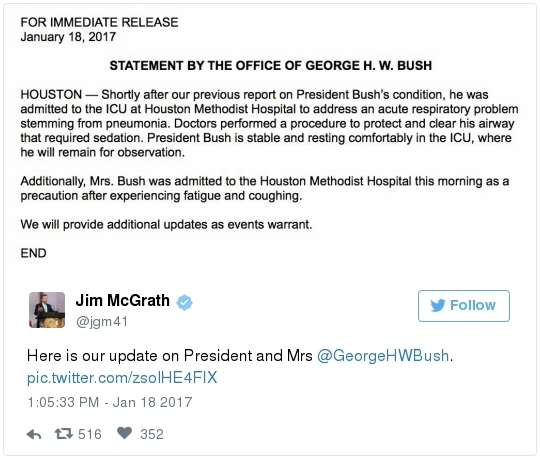
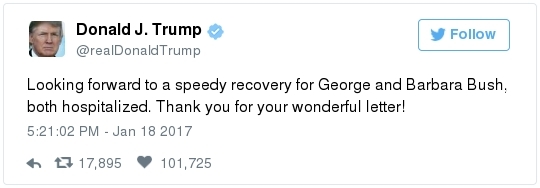
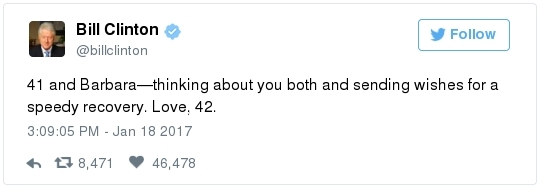
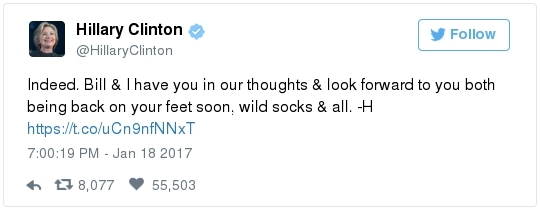
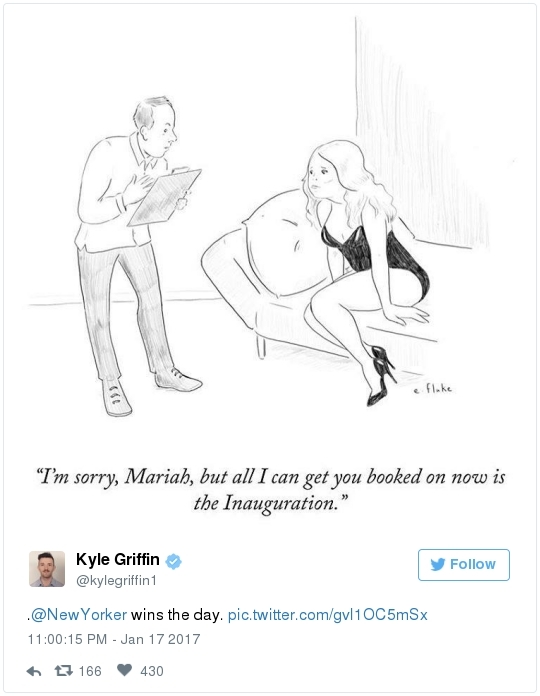
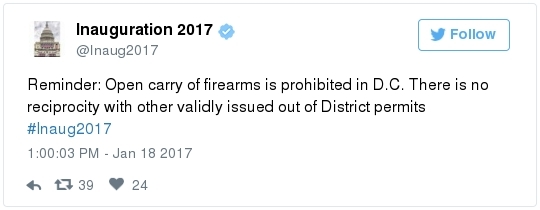
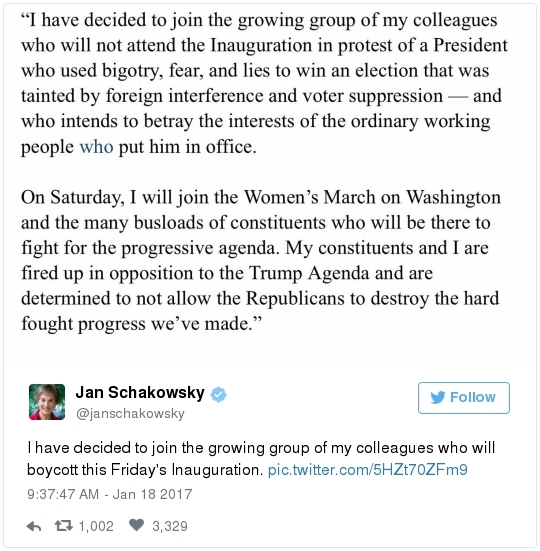
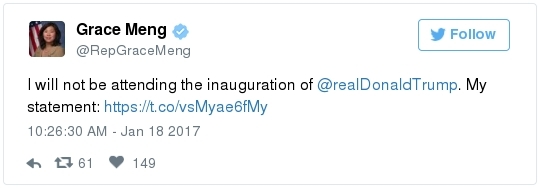
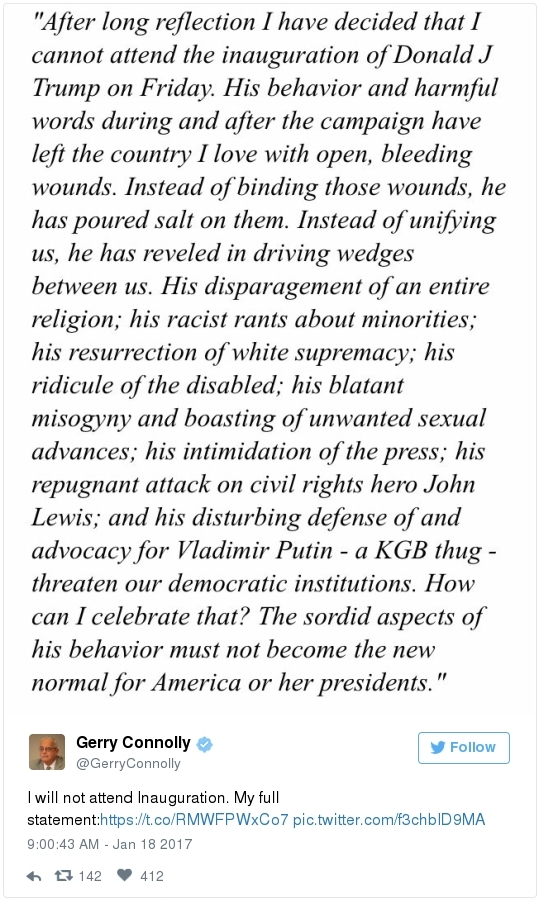
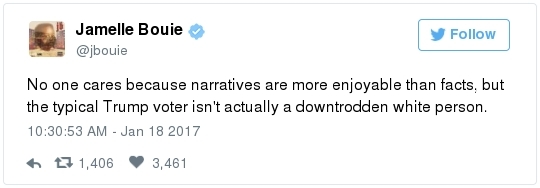
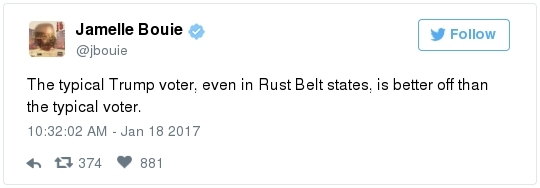
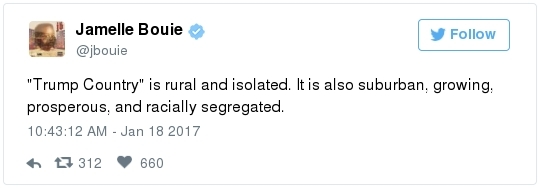
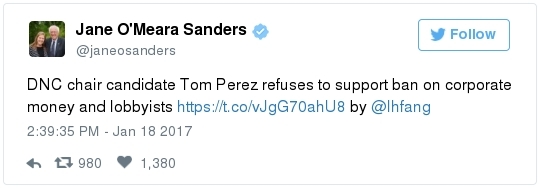
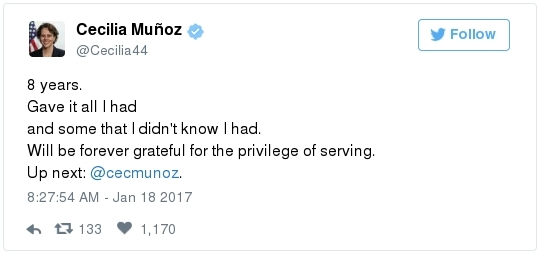
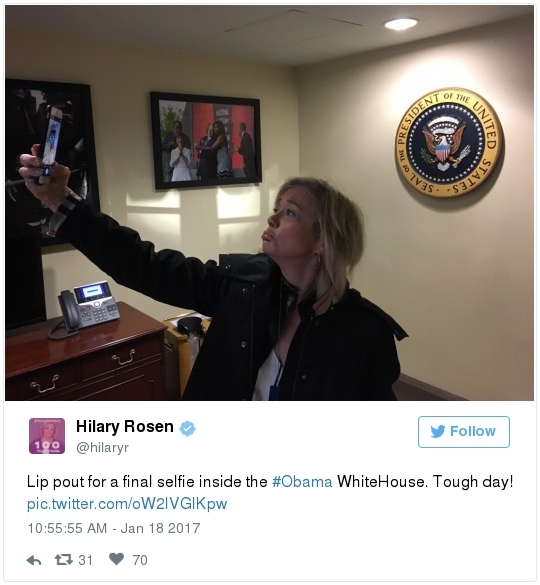
TRUMP VS. THE FOURTH ESTATE: -- Trump's DC hotel has banned the media from its premises during inauguration week. From Politico's Daniel Lippman, who was denied entry when he tried to get in for breakfast yesterday: "The hotel's decision to ban media from property owned by the federal government and from a hotel controlled by the president-elect comes amid a broader debate over media access to the incoming administration." -- More press limitations from the president-elect: "[Trump's] inaugural committee will break with long precedent and restrict access to two of his official celebrations to pool press coverage only, cutting out journalists who want to report on the events on their own, without official minders," Paul Farhi reports. "The two officially sanctioned inaugural balls, scheduled for Friday night … will be 'pool only,' which means that only a handful of reporters and photographers will be allowed in when Trump appears after he is sworn in as president. The reporters will be under the direction of Trump press staffers, and their time and movement within the building will be at the Trump staff's discretion. Pools are typically used when a larger number of journalists can't be accommodated at a presidential event because of space or security concerns … The official inaugural balls, which draw thousands of guests, have historically been "open press" events, meaning any reporter could cover them, subject to security screening." -- Trump ordered his staff to keep the daily White House press briefings in the West Wing – for now. Politico's Hadas Gold reports: "The press went crazy, so I said, 'Let's not move it.' But some people in the press will not be able to get in," Trump said in a "Fox & Friends" interview Wednesday. The move comes after panicked reports that the incoming president would be relocating briefings from their traditional space and thus moving them further from the White House communications staff and the Oval Office. "We looked at additional spaces to try to accommodate more members of the media," incoming press secretary Sean Spicer said. "And I think there was a large outcry from folks about this idea of looking at additional room, so after hearing from them, the president-elect said to me, 'Just keep it in their room.' But it's going to be cramped quarters; it's going to be tight." -- A 27-year-old man in Scotland revealed how he tricked the right-wing conspiracy site Infowars into publishing a completely fake report about Trump. From Buzzfeed's Jamie Ross: "Markus Muir, a [marketing professional from Glasgow], sent a direct message on Twitter to Infowars' editor-at-large Paul Joseph Watson claiming BuzzFeed News and CNN were due to release harmful footage of Trump. 'I said I worked at NBC and couldn't say any more,' said Muir. 'It was only two direct messages and I thought he might ask for more confirmation. I went to bed, forgot about it, then I checked his feed on the train to work and it was just him saying there was huge news about to come out … 'I couldn't believe it,' [he said]. 'I made it all up … I didn't think he'd get back to me because it was ludicrous.' After initially finding his prank funny, Muir became concerned: 'There's no level of judgment from these people claiming to be journalists, there is no rigour whatsoever and they're the first people to see an article from [NYT] or CNN or BuzzFeed and call it fake news.'" -- A Pew Research Center survey finds that Trump voters relied heavily on Fox as their main source of election news leading up to Nov. 8 – with 40 percent naming it as their "main source." The next most commonly listed source, CNN, was named by just 8 percent of his voters. Meanwhile, Clinton voters did not coalesce around any one source: CNN was named the most, but by just 18 percent. Rather, the survey found that Clinton voters were more spread out. MSNBC, Facebook, local news stations, NPR, ABC, The New York Times and CBS were named by between five and nine percent of voters. (Read more.) -- "President Obama can help beat fake news," by presidential historian Tim Naftali on CNN: "Obama should consider … declassifying in the remaining (day) of his presidency some of the intelligence behind … the US intelligence community's assessment of Russian intentions and activities in the 2016 presidential election. … Presidents have the authority to declassify anything. On rare occasions when they believe it to be necessary, they reveal signals intelligence and other highly sensitive sources. In April 1969, in response to the downing of a US reconnaissance plane off the coast of North Korea, Richard Nixon appeared to reveal that the United States could intercept North Korean radar signals. In April 1986, to pin the blame on Libyan leader Muammar Gaddafi for a terrorist attack at a discotheque in West Berlin where a US soldier and a Turkish civilian had died and 230 were wounded, President Ronald Reagan disclosed that the US could read confidential Libyan government messages, implying that we had broken their ciphers. I believe that we now find ourselves in one of those rare moments in our history when our president may need to risk a foreign source or two for the sake of our country." WAPO HIGHLIGHTS: -- Joel Achenbach has a fun piece about all the presidents who promised change in their inaugural addresses, only to learn how hard it is to bring real change: "Twenty-four years ago, William Jefferson Clinton promised change. 'Thomas Jefferson believed that to preserve the very foundations of our nation, we would need dramatic change from time to time,' the 42nd president said in his first inaugural address. 'Well, my fellow Americans, this is our time.' He had been echoing Jefferson promiscuously for days. Jefferson had won the first 'change election' in American history, in 1800 — federalists out, 'republicans' in — and now Clinton had ended 12 years of Republican occupation of the White House. He had journeyed to Washington from Monticello, recreating Jefferson's trip 191 years earlier, this time in a bus with a license plate reading 'Hope 1." -- Another historical look at inaugurations past: "The end of the beginning," by Larry J. Sabato: "Truly, has there ever been as dramatic a contrast between outgoing and incoming chief executives as [Obama and Trump]? Actually, yes … [and] for those who think Obama and Trump's minimal level of comity is assured, a few historical reminders are in order. John Adams was so contemptuous of Thomas Jefferson that he left the White House in the middle of the night on March 4, 1801, refusing to attend the inaugural ceremony of the man who had vanquished him. Democrat Samuel Tilden, who handily won the reported popular vote in 1876, was urged to lead an army into Washington to stop the 'corrupt' handover of power by Congress to Republican Rutherford B. Hayes; luckily, Tilden declined, partly because the election was tainted on both sides. Nonetheless … President Hayes, thereafter called 'His Fraudulency,' never had widespread respect or support in his single term. [And] the Hoover-FDR transition was a disaster … So bitter were these rivals that they said not a word during the 1933 inaugural drive from the White House to the Capitol." SOCIAL MEDIA SPEED READ: Florida Gov. Rick Scott threw a ball in Washington last night to celebrate Trump's ascension: Trump released this photo of himself writing his inaugural address: Several internet sleuths noticed that Trump is sitting behind a desk normally used by a receptionist in a public area at the club: And Twitter had some fun with it: What's the mood like in DC? Well, the city's not exactly buzzing: George H. W. Bush sent this note to Trump: A statement from Bush's team: Trump's reply: The Clintons also wished him well: Does Trump still need performers? The New Yorker has an idea: Organizers issued this reminder: More House Democrats are refusing to attend: Some perspectives on Trump voters: Bernie Sanders's wife attacked Obama Labor Secretary Tom Perez, a candidate for DNC chair: Another White House staffer signed off: Hilary Rosen took a sad selfie in the White House:
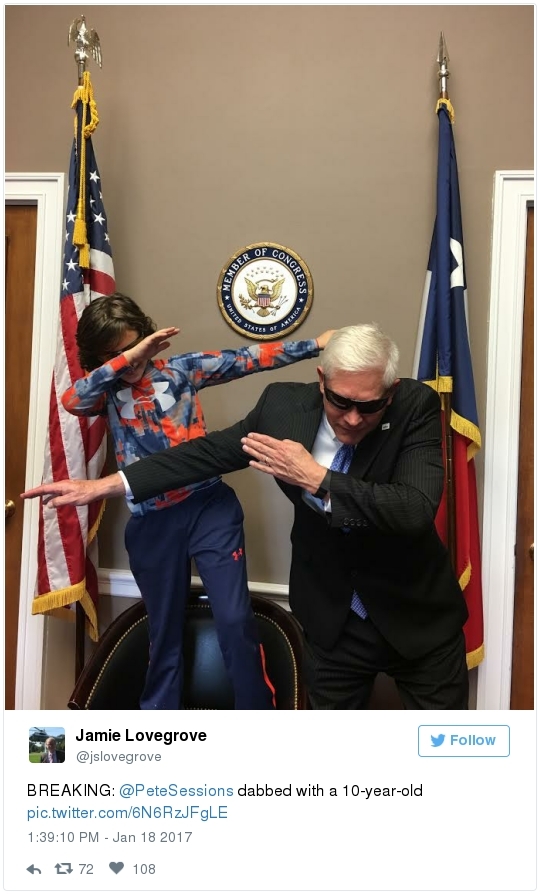
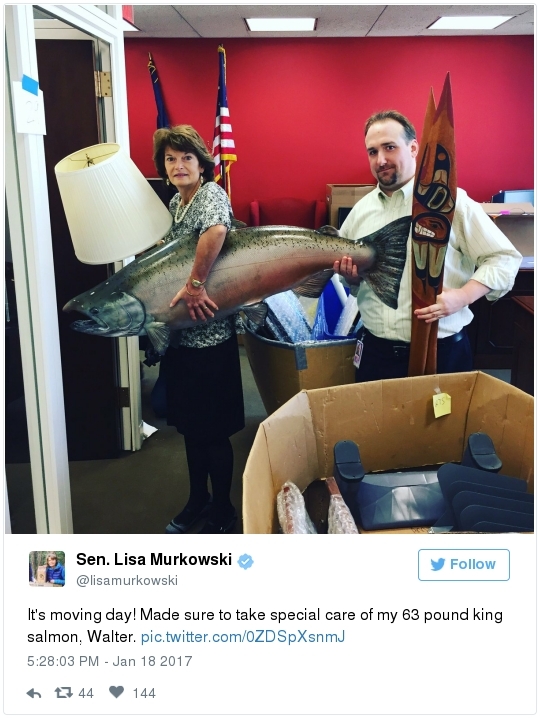
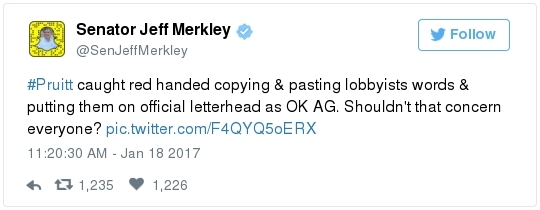
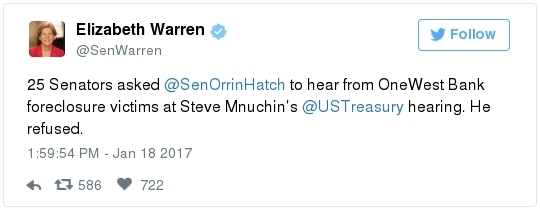
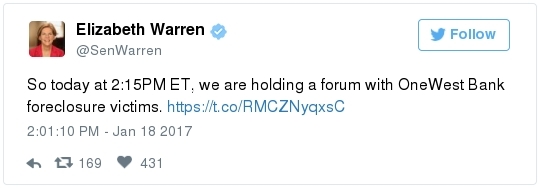
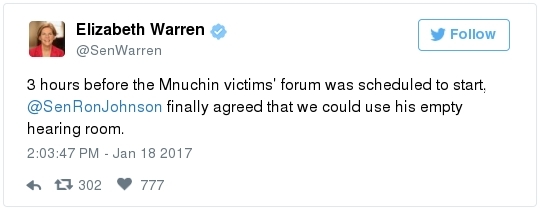
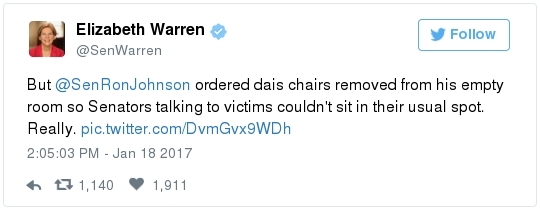
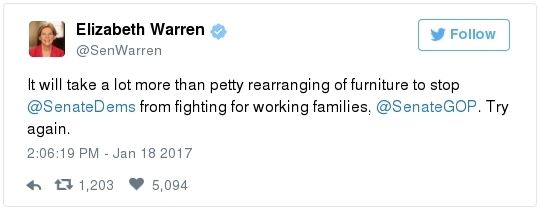
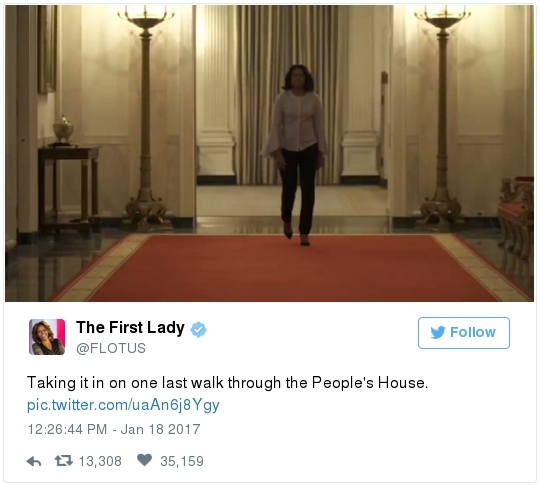
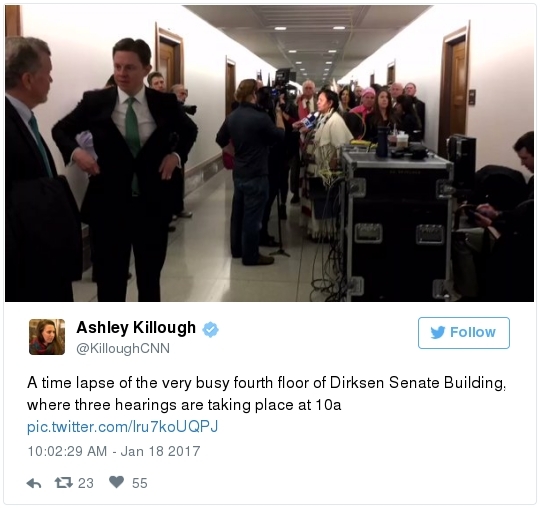
A parting gift for Obama: Movers were spotted outside Ivanka Trump's new D.C. home: Rep. Pete Sessions (R-Texas) got in on the dab: Sen. Lisa Murkowski (R-Alaska) changed offices: Democrats are attacking Pruitt for this: This moment from Price's hearing also went viral: Elizabeth Warren accused Ron Johnson of removing furniture from a hearing room to stymie a Democratic event: Two funny moments from interviews with Trump and Pence: 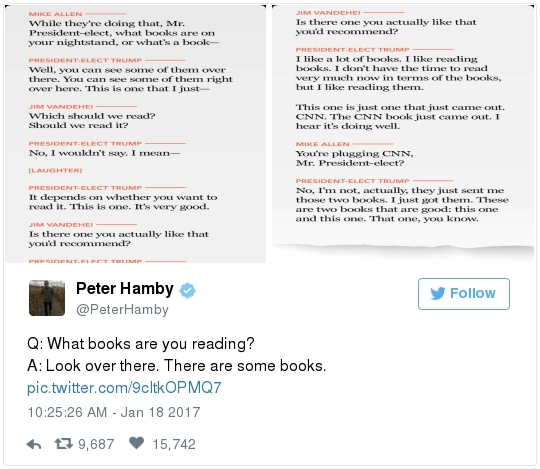 | 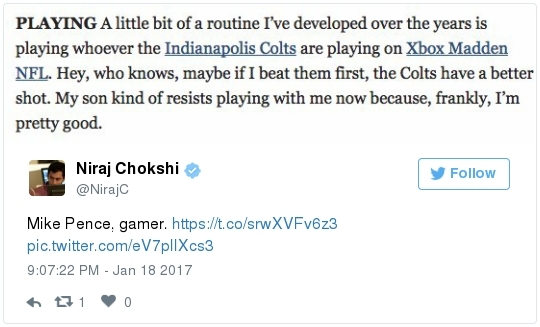 | | HOT ON THE LEFT: "Violence Against South Asians Has Returned To Post-9/11 Levels: Report," from HuffPost: "For South Asian-Americans, history seems to have repeated itself in a disturbing way, a recent report shows. South Asian Americans Leading Together (SAALT), a non-partisan nonprofit, released a report Wednesday on acts of hate during the election cycle directed at individuals in the South Asian community. 'The unprecedented violence we saw following the September 11 attacks has returned, electrified by a hostile 2016 presidential election,' Suman Raghunathan, executive director of SAALT, explained in a press release. What's more, President-elect Donald Trump was responsible for 20 percent of the documented instances of xenophobic rhetoric, the report stated. [And] more than half of the 67 documented incidents of xenophobic rhetoric came from statements by former or current elected officials, candidates for elected office at all levels, and appointed officials." | | HOT ON THE RIGHT: "Obamacare killed 300,000 jobs, 10,200 companies, $19B in wages," from the Washington Examiner: "A new report certain to spur quicker GOP action to kill Obamacare finds that it has crushed small businesses forced to participate and robbed employees of $19 billion in wages in 2015. What's more, the American Action Forum analysis found that Affordable Care Act regulations have cost 295,030 jobs and killed 10,130 small businesses that year. A similar report on Obamacare's regulatory impact in 2014 put the price at $22 billion in lost wages. Based on federal data, the report said, "We found that since the ACA became law, among small businesses, the rise in premiums has been associated with $19 billion in lost wages, 10,130 fewer business establishments, and nearly 300,000 lost jobs, with seven states losing more than 10,000 jobs, all results consistent with our previous research." | DAYBOOK: Trump goes into the bubble: He's flying to D.C. today on a military aircraft, not his private plane. At the White House: Obama and Biden meet for lunch. On Capitol Hill: Rick Perry and Steven Mnuchin confirmation hearings both start at 10 a.m. | QUOTE OF THE DAY: "It is true that behind closed doors I curse more than I do in public," President Obama said at the end of his final news conference. "And sometimes I get mad. And frustrated like everybody else does, but at my core, I think we're going to be OK. We just have to fight for it, we have to work for it and not take it for granted." | NEWS YOU CAN USE IF YOU LIVE IN D.C.: -- Another mild, mostly sunny day ahead. The Capital Weather Gang forecasts: "Sunshine dominates through the day allowing highs to climb to the low-to-mid 50s. Light northwest breezes allow the mild air to be fully enjoyed. Hard to believe that on this date in 1994, Reagan National Airport had a high of 8 degrees." -- The Wizards beat the Grizzlies 104-101. -- Ricky Gray was executed last night for viciously slaughtering a Virginia couple and their two young daughters in 2006. His death comes after attorneys unsuccessfully challenged the state's lethal injection plan, arguing that the drug he was to be injected with causes inmates to suffer a painful death. They said a firing squad would be more humane. (Rachel Weiner) VIDEOS OF THE DAY: Chief Master Sgt. Bill Marr knows something about marching in inaugural parades. He's done seven, and soon eight, as a member of the Air Force Band. He talked with Lee Powell about it:  | | Come march with the Air Force Band in the inaugural parade | Check out key moments from Obama's final news conference: 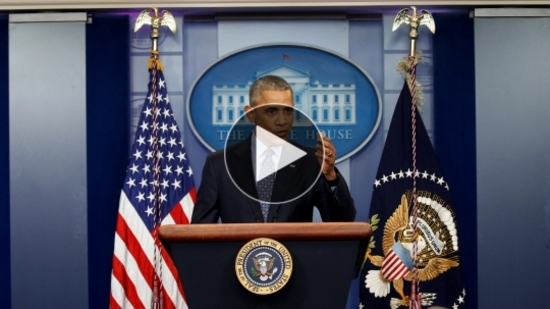 | | Key moments from Obama's final news conference | Michelle Obama took a final walk through the White House (click to watch): The small town of Wilmington, Ohio, was devastated in 2008 when DHL left and took more than 7,000 jobs with it. As the town tries to claw its way back, the Post's McKenna Ewen shows how Trump's election victory has brought it new hope: 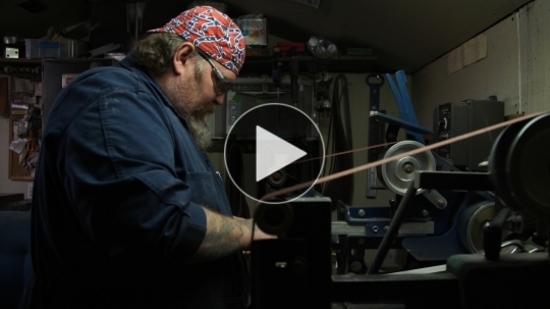 | | Want to understand why Trump has rural America feeling hopeful? Listen to this Ohio town. | Rep. Don Beyer (D-Va.) explains his decision to skip Trump's inauguration: 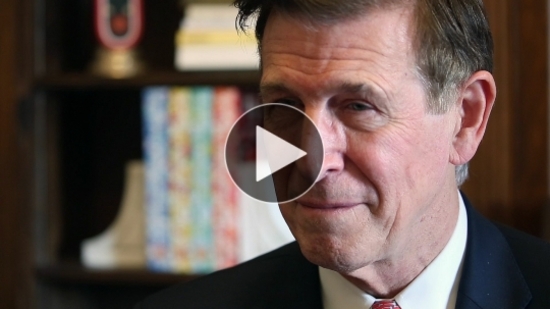 | | For Va. Rep. Beyer, skipping Trump's inauguration is a 'small symbol' | This might be the busiest we've ever seen the Dirksen Senate Office Building (click to watch): If you missed it, our video team summarized Tom Price's confirmation hearing in three minutes:  | | Rep. Tom Price's first hearing, in less than 3 minutes | Watch Bernie Sanders question Scott Pruitt: | | Key moments from Scott Pruitt's confirmation hearing | Jimmy Kimmel showed people still don't know ObamaCare and the Affordable Care Act are the same thing:  | | Obamacare vs. Affordable Care Act #2 | Seth Meyers took another look at Republicans' move to repeal ObamaCare:  | | Republicans Move to Repeal Obamacare: A Closer Look | Conan O'Brien imagined more conversations between Trump and Obama: 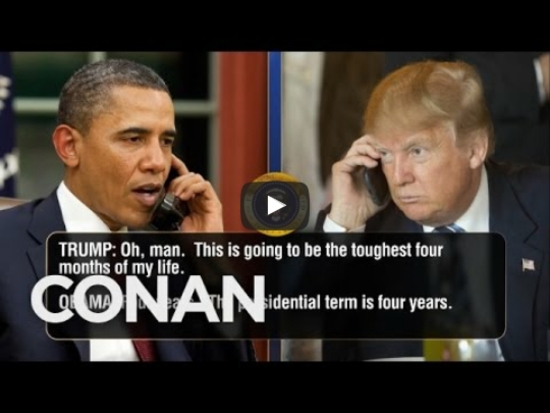 | | Obama Advises Trump About The Presidency - CONAN on TBS | O'Brien interviewed Michael Lewis about financial regulation:  | | Michael Lewis: Deregulating Wall Street Is Insane - CONAN on TBS | Stephen Colbert chatted with Billy Eichner about Mike Pence and partying at the White House:  | | Billy Eichner Announces He Will Perform At Trump's Inauguration | Colbert spoke about Trump's preparations for his first day in office:  | | Trump Gets Ready For Day One-ish | Trump was teasing a possible presidential bid as far back as 1988:  | | Donald Trump Teases a President Bid During a 1988 Oprah Show | The Oprah Winfrey Show | OWN | Katherine G. Johnson, 98 of Virginia, is portrayed in the film "Hidden Figures," which is about the role a group of world-class African American female mathematicians played in the 1960s space race. She reflects on her real-life experience:  | | NASA mathematician portrayed in 'Hidden Figures' breaks down how she helped astronauts | |


 Share on Twitter
 Share on Facebook









No comments:
Post a Comment