One of the things I've learned over my years as a professional critic is that it's good to preserve a certain flexibility when it comes to broad rules for what entertainment should...
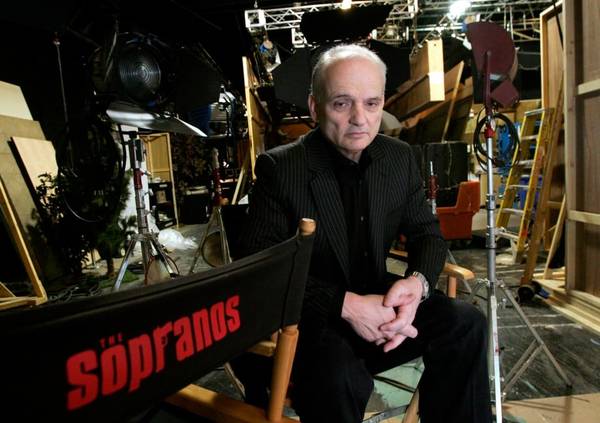
| |  | | | | Alyssa Rosenberg on culture and politics | | | | | | David Chase, creator and producer of the hit HBO series "The Sopranos," poses on a set in Queens in 2006. (Diane Bondareff/AP) | One of the things I’ve learned over my years as a professional critic is that it’s good to preserve a certain flexibility when it comes to broad rules for what entertainment should be. I don’t mean to say that I compromise on the absolute biggest ideas that guide my criticism and reporting, among them that the entertainment landscape is more interesting when more voices are represented in it and that the unique nature of entertainment industry employment is no excuse for workplace abuses. Rather, I’ve learned that if I’m too strict in any judgment, I’m likely to find myself reversed. An actor who once bored me will win me over. A remake I thought was a dumb idea will turn out to be thoughtful. And despite my exhaustion with the idea that every television show must be resurrected in some zombie-like fashion, I actually find myself strangely okay with a newly announced prequel to “The Sopranos.” | | Now, let me be clear: If David Chase was going to make a “Sopranos” movie because he was sick of people asking him whether Tony Soprano (James Gandolfini) really is supposed to die in that final scene, this news would prompt epic eye-rolling from me, and after the past several years, I am an Olympic-level eye-roller. But instead, the project that he has announced, titled “The Many Saints of Newark,” is a genuinely good idea: It’s a look back at the racial conflicts between Italian Americans and African Americans in Newark in the 1960s, a piece of history that is clearly part of the cultural context of “The Sopranos,” but not ever the series’ main subject. | | The question of how Italian Americans and Irish Americans (among other European immigrants to the United States) came to be perceived as white — and the extent to which that transition is complete, or to which members of those communities want to preserve their distinct ethnic identities — is a fascinating subject. For a more purely historical perspective (although a distinctly ideological one), it’s well worth reading Noel Ignatiev’s “How the Irish Became White.” One of the more uncomfortable answers is that members of immigrant groups were able to accrue some of the privileges of whiteness by adopting anti-black racism. Strains of that thinking pop up regularly throughout “The Sopranos,” but “The Many Saints of Newark” sounds designed to probe that tension more deeply. It’s a genuinely intriguing way to expand the intellectual world of “The Sopranos” and of mob stories in general. | | | None of which guarantees that “The Many Saints of Newark” will be great. And it certainly doesn’t mean that all TV show spinoffs, prequels and resurrections are a good idea. It’s just a nice reminder that there are no hard-and-fast rules for what counts as a bad pop culture idea. | | | | | | | | | | | | | | | | |




 Twitter
 Facebook
No comments:
Post a Comment