As I've mentioned before, I'm trying to recover from a very bad reading year in 2017 by reading only new books in 2018. I fell off the wagon a bit in February, a combination of...
| |  | | | | Alyssa Rosenberg on culture and politics | | | | | | (Bloomsbury Press) | As I’ve mentioned before, I’m trying to recover from a very bad reading year in 2017 by reading only new books in 2018. I fell off the wagon a bit in February, a combination of being on vacation and feeling like, as a pregnant lady, I needed a little comfort reading. But I still managed to read four fairly substantial books that are, if not all freshly published, new to me, and since I’m using this newsletter to try to keep myself accountable, here they are: | - “The Wizard of Lies,” by Diana B. Henriques: I read this after watching the HBO adaptation starring Robert De Niro as Bernie Madoff and Michelle Pfeiffer as Ruth Madoff on the plane. Bernie Madoff is an inherently challenging subject for a biography, since some of the facts of his fraud have been hard to nail down, and because he’s an inherently unreliable narrator who seems to lack a certain measure of insight into his own motivations. But I did finish the book having a much clearer sense of how Madoff’s pyramid scheme worked, and the impact it had on his family, his victims, and the Jewish community at large.
- “The Rise of Theodore Roosevelt,” by Edmund Morris: By contrast with “The Wizard of Lies,” Morris is working with a more revealing, less psychologically shifty subject: Theodore Roosevelt was a voluminous letter-writer and diarist, and to say that he’s colorful is a wildly dramatic understatement. And as fabulous as the Roosevelt material is, Morris is more than a match for it. This is one of the funniest, most slyly written and propulsive biographies I’ve ever read. I spent an inordinate amount of time in Italy reading excerpts of this out loud to my infinitely patient husband. I can’t wait to read the next two volumes.
- “Rise and Kill First,” by Ronen Bergman: One of the challenges of writing a comprehensive history of a phenomenon is narrowing down the cast of characters and streamlining the story into a coherent but still-representative narrative. Bergman doesn’t quite pull that off in this history of Israel’s targeted killing program, but I still think this book is highly worthwhile, and not merely for people interested in Israeli politics and national security. Bergman does a nice job of explaining how Israel developed the doctrines that guided these operations — and how those doctrines were exported to the United States.
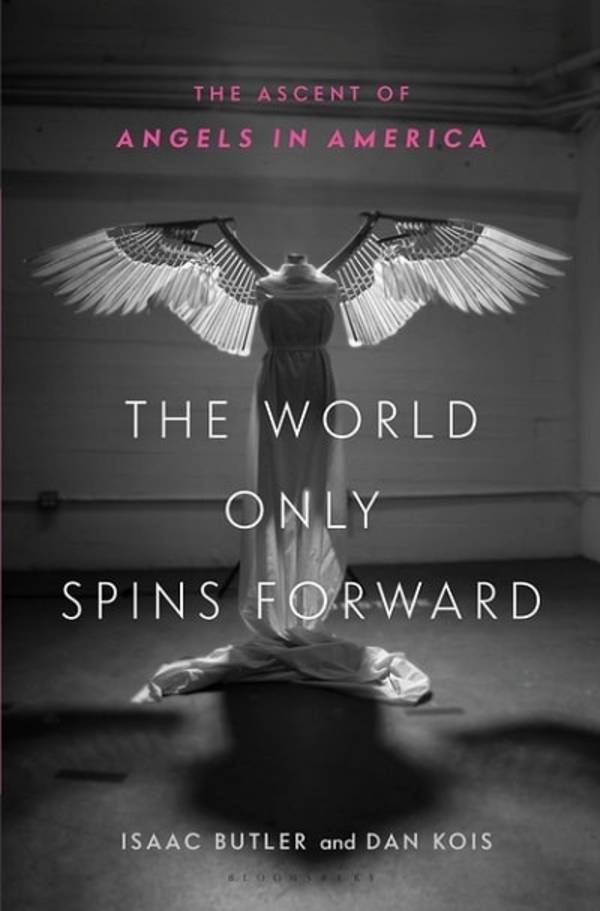
- “The World Only Spins Forward: The Ascent of ‘Angels in America,'” by Isaac Butler and Dan Kois: I reviewed this terrific oral history of Tony Kushner’s magnificent play earlier this week. I’m basically the target reader for this book as an “Angels in America” obsessive, but I think it has a lot to offer anyone who is interested in the power of art in a politically fractious age.
| | | | | | | | | | | | | | | | |





 Twitter
 Facebook
No comments:
Post a Comment