Every week, I answer a question from the Monday Act Four Live chat in the Wednesday edition of this newsletter. You can read the transcript of the March 5 chat here, and submit...
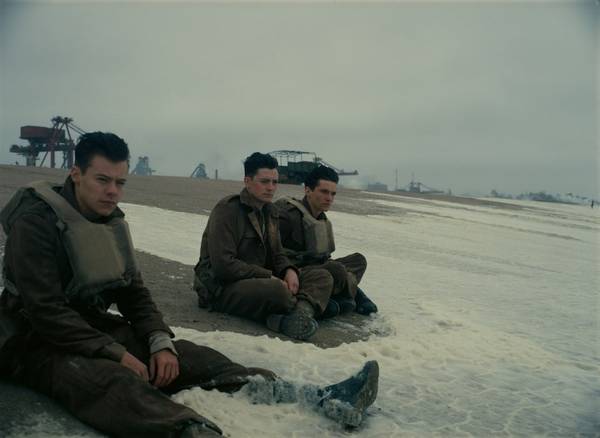
| |  | | | | Alyssa Rosenberg on culture and politics | | | | | | Harry Styles as Alex, Aneurin Barnard as Gibson and Fionn Whitehead as Tommy in "Dunkirk." (Courtesy of Warner Bros. Pictures) | Every week, I answer a question from the Monday Act Four Live chat in the Wednesday edition of this newsletter. You can read the transcript of the March 5 chat here, and submit questions for the March 12 chat here. This week, a reader wonders why moviegoers’ tastes and the opinions of Oscar voters don’t seem to overlap more. | | I might see 10 movies a year, usually movies that have high box office ticket sales, and rarely a movie that is nominated for best picture. Other than movies like “Titanic,” why can’t a movie be successful at both the awards and box office? | | | More specifically, though, I want to draw attention to the differences between “Titanic” and the highest-grossing movies in the United States this year. Of the top 10 movies that came out in 2017, every single one of them was an installment of an existing franchise (“Star Wars: The Last Jedi,” “Wonder Woman,” “Guardians of the Galaxy: Vol 2,” “Spider-Man: Homecoming,” “Thor: Ragnarok,” “Despicable Me 3” and “Justice League”) or a remake of an existing piece of intellectual property (“Beauty and the Beast,” “Jumanji: Welcome to the Jungle” and “It”). Not a single one of them was what “Titanic” was: a wholly original story produced outside the careful corporate oversight of a studio that considers it an ongoing investment. | | This is not to say that superhero movies or franchise pictures or installments in trilogies can’t be incredibly good. “Star Wars: Episode V — The Empire Strikes Back” is one of my favorite movies of all time. I know lots of people adore “The Godfather Part II.” “Lord of the Rings: The Return of the King” won best picture in 2003, and its two predecessor movies were both nominated for best picture. | | But given the existing parameters that directors stepping into those franchises now have to work with, I think it’s harder for Oscar voters to see them as distinctive artistic achievements rather than products that have been designed and produced by committee. Maybe that’s wrong-headed! Maybe that will change next year when “Black Panther” is eligible for Oscar nominations. But the issue is less that popular movies can’t win Oscars, and more that the current set of unfolding franchises strike Academy Award voters as less worthy than previous blockbusters that were the clear product of a vision like James Cameron’s or Peter Jackson’s. | | | | | | | | | | | | | | | | |







 Twitter
 Facebook
No comments:
Post a Comment