Before I get to the substance of this post, a quick note: I'm going on vacation this afternoon, and will return to Act Four on Feb. 20. In my absence, Sonny Bunch and the wonderful...
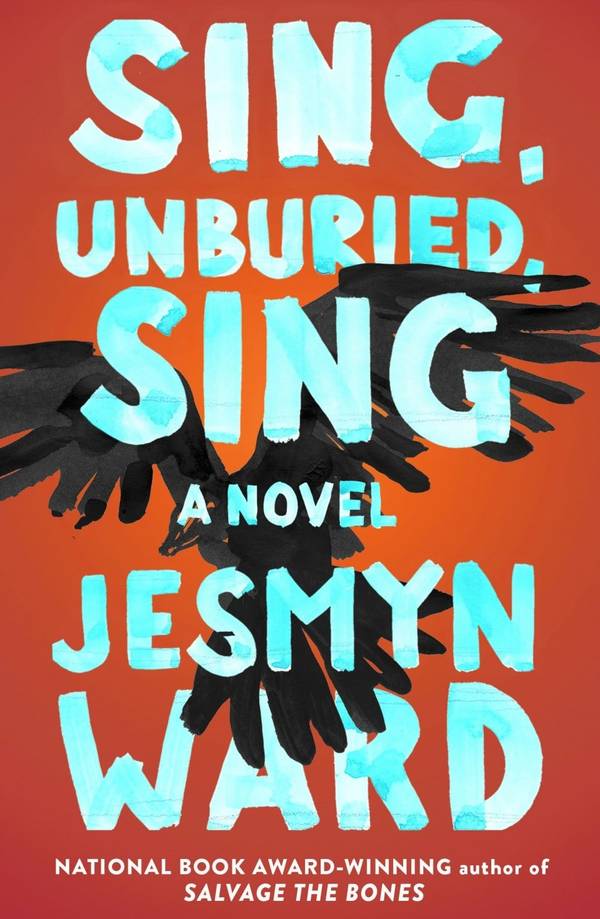
| |  | | | | Alyssa Rosenberg on culture and politics | | | | | | "Sing, Unburied, Sing," by Jesmyn Ward. (Credit: Scribner) | Before I get to the substance of this post, a quick note: I’m going on vacation this afternoon, and will return to Act Four on Feb. 20. In my absence, Sonny Bunch and the wonderful Betsy Phillips, who has filled in for me before, will man the helm, and the newsletter will go out only on Fridays. Now, to the actual post: | | As I’ve mentioned before, I had a bad reading year in 2017. After a strong beginning, I started a lot of books I didn’t like and didn’t finish, something I’d previously almost never done. I re-read a lot of books, some of them multiple times, which meant that I ended up comforting rather than challenging myself. And I felt like I missed a lot of books that I should have read to be a part of the conversation. So as a way of keeping myself honest, and also to give you a little insight into what I find myself craving, I’m going to check in with all of you about what I’ve read. Here’s everything I read in January: | | - “Sing, Unburied, Sing,” by Jesmyn Ward: This was the novel I felt worst about missing in 2017, and it very much did not disappoint. My feelings on ghost stories are generally determined by how much I think the haunting means both to me and to the person being haunted, and on that score, this is one of the saddest ghost stories I’ve ever read.
- “Fire and Fury,” by Michael Wolff: I hated this book, but the thing about being a critic is that sometimes it’s more fun to write about books you detest than the ones you love.
- “Grant,” by Ron Chernow: I understand that this can affect his historical interpretation, but one of the things I very much appreciate about Chernow is how much he seems to genuinely like his subjects. I’ve read Grant’s memoirs, and I was familiar with the basic contours of the big debates about his presidency and generalship, but Chernow managed to adjudicate them with a psychological compassion I found refreshing.
- “Operating Instructions,” by Anne Lamott: I cheated a little bit here, since I’d gone on a big Lamott binge more than a decade ago and so this doesn’t strictly count as a new book. But given my big project for 2018, I wanted to reacquaint myself with Lamott’s self-forgiving approach to motherhood.
- “Some Assembly Required,” by Anne Lamott: And since I’m trying to think about parenthood from more angles than simply my own, it was very interesting to read Lamott’s account of becoming a grandmother, which includes exchanges with her son Sam and his girlfriend Amy.
- “The Alienist,” by Caleb Carr: Sometimes I’ll read source material in preparation to watch an adaptation and then never watching the adaptation, but very much enjoying the source material. I still do want to watch at least an episode of “The Alienist,” though readers and fellow critics seem disappointed. But I very much enjoyed this, and it’s inspired a planned Theodore Roosevelt deep dive for February.
- “The Angel of Darkness,” by Caleb Carr: Clearly, I liked “The Alienist” enough to read the sequel.
- “Bloodlands,” by Timothy Snyder: My husband’s been raving about this book for a long time, so I finally downloaded it from our joint Kindle library. I think Snyder does some things earlier in the book that slightly undermine the big intellectual shift he’s trying to get readers to make, but he still managed to reframe World War II and the Holocaust for me, so I really can’t quibble too much with a few choices.
- A book I am embargoed from discussing here, but that I’ll be reviewing for The Washington Post’s Outlook section in February: Hoo, boy am I looking forward to talking about this one.
| | | | | | | | | | | | | | | | |




 Twitter
 Facebook
No comments:
Post a Comment