My least favorite part of covering arts and entertainment in recent years has been watching the pop culture press and readers spend increasing amounts of time litigating art that...
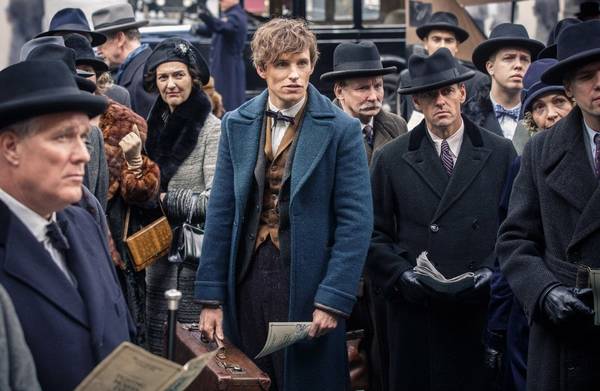
| |  | | | | Alyssa Rosenberg on culture and politics | | | | | | Eddie Redmayne as Newt Scamander in "Fantastic Beasts and Where to Find Them." (Jaap Buitendijk/Warner Bros. Pictures) | My least favorite part of covering arts and entertainment in recent years has been watching the pop culture press and readers spend increasing amounts of time litigating art that hasn’t even been released yet on the basis of brief remarks by the artists. One such controversy blew up last week when director David Yates suggested that the second installment of the “Fantastic Beasts and Where to Find Them” movie series — because yes, that’s a thing now — doesn’t directly address the question of Albus Dumbledore’s (Jude Law, playing a younger incarnation) sexual orientation. | | To back up for a moment, J.K. Rowling’s original Harry Potter novels never treated Dumbledore as someone with much of a sexuality, either. As with a lot of the professors at Hogwarts School of Witchcraft and Wizardry, readers got to see Dumbledore primarily through the eyes of his students, which meant we saw him primarily in terms of his teaching, his disciplinary stances and, ultimately, his position in the second war against Voldemort. Dumbledore’s gayness was established only in extra-textual comments Rowling made after the final book in the series, “Harry Potter and the Deathly Hallows,” had been published. It was presented then in the context of a single youthful romance. | | So, to be very clear, we’re arguing about whether it’s a bad thing that the second in a planned five-movie series based on a scientific text that was first mentioned in another novel, and which none of us have actually seen yet, deals with an issue that the author of the original novel series didn’t have the chutzpah to actually include in the text of her own books. I’ve seen arguments that this is about preserving the overseas box office for the movie (a line of thinking I find potentially and sadly credible), Facebook posts asking whether it’s realistic to depict an out-of-the-closet Dumbledore in a much earlier era, and pleas to just let Dumbledore be himself. | | | There are genuinely important issues at stake here. The influence of the overseas box office on U.S. movies is something I definitely think we don’t discuss enough. There are also legitimate questions to be asked about whether the desire for movies to depict people from marginalized communities in affirming ways gets in the way of historical fiction that accurately represents the experiences people from those communities might have had in different eras. And as someone who has long been skeptical of Rowling’s retroactive tendency to edit her books, I do think this is a kerfuffle somewhat of her making. | | But I absolutely think the best way to approach these questions is to look at the actual text of the movie when it becomes available. However urgent any of these issues are, the best way to address them is by dealing with the facts. Texts are ambiguous, and I’m sure we’ll argue over the nuances of this movie and the numbers it does at the box office. Until we have those things to work with, though, we’re arguing with air, and I’m not sure to what purpose. | | | | | | | | | | | | | | | | |





 Twitter
 Facebook
No comments:
Post a Comment