Every week I answer a question from the Monday Act Four Live chat in the Wednesday edition of this newsletter. You can read the transcript of the January 8 chat here, and submit...
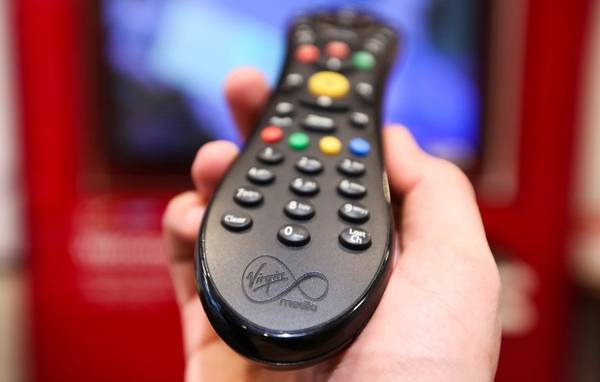
| |  | | | | Alyssa Rosenberg on culture and politics | | | | | | A man holds a television remote control. (Chris Ratcliffe/Bloomberg) | Every week I answer a question from the Monday Act Four Live chat in the Wednesday edition of this newsletter. You can read the transcript of the January 8 chat here, and submit questions for the January 22 chat here. (I accidentally scheduled a chat for Martin Luther King Jr. Day) This week, a reader worries that television, along with everything else, is becoming an engine of economic and cultural stratification. I worry about continue accessibility (affordability) to movies and TV given growth of streaming. I am old enough to remember when TV was mostly free over the air, and it was very egalitarian — everyone had a TV set. Now we are fragmenting into not just interest groups but class groups — those that can afford a full cable package and multiple streaming services, and those who can’t. I just worry about what that means for society. First, a quick fact-check: Most American households have access to television, whether they’re watching through broadcast, a cable subscription or a broadband connection. So, Americans still have television broadly in common. But I think you’re right to wonder whether we’re watching the same things any more. I think it’s important to remember that in the era you’re describing, television was “mostly free over the air” in part because there was just much less of it. There simply weren’t cable subscriptions available for purchase, and there wasn’t a business model where networks paid for the content they made or licensed by selling subscriptions. As a result, Americans were watching a smaller pool of shows, and had a smaller number of potential references which were more broadly shared. Now, there’s much more television in terms of the sheer number of shows being produced and the total number of episodes of television being aired each year. The phenomenon actually has a name, Peak TV. So, we’re all still watching lot of television, we’re just not necessarily watching the same things, and we’re not watching them on the same schedules. As a result, we have fewer shared references and fewer simultaneous shared experiences. Sometimes that fragmentation happens along class lines, but even people who do have cable packages or Netflix subscriptions have so many options that we aren’t necessarily developing a shared cultural language. Like a lot of things in American life right now, our television consumption is about class, but it’s about plenty of other factors as well. That’s not to say that we shouldn’t worry about our collective spinning apart, just that we should be aware of how multi-faceted it really is. | | | | | | | | | | | | | | | | |




 Twitter
 Facebook
No comments:
Post a Comment