No, the House GOP tax plan isn't 'so bad' for rich peoplePresident Trump made a personal appeal from an ocean away to ask moderate Senate Democrats to support the Republican tax...
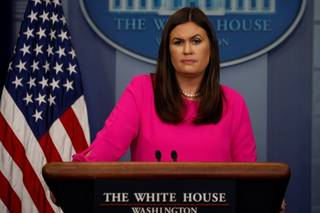
| |  | | Democracy Dies in Darkness | | | | | | | | | | The truth behind the rhetoric | | | | | | No, the House GOP tax plan isn't 'so bad' for rich people President Trump made a personal appeal from an ocean away to ask moderate Senate Democrats to support the Republican tax plan. Calling National Economic Council Director Gary Cohn, who was in a meeting with the Democrats, Trump reportedly said, "The deal is so bad for rich people, I had to throw in the estate tax just to give them something." Both the nonpartisan Joint Committee on Taxation (JCT) and the Tax Policy Center (TPC) have published analyses of the tax cut. TPC shows that by 2027 tax payers with incomes of $5 million and above would experience the biggest percentage change in after-tax income and in the average tax rate. The JCT analysis shows how taxpayers with incomes over $1 million would see their tax cuts grow over the course of the tax bill, from 2019 to 2027. Here are a few specifics: the House bill repeals the Alternative Minimum Tax (AMT), changes the tax rate for pass-through entities and as Trump said, repeals the estate tax. The specifics of each of these changes benefit the rich and uber-rich. The estate-tax provision is even more generous than Trump's own campaign plan, as the Fact Checker reported. Contrary to the president's claim, the tax plan is not "so bad" for the wealthy. In fact, no matter how you slice it, the super-wealthy do rather well under the House GOP proposal. But as we have said, that's largely because they already pay a large chunk of income taxes already. We award Four Pinocchios. |  | | | Enjoy this newsletter? Forward it to someone else who'd like it! If this e-mail was forwarded to you, sign up here for the weekly newsletter. Hear something fact-checkable? Send it here, we'll check it out. Did Ronald Reagan's 1981 tax cut supercharge the economy? The idea that Reagan-era tax cuts led to economic growth is still hotly debated by economists. Yet it's still a well-tread talking point for Republicans. White House press secretary Sarah Huckabee Sanders recently retold the Reagan tax mythos, "While arguing over President Reagan's 1981 tax cuts, Democrats claimed it would only benefit the rich. The Democrat speaker of the House at the time, Tip O'Neill, called them royal tax cuts, because he claimed they favored the wealthiest Americans. What really happened was more than 14 million new jobs were created over five years; incomes grew by over 22 percent for the next seven years; and the economy grew by over 3.5 percent, on average, for the rest of the decade." The numbers Sanders stated are a bit fuzzy, albeit generally in the ballpark. Ronald Reagan signed the Economy Recovery Tax Act into law in August of 1981. But Reagan's tax plan wasn't the only force at play in the U.S. economy. The Federal Reserve, led by then-chairman Paul Volcker, jacked up the federal funds rate to 20 percent in 1980 and 1981 to curb inflation, tipping the country into a recession. By the end of 1982, the interest rate dropped to 9 percent. Economists generally agree low rates have a stimulating effect on the economy. Setting the overlapping time frames aside, there are numerous problems with Sanders' cause-and-effect relationship. For one, it is impossible to pin economic gains to a single event. It would be more reasonable to consider the tax cuts in conjunction with a series of monetary policy interventions enacted during and before Reagan's administration. Yet Sanders gives Reagan all the credit. For citing numbers out of context, we award Sanders Two Pinocchios. |  | | | We're always looking for fact-check suggestions. You can also reach us via email, Twitter (@GlennKesslerWP, @mmkelly22, @nikki_lew or use #FactCheckThis), or Facebook (Fact Checker). Read about our rating scale here, and sign up here for our weekly Fact Checker newsletter. Scroll down for this week's Pinocchio roundup. –Meg Kelly | | | | | | | | | | | | | | | | |




 Twitter
 Facebook
No comments:
Post a Comment