Every week, I answer a question from Monday's Act Four Live chat in the Wednesday edition of this newsletter. You can read the transcript of the Nov. 13 chat here and submit...
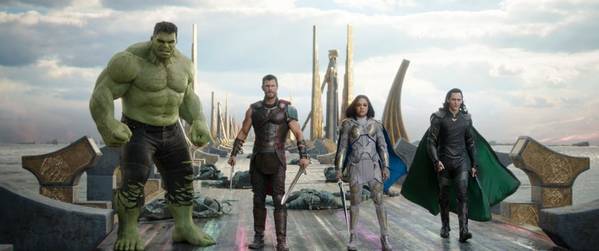
| |  | | | | Alyssa Rosenberg on culture and politics | | | | | | The Hulk, from left, Chris Hemsworth as Thor, Tessa Thompson as Valkyrie and Tom Hiddleston as Loki in a scene from "Thor: Ragnarok." (Marvel Studios via AP) | Every week, I answer a question from Monday’s Act Four Live chat in the Wednesday edition of this newsletter. You can read the transcript of the Nov. 13 chat here and submit questions for the Nov. 20 chat here. I apologize for the repeat of last week’s newsletter post; it involved an error on my part, for which I’m sorry! This week, a reader asks a fun historical question about the movies. When did movies start adding scenes after the end of the credits? I know the Marvel movies have been doing it for a few years. I guess the point is to get people to stay and see the movie credits. I don’t usually read the reviews before going to a movie to know if there will be a scene. Usually, the only clue is seeing half the audience remaining in their seats. More often than not, the large soda has me wanting to run to the restroom instead of waiting through an endless number of names I don’t know and could never read them all. Believe it or not, mid-credits and post-credits sequences, or surprise scenes at the end of movies, have a long tradition. The end of the 1903 movie “The Great Train Robbery” shows the ringleader, who the audience had previously seen killed, resurrected and seeming to fire his gun directly at the audience. “Airplane!,” which came out in 1980, returns to a taxi passenger whose driver disappeared in the first scene of the movie. It’s definitely true that these sequences have become more common, though, and they’ve become most essential to movies that function less like stand-alone films and more like long, expensive episodes of slowly unfolding television shows. Marvel movies do these sequences as the equivalent of the “next week on” promotions that appear after an episode of a television drama airs. They’re meant to give you a small sense of what’s coming next, such as Thor’s (Chris Hemsworth) scene with Doctor Strange (Benedict Cumberbatch) during the credits of “Doctor Strange,” which teased their interaction in “Thor: Ragnarok.” The scenes at the end of “Spider-Man: Homecoming” set up a future conflict between Peter Parker (Tom Holland) and the Vulture (Michael Keaton), and continued an ongoing joke. The good news for you is that these scenes are rarely essential and are always immediately available on the Internet in the wake of a movie’s release. So don’t get held up by a post-credits sequence. But I’d also urge you not to think of that “endless number of names I don’t know” as an opportunity to think about how many people it takes to make a movie these days. Even if you don’t read them all, it’s worth remembering just how massive an enterprise these movies are and how many people contributed to their success. | | | | | | | | | | | | | | | | |




 Twitter
 Facebook
No comments:
Post a Comment