| |  | | | | June 20, 2017 | Letter No. 91 | | | | | | | | | | | | Dearest Lennys,
Suddenly the sweltering days are upon us, but I'm finding it a bit hard to enjoy. Every day, in every way, we are reminded of the challenges of this moment in history. Whether it's a horrific shooting, a tragic, racist verdict in a police-brutality case, or just Bill Cosby and his fucking sweaters, it is just a lot to take in. So what's a girl to do? Specifically, a weird girl?
This week, Jill Soloway gave us a gorgeous and resonant essay about the moment they realized they were weird. While I don't know all of you personally, I'd be willing to bet you each experienced that moment. You know, the moment you understood you were approaching life a little differently.
For me, it was being caught reading Barbra Streisand's biography in math class in fifth grade and being publicly chastised, then continuing to read it alone at lunch, where no one was interested in watching me eat prosciutto with my hands. For my mom, it was deciding to buck her 1955 dress code with a group of friends who all promised to wear pants, then arriving at school on the designated day and finding that everyone had chickened out but her.
I love that for Jill, the idea of Weird Girl defies gender or race or age — it's just about otherness. Once, in Al-Anon, I heard someone say that they suffered from a sense of "terminal uniqueness." We all do, and in that way we aren't unique at all.
But these days, we all take in so much and react to it differently, and it's hard not to feel alone. Which is why I am almost obsessively focused on my communities. What the Internet tooketh away from me (a piece of my soul) it gaveth in groups of amazing people I never would have met otherwise. On the web I have so many remarkable communities I've been blessed to be a part of, like the chronic-illness community, where women share their struggles. I have my "endo sisters" and women like the remarkable Esme Weijun Wang, who is turning her own struggle with chronic illness into a business to help other creatives living with limitations.
I have my community of crafty weirdos, like Katie Kimmel, who turns me on to all the great female artists of Instagram. I have my hedgehog community (don't ask) and my woman-filmmaker community (do ask!). And I have the Lenny community. What a blessing.
As for my mom and the sisterhood of no one else wearing pants, don't worry about her. In the 1980s she became part of a downtown group of artists who called themselves Girlworld. They threw parties for women artists, came together to discuss how to take the male-dominated world by storm, and even had their own group show. She found her people.
Finding your people is what will get us through these days and what will erase the sting of weird-girl-loneliness past. If you haven't found 'em yet, we at Lenny are happy to stand in.
So much love,
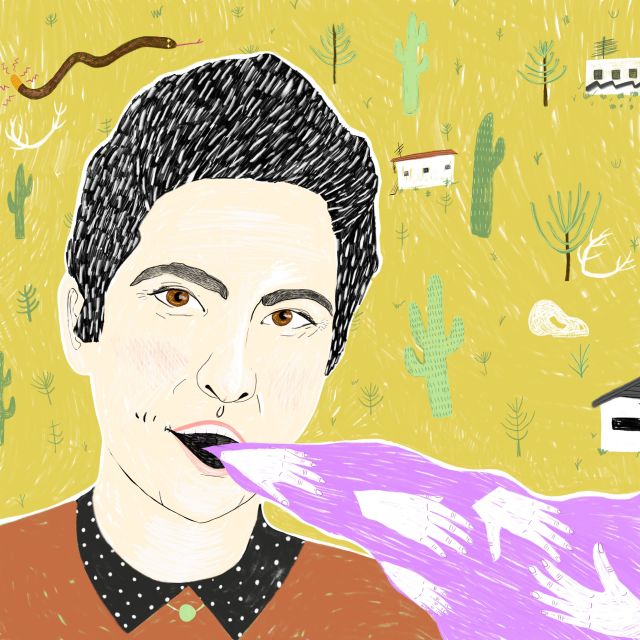
Lena | | | | | | | | | | | | I'm a Weird Girl | | | | By Jill Soloway | | |
I was sitting on a pier in Provincetown the day I first read the script for "A Short History of Weird Girls." My feet were in the water and the pages got all wet in my hands. I was reading on actual paper because I was in the middle of a month off work for the first time in about four years. I was on a tech hiatus — no devices, no Wi-Fi, no Internet for 30 whole days.
The previous few years had been a ferocious tsunami of ambition that started when my parent came out. My work was a perfect escape hatch from the tumult of my personal life. After multiple seasons of my career at the speed of flapping hummingbird wings, it was finally my intention to take time off and "enjoy life," as I hear people do.
But the soul of "A Short History of Weird Girls" really fucked me up. It was the fifth episode of the first season of I Love Dick, our new series that just came out on Amazon, and it's about the sexual backstories of four of the show's female characters. The script took me straight out of vacation mode (honestly, who ever thought I could do it anyway? I have an idea for a bumper sticker that says DOWNTIME MAKES ME ANXIOUS; it's an idea I thought of during supposed downtime). I immediately called Sarah Gubbins, my collaborator and the showrunner of I Love Dick, on the ye olde flip phone I had bought for the month.
"I HAVE TO DIRECT 'WEIRD GIRLS'!" I told her. She said she couldn't hear me well and asked if she could text me later, but my phone didn't receive texts so I just moved closer to a beached rowboat in the hopes that she might hear me better. I said it again, only louder.
"OK, OK," she said. "But you're supposed to be taking a break. What's gotten into you?"
"I love this script. I love weird girls. I am a weird girl. I've always been a weird girl."
OK, yeah, less so now that I identify as nonbinary, but whatever.
I think I felt pretty normal up until around the age of ten. It's odd that I don't have any memories of not fitting in before then, considering that my sister and I were the only white kids in the school. We were lucky enough to live in a fantastic Chicago neighborhood called South Commons that was an urban experiment in integration. The air we breathed was a larger calling for one and all to be a living testament to the power of peace, love, social justice, civil rights, and the ERA, somehow mashed up into one big stew of purpose.
Around middle school, though, we changed schools, to a tiny Jewish day school. I was confronted with mean girls for the first time. Our fifth-grade class had five boys and four girls. I was the new fifth girl. That made us ten kids.
This should be easy, I thought — for the first time I was around people like me. Everyone was Jewish and from liberal families in Hyde Park, which was one neighborhood to the south and would ultimately become the home of one Barack Obama. But these girls, the Rachels and Debbies and Miriams, they straight-up hated me. They hated the fuck out of me. These nine kids had been in a Jewish day school from the age of zero and had been learning Hebrew, Holocaust, and upper-level science with real dissection in locked arms ever since. I was lost, but I didn't know it.
Until one day a girl named Suzy took me into a classroom to tell me that she couldn't be my friend. Well, OK, she could, but only if I promised never to tell anyone else.
I still remember that moment. Alone in a classroom with the alpha. Like Comey at dinner with Trump, it took a turn. I was now the Other. There were no other girls to turn to, considering that there were only three of them and they all belonged to Suzy. There was something wrong with me, and I didn't know what it was.
For some odd reason, I followed up this awful year by going to a sleepaway camp with another set of ten girls who had known each other since forever. They also hated me. Note to self, parents, and parents of all young people looking for a Self — middle school is not the time to change friends. Middle school is the time to strengthen bonds with kids you already know so that you can make other people feel odd.
For an unknown reason, we switched neighborhoods and schools yet again, moving to the Near North Side of Chicago, a few blocks from Rush Street, where locals and yahoo tourists go to "do Chicago." The kids in that neighborhood were fine. I had friends now. Seventh and eighth grade were better.
We used to do that thing where your best friend calls the boy you like and you listen in on the other line. Someone asked Scott if he thought I was cute, and he said I looked like a turtle.
I'm not saying I'm tortured by that, but I am looking for that moment where I started to think there was something really wrong with me and soon everyone would find out. I guess it's as simple as saying it was a birth, of sorts, of Shame.
Somewhere early in high school, I realized I had a body that guys were into, with gigantic boobs and skinny the rest of me. By gigantic, I mean outsize, I mean completely unreasonably connected to my body, I mean men honking as I walked down the street.
Transforming from a weirdo into an object that boys and men of all ilk wanted did not help my shame. In fact, it might have made it worse as it all went down below. Most people thought I was happy because I looked like the idea of whatever cute looked like then. But the acting had started.
I think all girls feel weird. Actually, so many people of all gender identities feel odd and weird, don't feel natural about sex. The script became an idea for me, like an entering-into-evidence in the court of public opinion, like testimonies.
They're saying, "This is where my shame comes from." That's what I wanted to film, and I wanted to obliquely treat each image as if it were a photograph dropping onto another photograph in a courtroom, maybe a courtroom of the world. I hope it feels like a ride where every time you want to stop and see more, you can't because we're moving so fast.
In a way, all of us are on trial for being weird. Directing the episode felt like the making of a document, with a sort of weaponizing feel, something zealous meant to raise hackles. I always wanted to be a lawyer but as a little girl felt too dumb. The bar exam seemed impossible. I always wished I could just be a part-time guest star, like doing closing arguments in a sex-crimes court, when I had spare time. But this piece of film feels like an argument to me, doing all of the things with TV that you aren't supposed to do. Propagandize. Teach. Be didactic. Sedition.
Although I never made it to law school, I did get lucky enough to land in this place where I get to use the framework of a TV show to delve into my own emotions, my own shame. Make things better, for me, and hopefully for the people who find the show and find a place to feel less odd and more proud of their own inner weird girl.
Jill Soloway is an artist and filmmaker who created Transparent and co-created I Love Dick, both on Amazon. They live in Los Angeles, have two kids, dream about being a part of a global movement to dismantle patriarchy, and are totally exhausted. | | | | | | | | | | | | When Unity Doesn't Include Women | | | | By Cristina Garcia | | |
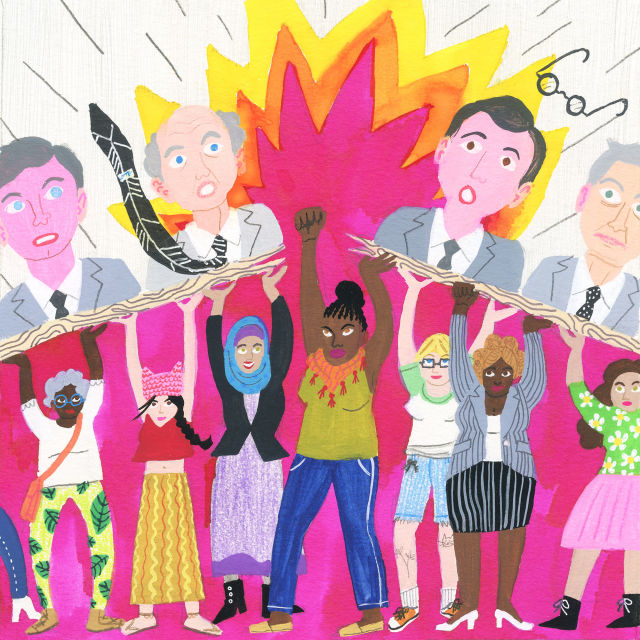
Let's face it; women are the backbone of the Democratic Party. We are the activists, the fighters, and the energy. Women launched the post-inauguration march that demonstrated to the world that Americans would not just roll over and accept rule from a party that lost the vote of our people.
Together, women serve as a collective igniting force that energizes the underrepresented, the ignored, and the silenced, because we too are still fighting for the most fundamental rights in the 21st century. We too must constantly defend our bodies, claim our autonomy, and protest our exclusion from both the table and the menu. If any lesson is learned from the election of President Donald Trump to the Oval Office, it is that this party needs to reconsider the vision that we have for the future. Unfortunately, I'm not sure our current leadership understands that.
Earlier this year, Vermont senator Bernie Sanders and DNC chairman Tom Perez took the opportunity to embark on a much-needed "Unity Tour," on which they laid out their forecast for the future of the Democratic Party. These efforts, especially in the wake of the divisive 2016 election, are a vital part of how we move forward. Our party is fractured, and we need to make every possible effort to come together to defeat congressional Republicans' dangerous agenda — whether Donald Trump remains their leader or not.
However, their Unity Tour did not include any high-profile female representatives, which gave the impression that fixing the economy is only a man's job. Women are not just 52 percent of the population, they're also business owners, CEOs, and bankers. Women are more likely to manage household finances than men are.
In fact, women are also very savvy financial leaders. Even before we were allowed to hold jobs in the public sphere, we were entrusted with balancing the family budget and stretching every dollar. After the Wall Street bailout, FDIC chair Sheila Bair and Massachusetts senator Elizabeth Warren pushed for stronger regulations and more oversight over the reckless entities that had plunged our economy into crisis. The SEC has been led by four women consecutively, and Janet Yellen is proving to be a trustworthy steward of the Federal Reserve.
There are plenty of strong female leaders who are making a splash on the national stage who would have been great additions to the conversation. Elizabeth Warren can get under Trump's skin like no one else. Kamala Harris delivered one of the only significant victories for the Democrats in 2016.
Perhaps if a woman had been included on the tour, these two men would have been more careful about campaigning with a candidate who toes the line on a woman's right to choose. Maybe there would have been more alarm at the prospect that Republicans are currently trying to charge women more for health care because of our biology. Or maybe there would have been deeper discussions about how we can increase the diversity in our leadership because women still only make up 20 percent of the representative governing body of our nation.
Yes, the intention of Mr. Perez and Senator Sanders to focus in on the economic issues is laudable, but we should not assume that they are gender-exclusive.
Fixing our economy and protecting the rights of women go hand in hand.
When women are empowered to demand higher wages, they spend more money in our economy. When they can keep their jobs after giving birth and afford child care, they spend those wages to support their families.
Our economy is stronger when women are empowered.
Yes, we want a higher minimum wage, health care for all, and affordable college tuition, but we also want the right to control our bodies, to be paid the same as men, and to be equally represented. Our economic futures are intrinsically tied to our right to choose when and if we get pregnant.
Having control over my own body meant I could graduate from college, get a master's degree, become a homeowner, help run the family business, and run for office on the timeline that I chose. Men don't have to worry about the career consequences of getting pregnant.
To be clear, I'm not saying that the divide in the party between progressivism and pragmatism is not worth evaluating, but women need to be at that table too.
A Unity Tour that lacks representation from half the world's population and the backbone of the Democratic Party is not complete. It is important that the men in charge of our party acknowledge the privilege of always being at the table and use that power to bring women up with them. Every issue is a women's issue, period. If we're truly going to be united, we must always have a place at the bargaining table.
The men in Democratic leadership need to rededicate themselves to giving women a seat at the table. The values we have espoused as a party on reproductive rights, equal pay, and other gender-equitable measures cannot be compromised. Give women a voice. Let us help draft the plan for a more prosperous economic future where our rights and our bodies are respected.
"Donald Trump did not win the election — the Democrats lost the election!" Bernie Sanders said to a Miami crowd on the Unity Tour. "That means rebuilding the Democratic Party, making it a grassroots party, a party from the bottom on up!" What he needs to realize is that women ARE the grassroots, and they're only getting more energized. Right now, an "unprecedented" number of women are planning to run for office in the wake of Trump's presidency. I want it to be clear to these women that they are our future leaders — and I shouldn't have to write an op-ed to tell them that.
California assembly member Cristina Garcia is the chair of the California Legislative Women's Caucus and a champion for women and girls in her state. She is the author of the bill to repeal the tampon tax and recently introduced legislation to redefine rape to include "stealthing" in California. | | | | | | | | | | | | Why I Decided to Do Nothing With My Art Degree Except Complain About It | | | | By Chelsea Martin | | |
I wish I could have a house.
I feel ashamed to say that. It's like saying I want to be an admired professional athlete, when I've done absolutely nothing in my life to merit such a thing. I have very little money, a freelance job that could disappear at any moment, insurmountable debt, and a worthless, embarrassing art degree.
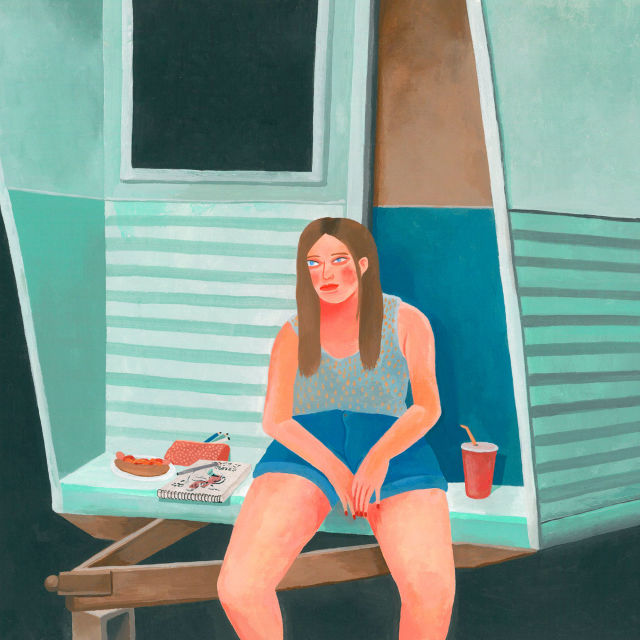
But I don't even want a nice house. It doesn't even have to be a house. It could be an old trailer parked on some unbuildable piece of land in the middle of nowhere, or a tree house built for children. Just something to make me feel like I'm investing in my future and paying toward something that could someday be mine. A safety net.
But the cruel reality is that buying a house will probably be forever impossible, given the credit score I ruined by not being able to make payments to my student loans for several years, unless I find a bag of unmarked bills.
My debt, bad credit, and unstable income are the direct result of obtaining the art degree I decided to get when I was a seventeen-year-old who had never had a job, who was so surrounded by poverty that I believed my struggling, slightly-above-the-poverty-line family was "middle class," and whose entire concept of edgy/alternative art revolved around Andy Warhol. This teenage version of myself singlehandedly fucked shit up for every other version of myself forevermore. I like to think that I was actively cultivating my adorably self-destructive sense of humor, but I think I was just dumb, or maybe horny for the boys I thought would be at art school.
The only way I see out of this impossibly dark and claustrophobic debt hole (aside from the bag of unmarked bills) is the same bachelor of fine arts that led me into the hole in the first place. A BFA is essentially an expensive lottery ticket, with big payouts to the very select few who are somehow able to get people to pay them for their work. Ironically, the only way I can keep playing this lottery is to continue prioritizing making art over making money. If you're not willing to stop making art and you're not willing to be poor forever, you have no choice but to keep trying, to keep believing that this extremely unlikely payout could still happen to you.
I may be making this ratio up, but I think it's something like one out of every four hundred million artists is able to support themselves with their art. They're not great odds, but I've already put so much money and energy into this system, it would be a waste to disengage at this point. And sometimes it seems like I'm making progress, since last year I sold a book (although "sold" is a weird way to put it, since I got a $0 advance from my publisher (but I don't write books hoping for money (I don't know why I do it))).
My boyfriend, Ian, started sharing my home-buying delusion. Together we looked for $25,000 properties (raw land in undesirable areas), $50,000 properties (vaguely house-shaped things with a small possibility for habitability in undesirable areas), and $100,000 properties (fixer-uppers in undesirable areas). Ian has great credit and no debt, I thought. Maybe he could take out a loan. We looked through hundreds of properties, sent links to each other, researched zoning laws, priced the construction of off-grid cabins. We looked in cities we'd never been to and the remote suburbs hours outside of those cities. We talked about whether or not a flushable toilet was absolutely necessary.
Last year, Ian and I both started freelance jobs making emoji for a messaging start-up. It's my first art-related job (shout out to the nepotism of my high-school ex, who was in charge of hiring). To learn how to use Adobe Illustrator, as was required for the job, I took a course on lynda.com for $30. I tried not to think about the $3,000 Adobe Illustrator class I took in art school that somehow taught me nothing. The only thing I remember creating in my $3,000 Adobe Illustrator class is an elephant version of Oscar Wilde. My elephant Oscar Wilde vector art is very painful to remember because of how ugly and stupid it was, and how many weeks it took me to make it. Long Live Obsolete Hard Drives With Old Art on Them That You Are Eventually Forced to Throw Away!
Maybe I can climb the emoji corporate ladder and someday land a top-tier emoji-design position that will possibly pay me enough for me to get my life together. The only thing I imagine stopping me is the fact that I'm barely interested in the field. The other day I had to check my phone to see if a tree emoji existed in iOS because I just don't even care enough to retain that information. There are, in fact, three tree emoji, four if you count the palm tree on an island, five if you count the cactus. But I wouldn't recommend it, because a cactus is not a tree. I even Googled "is a cactus a tree?" to make sure, because I don't trust myself with anything. Sometimes I'm glad I went to art school, because the lack of general education is a really good excuse for not knowing extremely basic things about the world.
I hope it doesn't sound like I regret art school. Art school is amazing. It's four years of slowly eating Stouffer's lasagna out of the cardboard bowl it was cooked in while pondering the meaning of your self. It's fancy, self-indulgent, and technically an education. You can tell people you're going to college and they conjure images of you studying textbooks and learning how to think rationally. Meanwhile, you're writing a long prose poem about how eating food from McDonald's is impossible while warming up Stouffer's lasagna in the microwave (it was my thing). I honestly feel lucky that banks wanted to prey on me so badly they lent me money for art school and billed me later. It was there that I learned that art is something to be taken seriously, to better yourself with, to help you engage with the world.
"Your emoji-design job is bullshit," the banks told Ian.
"That's true," Ian said.
Every job anyone I have ever known has ever had has been bullshit, I imagined countering.
You know that is a crazy statement, the banks would say.
I would say, How is it that seventeen-year-old me was able to borrow an obscene amount of money for a degree that had almost zero likelihood of helping me find a career, and yet borrowing less than that for something tangible that would definitely make my life easier is out of the question?
This is way more complicated than you realize, Chelsea, the banks would say. You went to art school, you say? That's not a real education. We don't have time to explain the financial industry to you. Tell your little boyfriend to get a real job.
"It's not like we can't afford it. Renting an apartment is more than a mortgage payment would be," Ian said. "We want a really simple, cheap house."
"The best we can do is a $15,000 personal loan."
We started fantasizing about renting-to-own a busted trailer with the $15,000. We looked at tiny undesirable lots that were filled with garbage even in the photos advertising them. I imagined cleaning up the property, moving the garbage artfully to the perimeter to form a lovely garbage fence. I imagined drying my laundry outside to avoid trips to the Laundromat, getting an aggressive guard dog, walking to 7-Eleven without a bra to buy a hot dog and scratcher tickets, peeking out my trailer windows at the pesky neighbors.
I did a little math and realized we would need at least double the money in order to buy a crappy used trailer on a lot. It's a hard fact to swallow that the image most privileged people conjure when they think of poor people is my unrealistic aspiration. I need to make double the amount of emoji I ever thought was possible. Triple! Quadruple! If there are words like this after "quadruple," I don't know them. That imaginary banker was right. An art-school education is not very well-rounded.
Oh, I just remembered: "quintuple" — I Googled it to make sure it's a real word.
Chelsea Martin is the author of five books, including Caca Dolce: Essays from a Lowbrow Life, forthcoming from Soft Skull in August 2017. Follow her @_chelsea_martin. | | | | | | | | | | | | Do Not Tell Me to Be Quiet | | | | By Yetide Badaki | | | |
"Ladies should be quiet, ladies should be proper, ladies should be … nice."
I have heard those words, or some variation of those words, my entire life.
I still remember the day when I was taught what the world expected of me as a girl. I was about six and was running around my backyard in the glorious heat of a humid equatorial Nigerian day. I occasionally shouted with joy as I gave chase to my older brother, whom I idolized. As the rivulets of sweat trickled down our faces and backs in the sticky heat, my brother whipped off his shirt, and I gleefully did the same. And as I blissfully took in the feel of the cool breeze on my skin, I heard a woman call out my name, her voice filled with shock and horror.
I was told that my behavior was inappropriate, that it was unladylike to make so much noise and especially unforgivable to take off my shirt. I was confused and asked why my brother could do these things but I could not, and I was told, quite simply, "You are a girl." There was no malice, no ill intent, it was stated as simple fact.
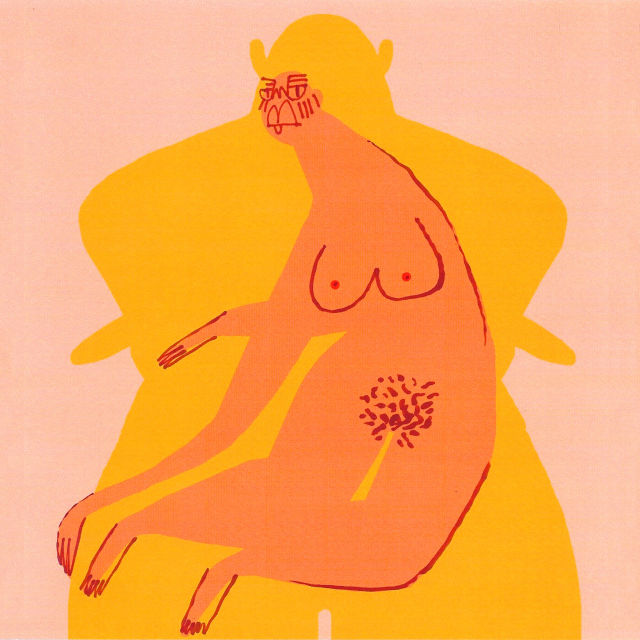
Over the years, I learned the lesson of proper femininity well. I learned that as my body developed, I shouldn't play sports because it would distract the boys. How I shouldn't wear tight clothes or short skirts because it drew attention. How to hold my tongue, be agreeable, be soft, and be likable.
I formed a protective weight barrier in my early teens, as there were advances even then. Feeling it was my job to avert the gaze, I helpfully began to hide within my own body. And while I found respite on the stage, where I could scream, shout, and explore with abandon, my everyday existence was still about exhibiting a straitjacket of niceness.
And then, the last straw. I was told I could no longer do what I loved — acting —because it wasn't "nice" or "ladylike." I tried to comply. I worked hard to fit in to the ever-tightening corset of perceived womanhood. I couldn't breathe. When would these restraints ever end? And the answer was clear: they wouldn't. This corset would either squeeze all the life out of me, or it was time to forget nice and break the bonds. So I did. I made my environmental-science major into a minor, got in to grad school for theater, and felt for the first time that I was truly beginning to live, to find my voice, to breathe.
Fast-forward through a marriage, a divorce, and about a decade, and I'm reading audition sides for a goddess who literally devours men with her vagina. Bilquis is an ancient goddess of love on the TV show American Gods, adapted from the book by Neil Gaiman. There were many who clamored to tell me how "not nice" such a character was and how "not nice" it would be for me to want to play her.
But I loved Bilquis. I had loved her from the moment I first came across her bold aesthetic reading Neil's book in 2001. And I began to develop an even deeper love for her as Bilquis's unapologetic approach to life continued to inspire and inform me, as I became a version of her.
Despite all this, there were still many hang-ups, many fears propagated by the shadows of my past. In a very politically charged climate, I found myself struggling to filter a taught aversion to discussing my beliefs. That was until I woke up a certain morning in November with a heavy heart and a profound sense of guilt. I had been complicit. Every time the shadows of my past kept me from continuing a discussion because it was not "nice," I had given permission for certain behaviors and prejudices to continue.
I started to tentatively enter the conversation. It was new ground for me. I stuttered and stammered my way through it, and at times I could barely be heard. But I was finally speaking. One night, while conversing with several acquaintances on a West Hollywood balcony about the perils of discriminating against others purely based on their differences, it all came to a head. I was not going to be complicit yet again, I was not going to allow prejudice to continue to take hold, and I was not going to allow for it to be normalized.
Then, in the darkness, I hear those ever-present words: "Be quiet." A wellspring of experiences and similar constrictions traveled up from my pelvic floor, rattled around my diaphragm, and rushed forth between my quivering lips — "DO NOT TELL ME TO BE QUIET."
There it was, the summation of the majority of my life thus far: making allowances, shrinking to fit in to the spaces that we are grudgingly allowed. Be quiet? That is all I had ever been! I worked hard to appease, to placate, to never appear assuming or difficult or, heavens forbid, too assertive or ambitious. What had that accomplished?
To be clear, I am not saying I have the answers, and in no way am I looking to be an example. I am flawed, I am learning, and I make many mistakes. But what I am doing is cultivating my voice now, hoping to aid in amplifying the voices of the women around me. I am reaching inside, holding out my hand to that six-year-old girl, and I am asking her to live out loud.
Yetide Badaki is an actress who currently stars in American Gods on Starz. | | | | | | | | | | | | I Hoped for a Boy | | | | By Elsa Collins | | |
It's 2008, and I am in a casino in Las Vegas. I am not playing blackjack; I am working the employee break rooms to help elect the first female president of the United States. I am going from culinary worker to culinary worker, telling them, in English as well as in Spanish, why her beliefs, her plans, her experience, and her education should garner their votes. She is smart, she is qualified, she is female.
I am also a few weeks pregnant with my first child … and I am hoping it will be a boy.
Wait. Of course I hope the baby will be healthy. Of course that is most important above all. But with my next thought, I hope I have a boy first. Then "the pressure" will be off. The pressure that was coming from my mother, my husband, his family, people I don't even know. My father didn't stop until he got his son — it took him seven tries. Even the woman at the checkout stand ringing up my prenatal vitamins was wishing me luck in having a boy.
It somehow will prove my husband's masculinity that he can "make men," and even though I don't contribute the chromosome to determine sex, my body will have complied. Because often we are blamed for not being able to provide the son.
A couple of weeks go by, and at our three-month appointment, our OB-GYN asks us, "Do you want to know the sex?" We say yes, and we hold our breath. "It's a girl" … and I am disappointed. I missed her showing me the ovaries that determined her sex because I am looking at my husband and am feeling bummed. I feel like I have let him down. Yes, he was wishing for a boy. I know this even though he never said it aloud, and of course he wants a healthy baby too … but I see in his posture his shoulders falling for a quick second.
I thought the cultural bias favoring men was something unique to the Hispanic culture of machismo. Men are considered more important, considered to have more value and be better than women. Growing up in Mexico in the '90s meant that any girls who tried to join in on sports in recess were rejected by the boys. The girls rejected them, too. I was told that playing sports with the boys made me more of a tomboy, and if I wanted to sit with them, I had to stop. In junior high school, administrators would rank students monthly based on their grades and put a numerical list every month. When I was at the top of the list one month, the director came to the classroom to berate the boys and bemoan how this "half-American girl could possibly be getting better grades than the boys." My popularity was based on who I was dating, and I quickly learned that most of my value was based on looks and who I could be married to at some point. Maybe this is why my father kept on trying to have a son.
But then my husband, who is African American, also felt this way. And then I realized the majority of my friends, no matter their ethnicity, felt this way. A Gallup poll in 2011 showed if Americans were to have only one child, they would prefer it to be a boy rather than a girl 40 percent to 28 percent (which is up from 38 percent to 24 percent when polled in 1941). So 70 years later, the gender bias has grown stronger. Gender favoritism has no cultural barriers.
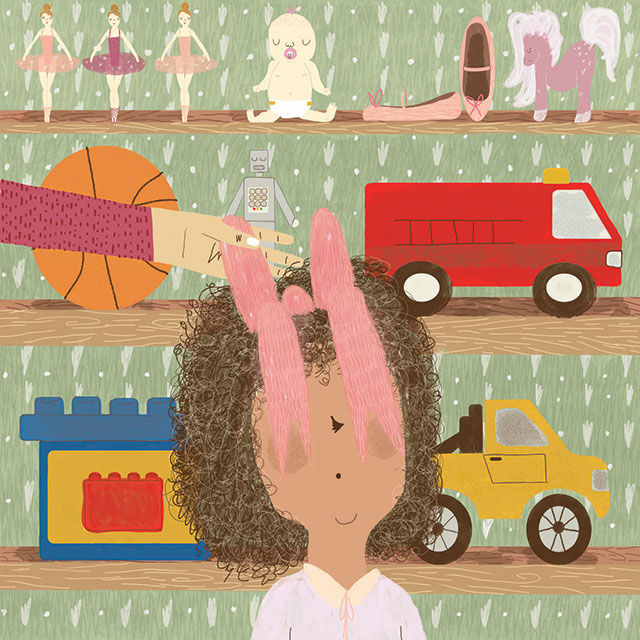
Once we knew we were having a girl, society started dictating gender roles and behaviors to my unborn child. The majority of the gifts I received were every shade of pink and purple. I did not receive one Lego set, one truck, or one ball, but I received four baby dolls for her to play Mommy and enough matching hair bows to fill a drawer. And by the way, it wasn't like I was buying those Lego sets for my daughter either. In fact, I think to compensate for the guilt I was feeling about having a girl, I may have gone to the other side of the spectrum and bought half of those hair bows. The room was promptly painted pink, and I started researching Mommy and Me ballet classes.
She was born, and I dressed her up in those pink-and-purple outfits with the matching hair bows and let her play with those dolls and play Mommy. I believed that a woman could be president, fly a plane, be a firefighter, be a surgeon, be a neuroscientist — and watch out, anyone who tells my daughters differently (I had a second daughter in 2010) — but I had not started the revolution at home.
Fortunately, we can evolve as humans, as individuals, as women. When my older daughter was three, I started to notice that if she wasn't wearing a skirt that could twirl, she was upset. Pants were an abomination. I thought to myself, Uh-oh, I have been telling everyone around me that looks don't matter and girls can do anything, and I somehow missed communicating this to my two daughters.
So I bought the Lego set (I started with the white, pink, and purple set, and then moved on to the Lego city set). I bought books about women doing amazing things to read to my children, like Grace for President and Not All Princesses Dress in Pink, and now that my eldest is eight, she is tackling the young-readers' edition of Hidden Figures. I encouraged wearing pants, getting dirty, and playing outside, and I spoke to them about having no limitations. I started looking for camps that were science-based and focused on problem-solving instead of the traditional dance camp. It was a struggle at first to get them behind the idea that engineering was cool, but after constructing a roller coaster out of classroom items and building something tangible, they were hooked.
The 2016 presidential campaign provided me with a concrete opportunity to engage with my girls in a way that I had been searching for. They came with me to rallies for Hillary Clinton; we started reading her speeches together. We started having the conversation about equal rights and equal pay, and I was able to illustrate how being a woman is difficult. At one point, I was traveling to Colorado to get out the vote, and my daughters sent me off by saying, "We hope you register lots of voters, Mommy, and it's OK if you aren't here for our basketball game, because it's hard being a woman," and I was overcome with a feeling of triumph.
My husband was feeling like we were done having kids after having our two daughters. Well, here's a little secret: the daughters that I was so ready to be adored by are actually Daddy's girls. The relationship between them is so strong and nurturing that I am so thankful that I had daughters for him and sisters, one for the other. I did have a son four years ago. I won't lie, I am happy that I had him. And there were references to "our little prince" by the grandparents. But the truth is that my oldest daughter is the one who sets the tone for the household and the rest of her siblings. The girls are definitely dominating him and deciding what show they watch and what game they play. I am also more comfortable enrolling him in nontraditional classes like dance. He knows that being friends with girls is important, that his sisters can also play with his cars and imitate a traffic jam, and up until now, his older sisters can and will block his basketball shot. We are also teaching him it is OK to cry, and even at this age (he is four), that no means no, silence means no, and only yes means yes.
When we don't activate and participate in parenting, we allow those long-ingrained beliefs to be our default state. It is more difficult to fight against what has been the status quo. It is difficult to encourage your daughters to speak up, speak out, and to be nonconformists. The changes started off small and grew incrementally. It started with not being hung up on the skirts that would twirl but choosing pants and outfits for comfort. Now, we are sitting around the breakfast table discussing why there still hasn't been a female president and how they are hoping that will change.
Elsa Collins is a graduate of Stanford University and Columbia Law School and a social-impact consultant residing in Los Angeles. | | | | | | | | | | | | | | The email newsletter where there's no such thing as too much information.
From Lena Dunham + Jenni Konner. | | | | | | | |  |  | |






No comments:
Post a Comment