| |  | | | | September 13, 2016 | Letter No. 51 | | | | | | | | | | | Advertisement | | |  | | | | | | | | | Hi Lennys,
I'm back! I had a gorgeous healthy little girl in the middle of July. We are immensely grateful for this, and I try to be thankful every day, as the birth of a thriving child is a little bit of grace in a world that can be ugly, chaotic, and just wrong. During feedings in the middle of the night I would listen to the radio and hear about the latest global atrocities — Syria, Nice, Trump. I'd look down at the guileless face of my baby and think, What am I getting you into? There were days when I'd just hide from the news, because in my postpartum hormonal state it was way too much.
But we can't hide from uncomfortable, horrific truths, and that's why it's so important to have essays like Natalie Baszile's, about the decades-long impact environmental racism has had on generations of her family. Natalie is the author of Queen Sugar, the best-selling book behind Ava DuVernay's buzzy, beautiful new TV show, and she writes about how redlining (the practice of denying black people housing loans, except in undesirable neighborhoods) has had potentially fatal repercussions. The areas of Texas and California that Natalie's family was shunted into were literally toxic — downwind of noxious chemicals that shrouded their neighborhoods in awful smells. This is something that families of color are still reeling from today.
After sitting with Natalie's piece, here's a bit of whimsy: Laia's interview with costume designer Colleen Atwood, who has designed the unusual, dramatic, and otherworldly outfits for the characters in Tim Burton's movies, including his latest, Miss Peregrine's Home for Peculiar Children. We also have three recipes from the endlessly talented chef Julia Turshen for dips that will delight your face (I want to make the carrot-miso one immediately).
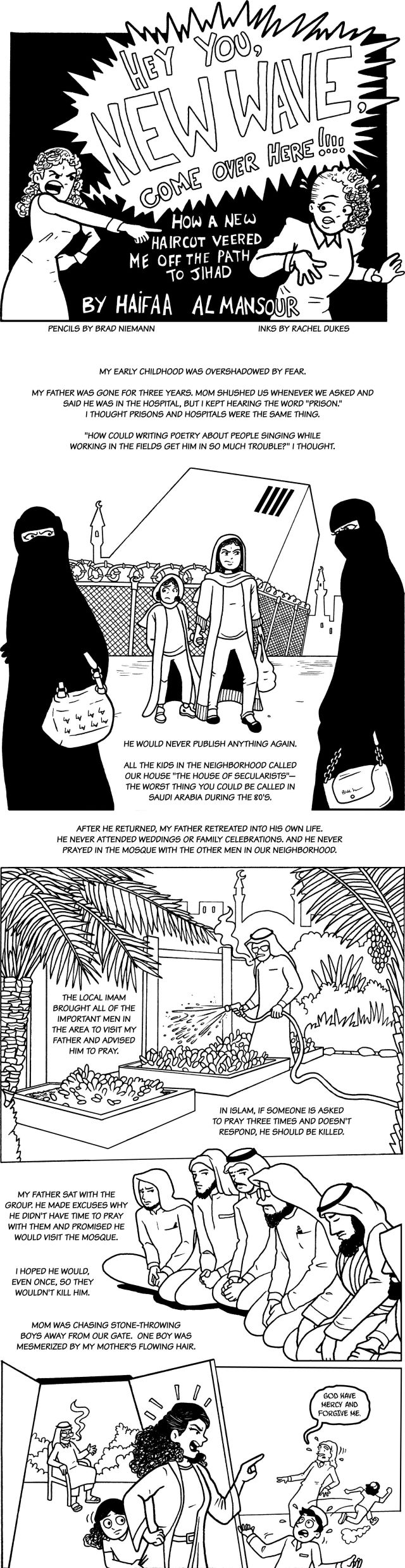
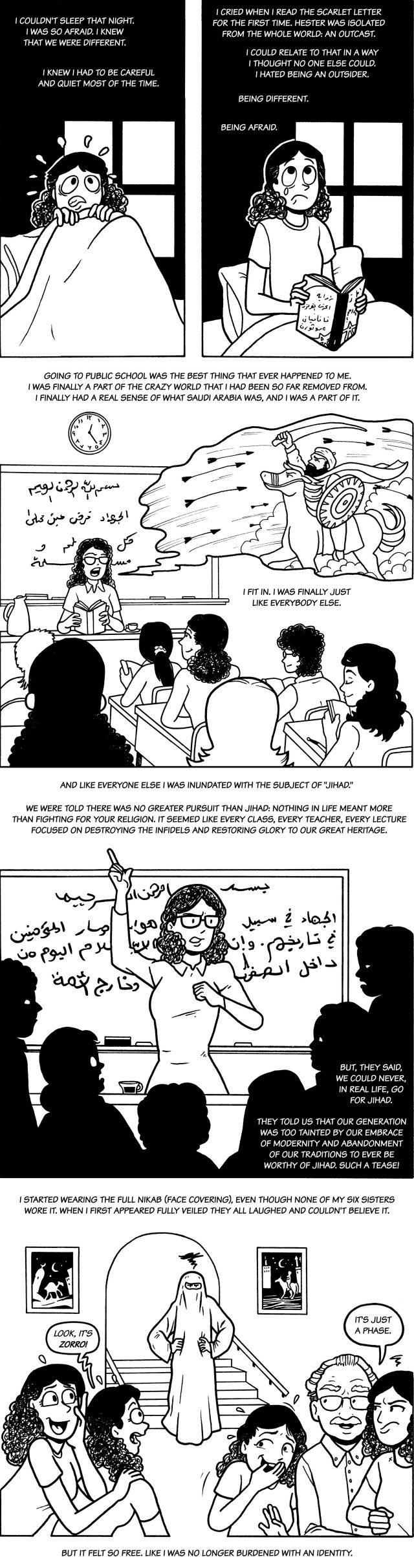
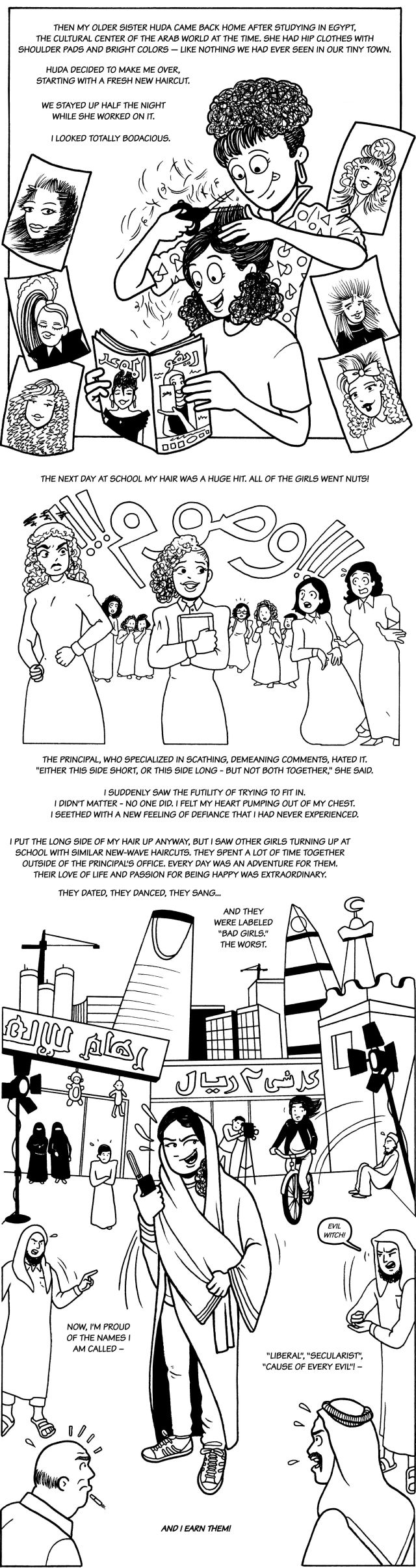
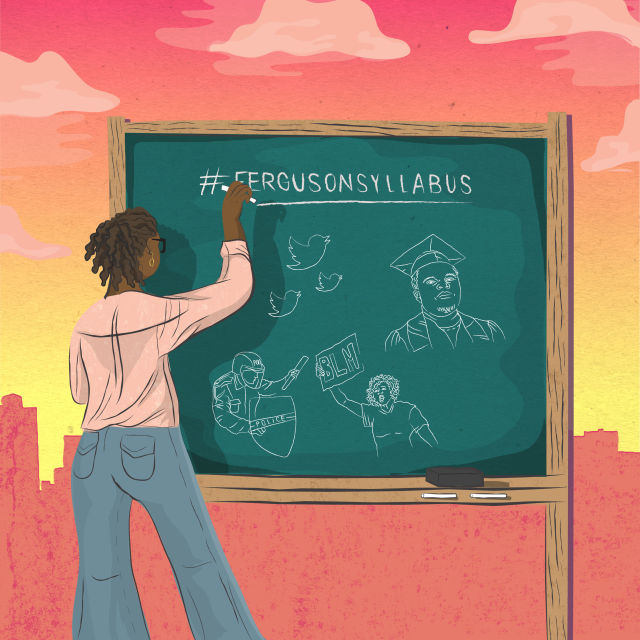
Then, we have the multitalented director Haifaa al-Mansour with a comic about how getting a New Wave haircut as a girl in Saudi Arabia kept her from embracing the idea of jihad (seriously). And finally, we come back to the idea of facing our history, with Georgetown professor Marcia Chatelain's piece about the hashtag she created, #fergusonsyllabus, in response to the killing of the unarmed black teenager Michael Brown by a white police officer in 2014.
As Marcia describes it, "The hashtag was a plea: 'Please talk about Ferguson. Find something to say. Our students are confused, scared, and they are getting a constant stream of arguing talking heads. They need us to talk.'" Let that be a lesson that keeps on teaching us. No one should bury their head from the hard realities, from the bad things that happen every day in America and elsewhere. It's a privilege to avoid those things in the first place. We need to keep talking, learning, and evolving.
Xx
Jessica Grose, editor | | | | | | | | | | | | Advertisement | | | | | | | | | | | Down Wind | | | | By Natalie Baszile | | |
When my father was fifteen he packed his clothes in a cardboard suitcase, and, over his mother's tearful objections, caught the bus from Elton, his tiny hometown in the heart of South Louisiana's rice country, across the border to Port Arthur, Texas, a port town at the mouth of the Gulf of Mexico. It was home to the nation's largest oil refinery. He moved in with his uncle, Madison Baszile, and finished high school in Port Arthur.
Madison was the most important man in my father's life. He initiated him into the world of men offering advice on everything from love, sex, and marriage ("Before you marry, go three deep," which meant before you tie yourself down, research the person's family back three generations, so you'll know what kind of people you're really dealing with) to financial matters ("Never touch the lump" — which meant save your money, spending only the interest you earn, if you have to, but never the principal — an idea he overheard while moonlighting as a cook for the white oil executives at Texaco).
By day Madison worked as a handyman at Texaco, stenciling warnings on the massive chemical tanks. By the time my dad moved in, Madison had worked at Texaco for almost fifteen years. He was married and had five daughters. He was a good husband and an attentive father. But like the other black families in Port Arthur, redlining limited Madison's housing options. He never had the luxury of researching his environment three deep. He bought a modest wood-frame house six miles downwind of the Texaco refinery. Day and night, a white plume billowed from the refinery's smokestacks. Sometimes the stacks spewed fire. The air reeked constantly — a sulfurous odor that you smelled as soon as you rolled into town.
Madison's oldest daughter, Alphamel, died in 1964. She died from fluid around her heart. She was 25 years old. Her weight could have been a factor in her death, but so could the toxic emissions — sulfur dioxide, benzene, carbon monoxide, and other pollutants — she inhaled daily growing up in Port Arthur.
Madison's next daughter, Fayetta, was 43 when she died of breast cancer in 1993.
Sandra, Madison's third daughter, died of lung cancer in 2000, most likely because she smoked.
Charlotte, Madison's fourth daughter, was 60 years old when she died of breast cancer in 2003.
Of five daughters, only his youngest, Madiola, is still alive.
Before he passed away in 2000, I asked Uncle Madison if he was alarmed that, at that point, three of his five daughters had died. He was ambivalent about linking their deaths to the refinery. I was dumbstruck, but I got it. Like so many Port Arthur residents who depended on the oil and gas industry for their livelihoods, Uncle Madison was reluctant to blame the region's largest employer for his suffering. But it's hard to ignore the evidence. One in five Port Arthur households has someone in it struggling with heart problems, skin ailments, and respiratory illnesses such as asthma or bronchitis. Cancer rates among African Americans in Jefferson County, which includes Port Arthur, are 15 percent higher than in Texans in the rest of the state. The cancer mortality rate among African Americans in Port Arthur is 40 percent higher than among African Americans elsewhere.
Today Port Arthur sits in the shadow of the 4,000-acre former Texaco plant, now known as Shell/Saudi Aramco, the nation's largest oil refinery. The facility is on the receiving end of the Keystone XL tar-sands pipeline, producing 636,500 barrels of crude oil per day. Port Arthur used to have a bustling downtown with restaurants and department stores filled with white patrons, many of whom worked for the refinery. Today Port Arthur's population is mostly black. Austin Avenue, the main street, is all but abandoned. Since the 1980s, Shell/Saudi Aramco's white employees have moved north of Port Arthur to mid-county communities along Highway 287, towns like Nederland, which has a multiplex and a Best Buy, three seafood restaurants and a Smoothie King.
But my family's story isn't over.
By 1964, my father had moved from Port Arthur to Los Angeles, married my mother, and moved from Leimert Park to Carson, a suburb thirteen miles southwest of downtown. Like Uncle Madison, my father was a good husband and attentive father. He too wanted the best for his family.
Carson wasn't my parents' first choice of neighborhoods. They wanted to move to a new housing development in Torrance, a neighboring city closer to the ocean, but the builder refused to sell them a house. Emboldened by widespread redlining practices, the builder steered them and other black families to the Del Amo Highlands housing tract in Carson, an unincorporated part of Los Angeles County formerly home to landfills, refuse dumps, and auto-dismantling facilities. Carson sat in the shadow of Stauffer Chemical Company, maker of, among other things, herbicides for corn and rice.
My parents paid $32,500 for a four-bedroom, three-bath house on Cliveden Street. Every afternoon around three o'clock, the winds shifted, blowing fumes over our neighborhood, skunk-smelling fumes so powerful they turned the paint trim on people's houses a different color after a year. One of my earliest memories is of looking out of my bathroom window in the afternoons at an orange sky.
My family lived in Carson until 1971, when my parents drove fifteen miles south and put down a deposit on a new house in Palos Verdes, a community overlooking the Pacific Ocean known for its good public schools and clean air. For 37 years my parents believed they had outrun the effects of inhaling toxins spewing from the refinery. They believed the price they would pay for upward mobility would appear only on their mortgage statement.
In 2008 my dad was diagnosed with a rare and aggressive form of soft tissue cancer called leiomyosarcoma. That Thanksgiving he stood in my kitchen in San Francisco and I felt the mango-seed-size lump that had grown on his rib cage. It was visible under his skin, and I couldn't help but think about Uncle Madison's warning. Until the cancer, my dad's health had been good. He died in 2011.
Is it possible my dad's death resulted from all those years in Port Arthur and Carson? I don't know. But it's hard to ignore the evidence. The Carson area has the highest concentration of refineries in the state of California. The benzene, carbon dioxide, hydrogen sulfide, and other toxins emitted from the refineries have been linked to asthma, chronic rashes, and leukemia. It's hard to forget that federal housing authorities sanctioned redlining in communities like Carson as early as the 1930s. Residents there, most of whom are black or brown, finally won their battle with the refineries in 2015 when they received a $90 million settlement from Shell.
But the damage had already been done. What I do know is that aside from Uncle Madison's family, we didn't have a history of cancer in our family until my dad's diagnosis. I know his siblings never moved to Port Arthur or Carson. They're still alive.
Natalie Baszile is the author of Queen Sugar, her debut novel, which is being adapted for TV by the writer and director Ava DuVernay and coproduced by Oprah Winfrey for OWN, Winfrey's cable network. She lives in San Francisco. | | | | | | | | | | | | Advertisement | | | | | | | | | | | | | | | The Peculiar Career of Colleen Atwood | | | | By Laia Garcia | | | | | | |
For the last three decades, costume designer Colleen Atwood has been inconspicuously influencing pop culture and the world at large. The designer, who might be best known for her fantastic work in nearly every Tim Burton movie, including Edward Scissorhands, Alice in Wonderland, Ed Wood, Mars Attacks!, Sweeney Todd, and Planet of the Apes, has also helped in the creation of indelible characters in movies like Philadelphia, That Thing You Do!, and Gattaca. She has shaped our visions of the past and our visions of the future. She's a three-time Oscar winner and has also designed costumes for the Ringling Bros. Circus and uniforms for My Chemical Romance.
The release of Tim Burton's Miss Peregrine's Home for Peculiar Children finds Colleen working once again with Burton, the master of otherworldly fantasy, and we took advantage of it to talk about her career and her inspirations. Over the phone, Colleen was warm, and her no-nonsense approach to her life and her work was truly an inspiration. We could've easily chatted for hours. I wouldn't have minded just going down the list of all her movies and just asking, "What was that like?" Especially when I remembered that for my eighth-grade talent show, my class decided to reenact That Thing You Do! and put me in charge of the costumes. Who would've ever thought I would be speaking to the real woman one day?
Laia Garcia: Were you into fashion as a child?
Colleen Atwood: I loved clothes. One of my grandmothers had amazing style and kept up with fashion, and the other could sew and fix things and was very crafty, but wasn't especially fashionable. I got the best of both worlds by being around both of them. I was aware of fashion and how to look "smart," and I also knew how to make things out of nothing and make them look good. I think from an early age I was definitely into it.
LG: Did you have a peculiar personal style from a young age or did that develop more when you were a teen or in college?
CA: You know, I think that happened later for me. I mean, I always had style, and I was a clothes fiend, I loved clothes. I lived in a farm town in Washington State, and the first thing I did when I got a job that paid a little money was buy a white blazer with a crest on it. Now, why I bought that when I was in fifth grade, I don't know. It really wasn't part of the life that I was living at that point in history. We didn't have a lot of money; we had basic clothes. We weren't fancy, let's put it that way.
I think that epiphany really happened for me in the mid-'70s. I worked in a boutique, Marshall Hills store in Seattle. I kind of managed and did all the displays and stuff for the Yves Saint Laurent boutique and when he was first hitting it big. I would save all my money and buy something great. I wish I still had them.
LG: Were you working there because you wanted to work with clothes?
CA: No, it was a moneymaking job more than a thing that I was aspiring to do. I was in art school and I wanted to be a painter, but I had a child. I always had to make a living, so I kept having jobs like that. When she finished high school, I moved to New York and started this career.
LG: How did you change from wanting to be a painter to costume design?
CA: I like to say I learned how to do it in a practical way rather than in a "cool" way.
I started painting less and less as I had to work more and more to make a living for my family. But the love of beautiful things was always there. I had a good eye for working with clothes because of my training. When I started to work in film, which was as a grunt in an art department, people appreciated it, and it moved me forward in that direction. They always asked me to do the clothes, so it just kind of ended up happening that way.
LG: You've also made costumes for rock stars and music tours and even for the circus — which seems like it would be so much fun! Can you tell me a bit about those experiences?
CA: I love doing different things. I've done ballet also. For live entertainment, the costumes have to live for a long time. You have different requirements to what the costumes have to do because of their function. Dance costumes are kind of like action costumes, they're just prettier.
LG: You've worked with Tim Burton for over two decades. Do you have a secret language by now?
CA: It's funny with Tim and I. We've always had a comfortable way of communicating on a work level. It's a challenge to try to keep coming up with new stuff for him that isn't just the same thing over and over again.
He really loves color and art and painting and costumes. He lets you do whatever you want to create, he doesn't get in the way and try to control it or anything. He's totally comfortable with my choices; he always has been. He's just a respectful person.
LG: What are some of the things that you researched or looked into when you were designing the costumes for Miss Peregrine?
CA: There was research about the refugee kids that went to the countryside in England to avoid the bombing of the cities during World War II, and then researching quirky villages in England and how people looked in those places. Even though there are different time periods, I was really trying to make it feel like it had a flow to it.
LG: What was your favorite costume or style moment in Miss Peregrine?
CA: We have so many wonderful children's costumes in Miss Peregrine that I loved. The kids were so great, and to see all of them standing together with Eva Green and her strange kind of look, the feeling of that world together with her, was really exciting to me.
LG: Is there a time period or a style that you love but haven't been able to incorporate or work with in one of the projects that you've done?
CA: Well, there's so many elements. I've always wanted to do a Pancho Villa kind of Mexican-style thing. Or the Infanta, like the Spanish court, I love some of the paintings from that era, which I've never gotten to do. I mean, and also I love Elizabethan, and I've only kind of gotten to do a spin-off on them in Alice's costume in Alice in Wonderland, but I've never really gotten to explore that Tudor world, which I think is very beautiful.
LG: What is the most important lesson that you've learned in your career?
CA: That you really have to be able to keep moving forward in time. If something isn't working, maybe go away from it and come back to it, but just keep working and working really hard. Nobody's going to do the work for you, you have to figure it out. I've managed to gather amazing teams in different parts of the world I've worked in, and respecting the people that work in collaboration with you is really important. Because if you don't have a connection with those people to realize your vision, you're not going to get anything out of it, you're not going to get what you want.
This interview has been condensed and edited.
Laia Garcia is Lenny's deputy editor. | | | | | | | | | | | | | | | | Advertisement | | | | | | | | | | | Dip In | | | | By Julia Turshen | | |
| (All photos courtesy of the author) |
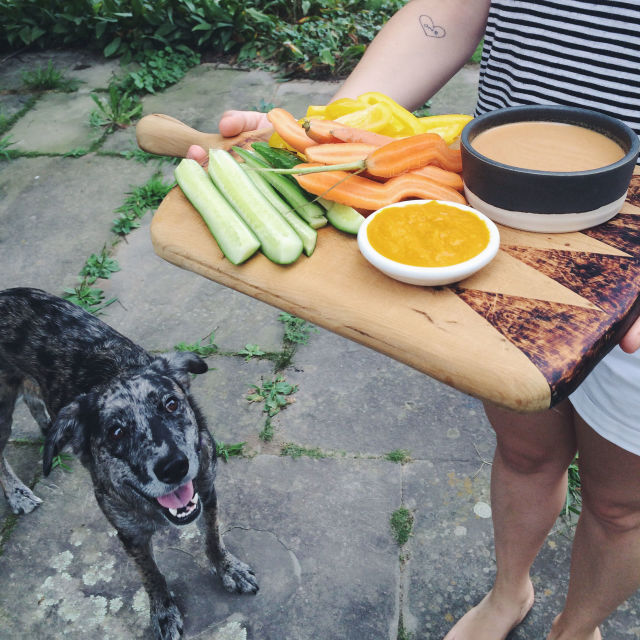
I love versatile recipes that give you a lot of flavor for very little effort. Enter these three easy dressings/sauces/dips (call them whatever you want), which require nothing more than throwing a handful of not-too-out-there ingredients into a blender or food processor and buzzing them until they're smooth. They all keep well for up to a week in a jar in the fridge, and making one of them (or all three, go for it!) means you will have a great, super-flavorful mixture on hand to throw on salads, dip vegetables into, or spoon on top of things like store-bought rotisserie chicken or last night's leftovers to jazz them up a bit. This is very true to how I cook at home since my wife and I try to eat really healthy food, and having a good dressing on hand makes everything a little more exciting. Oh, and these all happen to be completely vegan, which is great if that means something to you!
Creamy Caper Dressing (i.e., Vegan Caesar)
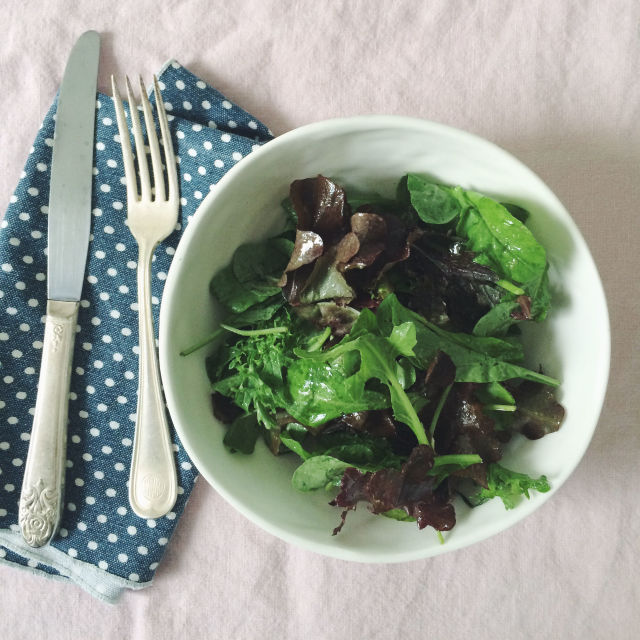
The most requested recipe I've ever created is my classic Caesar-salad dressing, which I couldn't resist calling "Julia's Caesar." The non-vegan version is in my new cookbook, Small Victories, but I've always loved this vegan version just as much and thought it deserved its own moment in the limelight. Here it is! It's great served on romaine with croutons (even better if that salad is served on a red-checked tablecloth). I also love dipping potato chips in this. I know that is the opposite of what you're supposed to use salad dressing for … but rules are for breaking, no?
Makes a generous cup/240 milliliters
1 large garlic clove, minced
3 tablespoons drained capers
2 tablespoons fresh lemon juice
2 tablespoons red-wine vinegar
½ cup/120 milliliters extra-virgin olive oil
¼ cup/60 milliliters vegan mayonnaise (such as Vegenaise or Sir Kensington's Fabanaise)
½ teaspoon coarse salt
A few grinds of black pepper
Place all the ingredients in a blender or food processor, and purée until smooth and well combined — alternatively, you can finely chop the capers and just whisk everything together. Will keep in a jar in the fridge for up to a week (stir before serving).
Carrot-Miso Dip
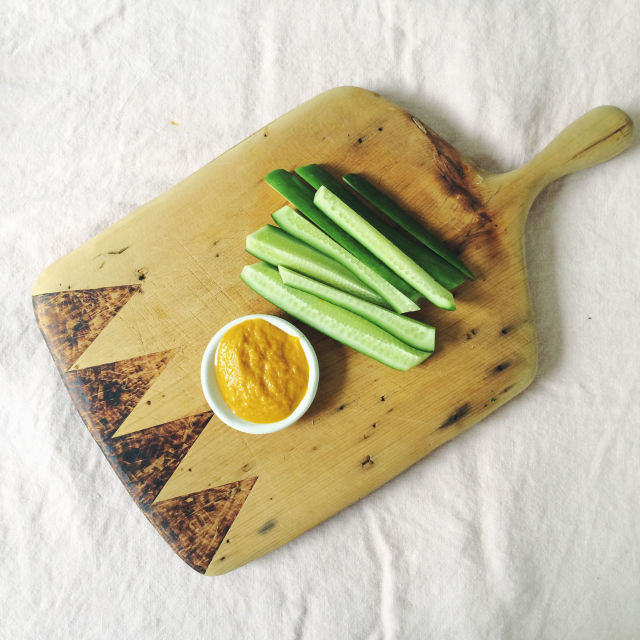
I feel like dipping one vegetable into another is like getting healthy extra credit. Enter this vegetable-based dip, a mash-up of carrot-ginger dressing and miso dressing and a sliced cucumber's best friend. It's also great to serve on grilled salmon or grilled shrimp. Or thin it out with a little extra rice vinegar, and use it as a salad dressing.
Makes a generous cup/240 milliliters
1 large carrot, peeled and roughly chopped (about 1 cup/150 grams)
1 garlic clove, minced
2 tablespoons miso paste (any kind will do)
3 tablespoons rice vinegar
3 tablespoons water
3 tablespoons extra-virgin olive oil
1 tablespoon soy sauce
Place all the ingredients in a blender or food processor, and purée until smooth and well combined. Will keep in a jar in the fridge for up to a week (stir before serving).
Spicy (or Not) Peanut Sauce
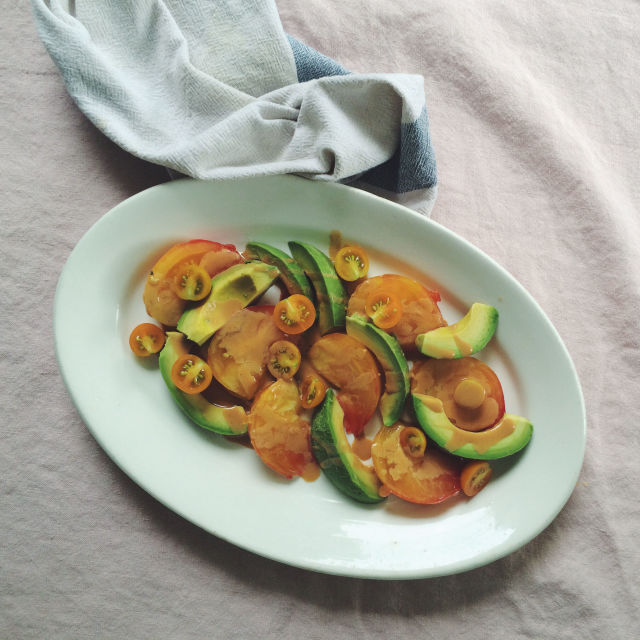
This peanut sauce makes everything it touches taste like spicy sesame noodles, which, to me, is a great thing. You could leave out the sriracha if you don't like spicy things, or use less — or use even more if you really like to sweat. For a great snack, I love filling the hollow of an avocado half (the depression left after you take the pit out) with this sauce and then eating the whole thing with a spoon. It works really well on cooked noodles, hot or cold; try buckwheat soba, thick udon noodles, "zoodles" made with zucchini, or even just good old spaghetti. It's also delicious on roasted vegetables, especially broccoli, sweet potatoes, Brussels sprouts, squash, and carrots. Honestly, this would be good on a flip-flop.
Makes 1¾ cups/420 milliliters
½ cup/150 grams smooth peanut butter (see note)
3 tablespoons rice vinegar (or fresh lemon or lime juice)
3 tablespoons soy sauce
2 tablespoons sriracha (or your favorite hot sauce), optional
1 tablespoon honey (or agave nectar)
1 teaspoon roasted-sesame oil
½ cup/120 milliliters water
Place all the ingredients into a blender or food processor and purée until smooth and well combined. Will keep in a jar in the fridge for up to a week (stir before serving).
Note: For the peanut butter, I prefer using one that's made just of peanuts, but use whatever you already have. If your peanut butter has sugar in it, leave out the honey (or agave nectar). If it already has salt in it, start with 1 tablespoon of soy sauce and taste before adding the second (you might not need it).
Julia Turshen is the author of Small Victories. She lives in upstate New York with her wife, dogs, and cat. | | | | | | | | | | | | Advertisement | | | | | | | | | | | New Wave | | | | By Haifaa al-Mansour | | | | Director Haifaa al-Mansour is often called brave, and she is. She is the brilliant mind behind Wadjda, about a Saudi girl's quest to purchase a forbidden bicycle, and Women Without Shadows, a documentary about women in the Arab world. Her bravery shines through her subjects, her narratives, and her boundary-breaking — Wadjda is the first feature film made by a female Saudi director. For Lenny, she made us a comic about one of her first rebellions.
—Mikki Halpin
Haifaa al-Mansour is the first female filmmaker in Saudi Arabia, whose films include the 2005 documentary Women Without Shadows, and Wadjda. She recently published a novelization of the film titled The Green Bicycle, and is currently working on the forthcoming A Storm in the Stars, based on the life of Mary Shelley. | | | | | | | | | | | | Advertisement | | | | | | | | | | | The Ferguson Syllabus | | | | By Marcia Chatelain | | |
When someone tells me about how difficult it is to talk about race in America, I'm always a little puzzled. Most days, it feels like that is all I do. I teach and talk about race everywhere, and I have for a long time. But the summer of 2014 and Michael Brown's killing in Ferguson, Missouri, changed everything for me.
The killing of Michael Brown made me sick for the reasons it made most people sick. As the news of his death flowed through my social-media accounts, I couldn't stop thinking about a dead body exposed to a community for hours on end. I thought about his grieving parents, who were forced to live their nightmare in public while defending their son. I was transfixed by the ethereal glow of tear gas pouring out into the night — the clouds of smoke and the squeals of protesters and bystanders searching for milk to cool the burning in their eyes while gasping for breath. No one should have to see or feel any of these things, but we all did.
When my husband told me that the Ferguson schools wouldn't be open for the first day of scheduled classes, my heart broke a little more. I've spent the majority of my life on a school schedule, so the first day of school is my sacred, secular holiday. Strangely, in times of tragedy, it's the little things that move you. It's the same way you can hold it together through a funeral, but the sight of deviled eggs at the reception afterward can send you into a primal wail. The thought of kids missing the first day of school sent me into action.
On Twitter, I asked my fellow educators — like me, most are dual citizens of Black Twitter and Professor Twitter — to consider devoting their first days of class to Brown, who had graduated from high school weeks before he was killed, and to all the kids in Ferguson. It was a small idea, a small contribution to something so deep, so rooted, so big, and so crushing that I didn't want to be alone. I used the hashtag #fergusonsyllabus.
The hashtag was a plea: "Please talk about Ferguson. Find something to say. Our students are confused, scared, and they are getting a constant stream of arguing talking heads. They need us to talk." What happened next is the kind of thing that I never imagined — the Ferguson Syllabus became a thing.
Colleagues decided to reinvent their classes for the semester, adding topics like the militarization of the police, the rise of social movements, and Missouri history to their syllabi at the last minute. Friends tweeted pictures of slides and flyers that said #fergusonsyllabus on them at schools around the country. Several high school teachers found my e-mail and asked if I could help them subvert orders from school districts that no one talk about Ferguson. We figured out how to use civics classes strategically.
Tech-phobic teachers signed up for Twitter, and they found themselves connected to allies. My Twitter followers in Halifax, Nova Scotia, related #fergusonsyllabus to Afro-Canadian history, and they donated socially conscious books to prison literacy programs. If you search for #fergusonsyllabus today, you will find a chronicle of how educators stepped up and reimagined what can happen at schools when history is happening all around us.
My students did so much of the teaching that year. A group in my African American Women's History class gave a presentation on their trip to Ferguson to stand in solidarity with residents; they had driven thirteen hours to get to Missouri from D.C.. We talked about their Facebook arguments with high school friends.
I didn't realize that after the semester ended, I would continue talking my students through the many other flashpoints that came after Ferguson. When Freddie Gray's neck was broken in Baltimore, and Sandra Bland was found dead in a jail cell in a Waller County, Texas, jail, and Korryn Gaines was gunned down in her home, my students reached out and asked to talk. One of them tweeted: "I really need @DrMChatelain's class. No one talks about anything together in real life." As my students count the number of women, children, and men killed, the police officers unindicted and acquitted, and the structures unreformed, I have noticed their reactions change. Injustice does not shock them like it used to; increasingly fewer of them have to be convinced that ours is a troubled age when it comes to race and inequality. But they are also unafraid to speak to their experiences, to speak out against what they see as wrong, and to speak to each other about race.
Here is the thing: silence does not protect us; in fact it suffocates us. I'm humbled by the folks who do the heavy lifting for justice — the protesters who lay their bodies down on pavement, the mothers who utter their dead children's names every day in hopes that our society might finally honor them, and the organizers who clear their eyes and lungs and bring more and more people closer to the movement. Among all this bravery, I offer what I know I can do: the work of teaching people how to really talk, of encouraging kids to notice differences, of helping teachers overcome their biases and fears of the children they need to care about, and of getting my colleagues to see that everything — yes, everything — is about race. My sense of commitment to helping get these conversations started has been reanimated and reimagined by the increased visibility of Black Lives Matter after that fateful summer.
When I travel and speak, people tell me stories; sometimes they hold back tears and choke down shame in the moments before the snacks and drinks are served. I think about them often. The black girl — one of the few at her private school — who told me that she feels weird because her white friend's parents forbade her from going to the prom with a black guy. The white high school teacher whose parents were staunch integrationists, leaving him to grow up without neighborhood friends. The immigrant parents who revealed that they had been harassed and brutalized by police but had never talked to their kids about it until one of my events. It's powerful. It's emotional. After the panels are convened and I have answered my last audience question, I go back to the hotel room and sit quietly. Sometimes, I cry. Sometimes, I exhale because I'm thankful that the audience warmed up or a heated moment came and went. Then, I get ready for the next conversation.
Marcia Chatelain is the author of South Side Girls: Growing Up in the Great Migration and the host of the podcast "Office Hours: A Podcast." Oh, and she's a professor, too, at Georgetown University. | | | | | | | | | | | | | | The email newsletter where there's no such thing as too much information.
From Lena Dunham + Jenni Konner. | | | | | | | |  | |  | |









No comments:
Post a Comment