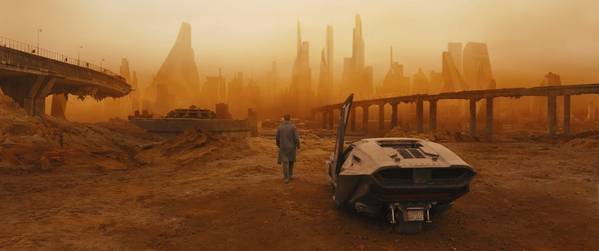
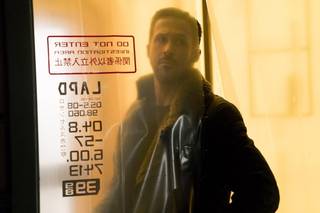
| Every week, I answer a question from the Monday Act Four Live Chat in the Wednesday edition of this newsletter. You can read the transcript of the Oct. 9 newsletter here, and submit questions for the Oct. 16 chat here. This week, a reader wants to know what happens when a different director makes a sequel to a cult movie. The tone to “Blade Runner 2049” is much different from the original. It’s far less film noirish and in portions is downright lush. How much should a sequel follow the original’s guiding principles even if the story is new? I think the answer to this question depends on the circumstances in which said sequel is being produced, right? If a new director is working under the close supervision of the original director or heirs who control the rights to the original work, and those people want the sequel to be stylistically and tonally true to the original, than that director better be a pretty gifted mimic. On the other hand, in different circumstances, a director and writer can feel free to innovate while working within the general factual confines of an established world. All of that said, though, I think the answer to your question can totally vary. “The Empire Strikes Back” may be the greatest sequel to an original movie ever made, and it’s very close to “A New Hope” in visual style, tone, conversational pacing and temper and characterization. It’s also about events that follow closely on the events of the previous movie, and about the same characters in roughly the same circumstances, so it makes sense for the continuity between the two movies to feel pretty smooth. “Blade Runner 2049,” by contrast, is a great argument for deviating within existing franchises, and one I think that the “Star Wars” movies could stand to learn from. The movie, which has a new writer and director, is about a world we know, but the world has changed, the main character has changed, the plot has changed and the circumstances of the old main character have also changed dramatically. It might actually make less sense for “Blade Runner 2049” to precisely ape the original, because it would make these temporal and thematic differences less clear. Also, frankly, it would be a bit of a waste of new technology (and of cinematographer Roger Deakins) to try to replicate the look of the 1982 original too closely (though Peter Suderman has a point about the lived-in nature of the original world). This is also one of the reasons I’m looking forward to Ryan Coogler’s “Black Panther” so much; I’m desperate to see something in the Marvel Cinematic Universe that feels truly different. For some audiences, franchises may be like McDonald’s: comforting because they offer the same exact thing over and over again. I’d rather see them function like the great restaurant groups, where there’s room for real innovation and surprise in each new iteration. |









 Twitter
 Facebook


No comments:
Post a Comment