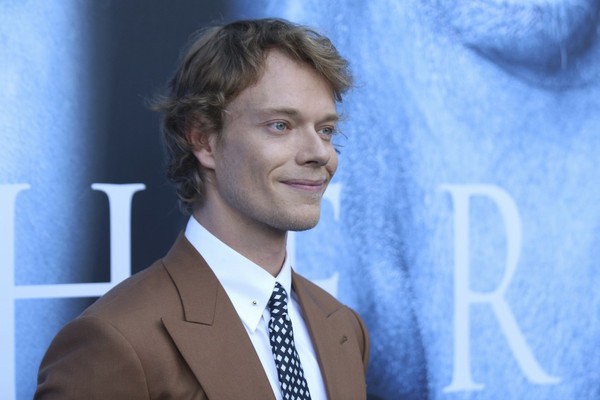
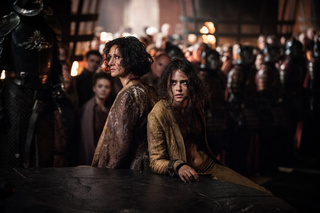
| Every week I answer a question from the Monday Act Four Live chat in the Wednesday edition of this newsletter. You can read the transcript of the July 31 chat here, and submit questions for the Aug. 7 chat here. This week, a reader uses “Game of Thrones” to ask a larger question about the toll of a grim role: I’ve always wondered if a role an actor plays “rubs off” on the actor’s psyche. On “Game of Thrones,” Alfie Allen plays someone (Theon) who was once cocky but has been enormously cut down to size, and ever since has had to endue constant humiliation (other than saving Sansa). Can that affect actors as they go about their normal lives? This is an interesting question, and one that has been debated for a long time. For a concise and typically thoughtful consideration of the question, I’d point you to Richard Brody’s meditation on the subject from 2014. He’s talking in part about a divergence in styles of action between those actors who feel the need to become a character and those who simply put on a character as if the persona is a costume. For the actors who do the former, Brody argued, “An actor’s attempted excavation of her own deepest and harshest experiences to lend them to characters adds a dimension of self-revelation (even if only to oneself), of wounds reopened and memories relived, that would make for agony in therapy. On the other hand, the effort to conceive a character as a filled-out person, with a lifetime of backstory and biographical details, becomes a submergence into another (albeit fictitious) life, an abnegation of a nearly monastic stringency. In the effort to make emotions true, to model performance on the plausible actions of life offstage or offscreen, the modern actor is often both too much and too little herself.” I don’t know that I necessarily agree with Brody that actors who take on and put off their characters as if changing clothes are necessarily relying on the force of their own personas to be magnetic. But the piece is an interesting history of this debate, and a nice delineation of two distinct approaches. Both Allen and Sophie Turner, who plays Sansa, have had to inhabit a lot of exceptionally difficult material over the years. But they don’t seem particularly method; in fact, with their adopted dogs and attempts at humor in interviews, it seems like they’re careful to separate the people they play on screen with the people they try to be when they’re not being filmed. For a series like “Game of Thrones,” that strikes me as a healthy choice. And it hasn’t kept either of them from turning in wonderful work. It’s one thing to need to go deep to deliver a performance. It’s another to falsely fetishize actorly agony as the only way to give a transformative one. | 







 Twitter
 Facebook


No comments:
Post a Comment