| |  | | | | July 11, 2017 | Letter No. 94 | | | | | | | | | | | Advertisement | | |  | | | | | | | | | Dear Lennys,
The other week, we asked you to give us your feedback — the good and the not-so-good — in a survey. And hot damn, you delivered. We loved hearing directly from our smart, engaged, impressive readers about what you want to see more of (hey, non-American Lennys, we see you and will strive to be more global) and what you want to see less of (uh, you think we've been kind of a bummer lately, and we've already been working on less we're all gonna die).
But one of the biggest notes we got was that you wanted our stories and images to be more navigable and shareable. To that end, we're rethinking our relationship to lennyletter.com starting now. Since the beginning, we had a 24-hour delay between releasing the Tuesday newsletter and putting stories on the website. We did that because we wanted our readers to feel like they were getting something exclusive and special. But that delay is no longer serving you, so we're going to be putting stories simultaneously in your inbox and on our site.
That way, if you want to keep reading Lenny in your email without interruption as a respite from the web, you can continue doing that. But if you want to read select articles and/or save them for later in an app like Pocket, you can do that too. We're going to make the titles of each article link to the website, and we will also make sure that there are clear links to each week's stories in the intro to each issue.
Without further adieu, here's what's in this week's delectable Lenny:
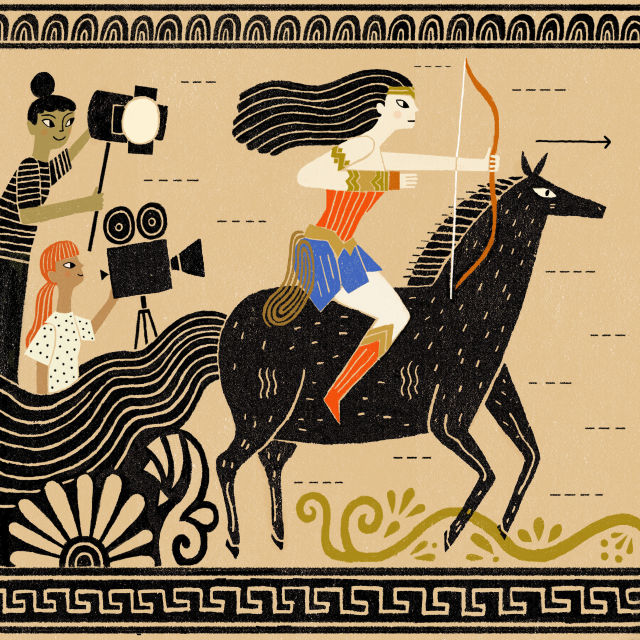
—Wonder Woman costar Connie Nielsen has a personal rallying cry against feminist backlashes. She comes from a long line of feisty women — her great-grandmother Olga once set fire to a store she had given her cheating lover. But each of these women experienced pushback from a society that wasn't ready for them.
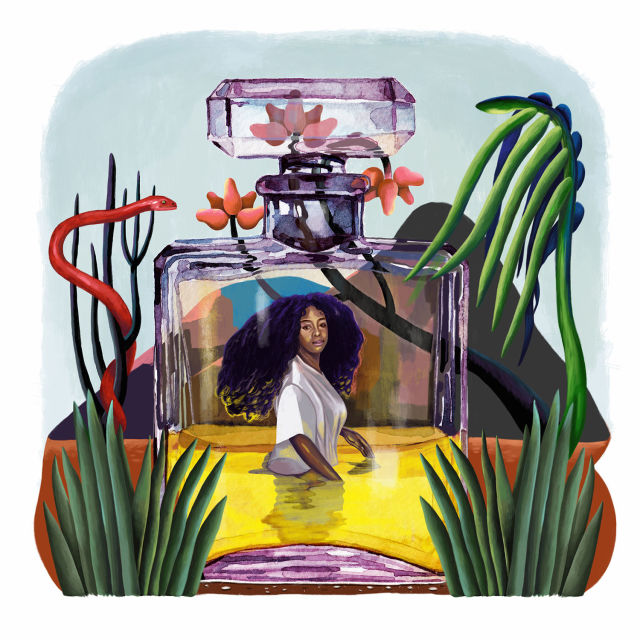
—Our intrepid beauty columnist Rachel Seville Tashjian goes all in on signature scents, and honestly she blows my mind with the revelation that eau d'you doesn't even have to smell good. Whoa.
—In a beautiful, evocative essay, writer and Nieman fellow Lolly Bowean tries to reconcile the gentrified city she now resides in with the pull of what used to be home.
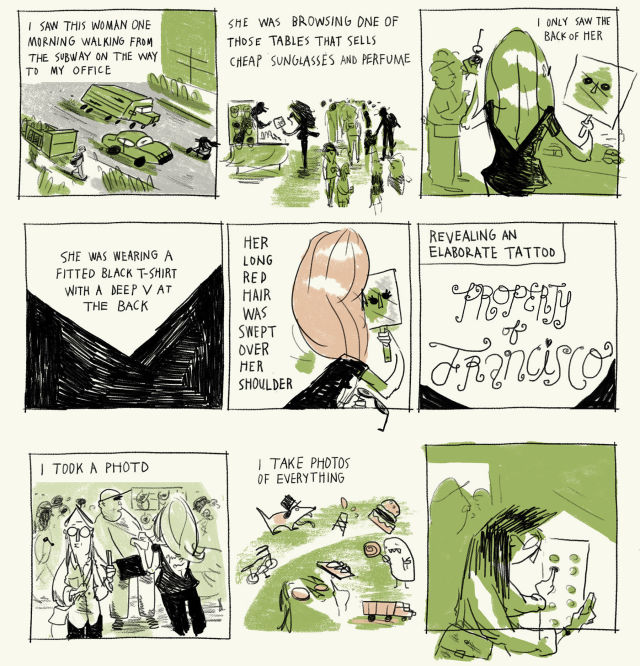
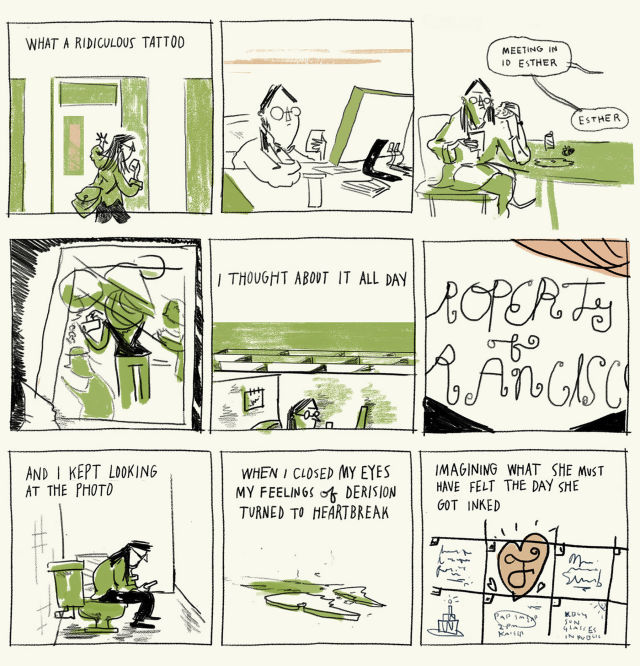
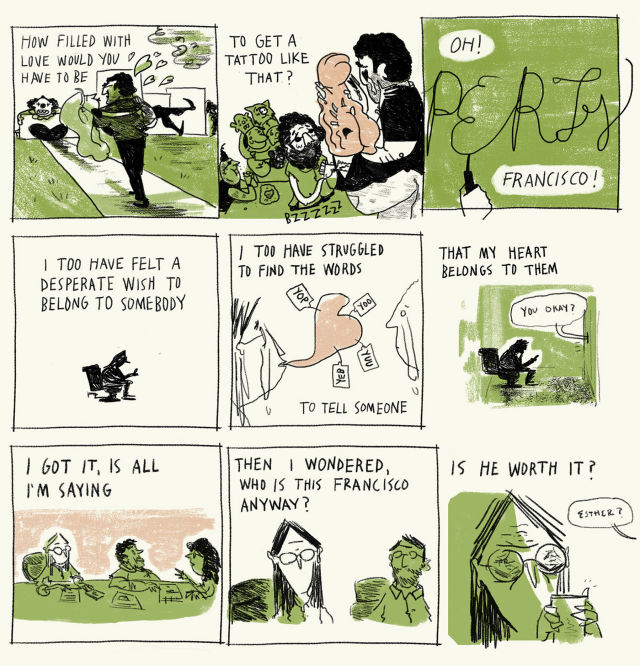
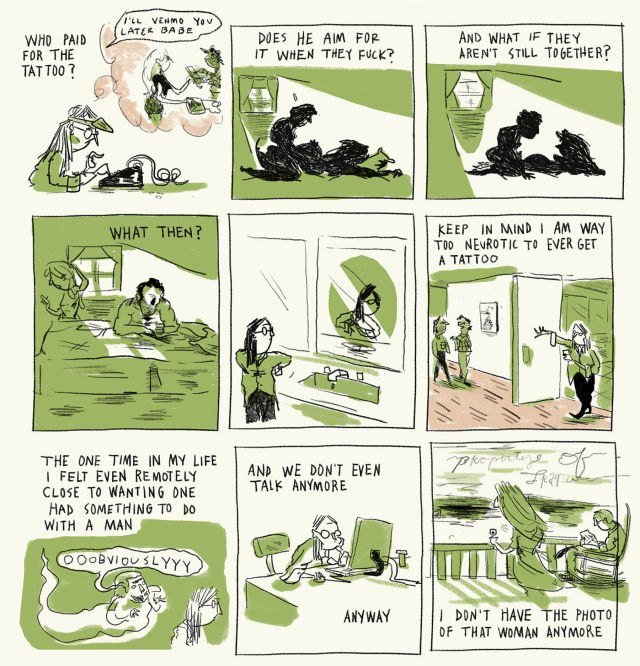
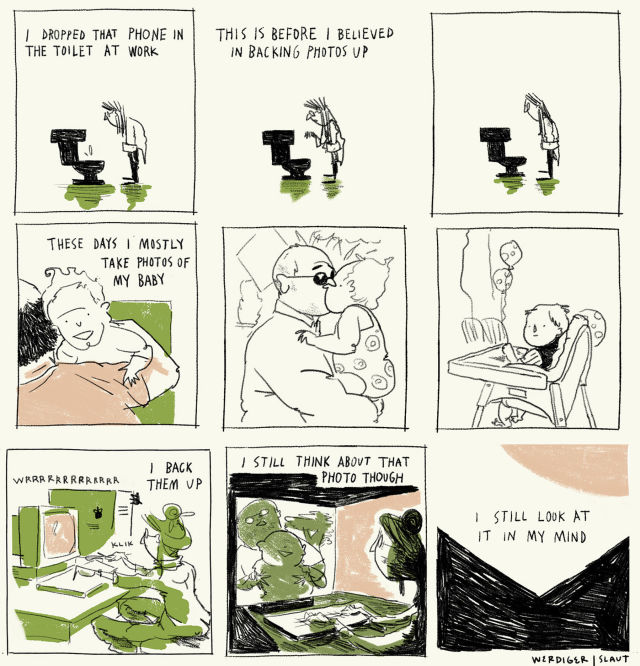
—With a very funny and also surprisingly moving comic, Esther Werdiger and Sara Lautman ponder a woman they once saw who had a back tattoo that proclaimed "Property of Francisco."
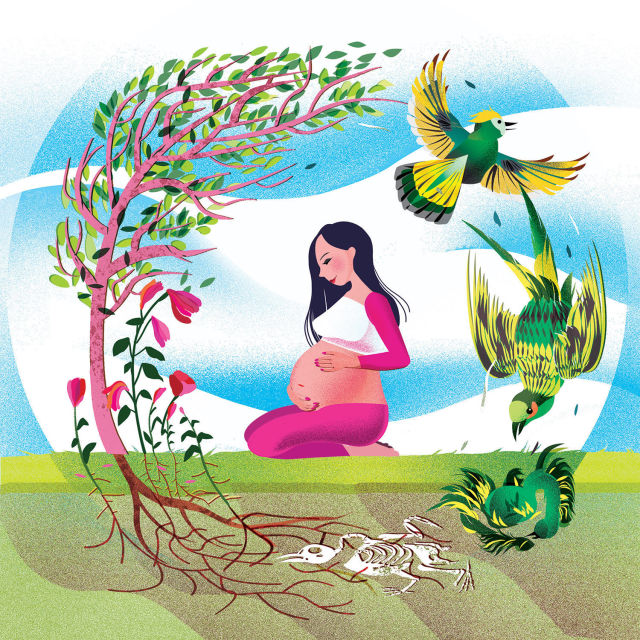
—And finally, we have a gorgeous essay, "Gestation," from Elizabeth L. Silver about the illness and death of her father-in-law happening in concert with the birth of her second child.
We'll be making some other changes in the coming weeks — experimenting with new forms in the newsletter, tweaking what we bring you on Fridays, and generally fine-tuning the Lenny experience. We can't thank you enough for being part of our community and for taking the time to tell us what you think. We could not exist and thrive without you, and we love you very much.
Xo, Jess Grose, Lenny editor in chief | | | | | | | | | | | | Advertisement | | | | | | | | | | | Will Wonder Woman Really Make a Difference With Hollywood Sexism? | | | | By Connie Nielsen | | |
Question: "So do you think this movie signals that Hollywood is moving toward making more films with female protagonists?"
Another: "Do you think things have gotten better for women in Hollywood?"
I am sitting at a press junket for Wonder Woman in 2017 but am hesitating to answer. I am remembering my first junket, for Gladiator in the United States almost twenty years ago, when I was asked whether my playing strong female characters was signaling a change in Hollywood's attitude toward women. My answer then was "Probably not." I was right.
The act of getting Wonder Woman made gives me some cautious hope. But will it change the system? Did Mad Max: Fury Road, The Hunger Games, and Insurgent change the system? Female directors' participation in productions went down in 2016 from the previous year, so I am thinking it's going to take more than that.
I know this because I have seen so many steps forward for feminism, only to be followed by a pushback against progress.
In Denmark, where I grew up, the second-wave feminism of the '70s caused a profound reimagining of our education system. When I was not yet a teen, the rules were changed at my school and girls were required to learn woodworking while boys learned how to sew and cook. We had become participants in a new society of equals.
When I wasn't learning how to handle a saw, I was reading new arrivals of feminist books at the local library. My brain was abuzz with ideas I realized could upend thousands of years of history. I got lost in groundbreaking fiction, like Marilyn French's The Women's Room. Ann Oakley's Subject Women taught me to question medical and biological assumptions about my gender. But the book with the most explosive effect on my young artistic mind was Kate Millett's Sexual Politics, with its revolutionary critique of the "heroic" male. Her elegant and witty prose dared to demolish sacred cows of modern literature and film.
Fully inhabiting the change around us, my father, a weapons sergeant in the home army, took me along on NATO military maneuvers, where I got the worst sentry postings just to prove to me that neither my gender nor nepotism would spare me from cold and fatigue. When I left home, he looked solemnly at me and said, "There is not a thing on this earth you cannot do, my daughter."
When I moved to the United States at 31, it was clear as day we were not moving quite that quickly toward a brave — equal — new world. I saw plenty of misogyny. Even as my career took off, I was all too aware men's roles were central to the dramatic arc in ways that invariably produced weaker material for female actors.
I couldn't understand what had happened to Hollywood. The movies made during my great-grandmother's time had featured incredible female leads. But in the 1990s, as women were slowly moving into real social power, it seemed the subconscious mind of society was reacting by producing films that were made to promote a sort of über-man. My interests, experiences, and viewpoint, as a human and as a woman, were rarely reflected on-screen. It turned out the whole world needed more persuading that equality was a right.
In my life, and in the lives of my mother, grandmother, and great-grandmother, are written stories of 120 years of feminism. Our lives illuminate the three waves of feminism that preceded this latest one, and how each wave was followed by a counterreaction during which some of the progress was lost.
Question: Who is the Wonder Woman in your life?
I think for a minute, but Olga comes to mind immediately.
My great-grandmother Olga, born in 1897, came of age during the first wave of feminism, the age of emancipation and getting the vote. She was imperious and irrepressible, a concert pianist with a famous temper. She married my great-grandfather, Herluf, a son of movie-theater owners. Together they built a luxury theater called Palæ Teatret in the north of Denmark and even made their own movies. Together, they traveled to Copenhagen, Berlin, and Paris to buy films for their theater; raised four children; and built a handsome villa for their brood.
But all too soon, Herluf died, leaving my great-grandmother to manage everything alone. Somehow she found time to raise her kids, run a business, ride her beloved horses, help the resistance during the Second World War, and win silver trophies for her considerable sharpshooting talents, all while managing various ill-fated love affairs.
On the walls of my childhood home hung black-and-white pictures of Olga in the arms of dashing actors during visits to film sets. I noticed how intimidated the husbands in the family were when Olga was coming to visit. Family members told hushed stories about Olga setting fire to a store she had given to a cheating lover — and calmly insisting to the fire brigade that it should burn. Olga had grabbed the reins of her freedom and created a life in which she provided for her children and satisfied her intellectual, business, social, and athletic interests.
My grandmother Eva was not as lucky. Throughout most of her life, women's rights were bogged down in a social backlash and the nitty-gritty negotiations for equal wages and representation — and Eva, a union rep for nurse's aides, was in the trenches. Abandoned by her husband while pregnant with her second child, she suffered the social exclusion reserved for divorcées during the conservative 1950s. She fought for equality and respect without fear or regret, but progress came at a cost for foot soldiers like her. Eva's was an angry feminism nurtured on the serious, gendered injustice that remained even in social democracies.
A backlash against feminism had taken hold in the postwar era, sending women back to house and hearth, but Olga and Eva held steady. It was my mother, born in 1945, who was really deeply affected.
Scarred by her father's abandonment and her mother's struggles and pregnant with me at the tender age of eighteen, she eschewed an education and sought protection. Just as the second wave of feminism was liberating women from the stifling conformism of the 50s she had imbibed as a young girl — burning bras, freeing sexuality, and shortening skirts — my mother married my father in exchange for respectability, converted to Mormonism, and proceeded to have three more children before she turned 28.
Inherently flamboyant and beautiful, she tried hard to blend into the small town she moved us to when she was 27, but she failed miserably and seemed like a unicorn among horses. She showed up at my school in full hunting attire and Dior-red nails to deliver my forgotten lunch box.
By the time I turned thirteen, I saw her energies flag, and she parked herself indefinitely in an armchair. Her frustrated dreams were given free flight during Valium-numbed afternoons buried deep in Barbara Cartland novels. The little pink pills she chewed to overcome severe depression made her distant and unreachable.
Then, a miracle happened. My mother discovered amateur acting and became the principal female lead of the annual political revue. Onstage, my mother glowed and grew in my eyes as from her heart poured real talent. For a few years, it seemed she had found her true self and experienced a delayed empowerment.
But those bright moments stand in contrast to the shadows of a debilitating cycle of depression that dogged most of her life. Her youth was spent raising children, but she craved artistic recognition. Her career, as it was, never took off: she lacked education and access but perhaps most of all the courage to go for broke. Olga and Eva were reminders to her of a former glory she had fled. She died at 68, nominally of sepsis, but I knew she was too tired to go on.
In my home, there are my great-grandmother's silver sharpshooter trophies, my grandmother's jewelry, and a poster from my mother's revue, and in my mind I see in their stories the ebbs and flows of the waves of feminism, its victories and its setbacks. I am experiencing the fourth wave and am proud to be a part of the first female-superhero film ever directed by a woman.
Question: Does this movie signal that Hollywood is ready to make more films with female protagonists?
Answer: If Wonder Woman makes a lot of money, if structural changes are made in the business models of studios and financiers, if more women become reviewers and distributors, and if we refuse to take a step back, again, then … yes.
Connie Nielsen is an actor; the president and co-founder of Human Needs Project, an NGO that provides infrastructure for people living in slums; and the founder of Road to Freedom Scholarships, a nonprofit that educates children living in slums. | | | | | | | | | | | | Advertisement | | | | | | | | | | | What's That Scent? It's Eau d'You! | | | | By Rachel Seville Tashjian | | |
The signature scent may be the last grand gesture of personal grooming. After all, smelling not simply good but evocative, lovely, woodsy, seductive, terrific — with notes of anise and an underbelly of sage plucked from a heaving English garden bed! — might delight the wearer and those in her immediate circle, but its magic can't be captured in a photograph. If all this painterly application of beautiful creams and gels, of bold lips and dewy cheek color, and of body oils that make us glisten like diamanté-studded mermaids makes us feel good, it must also be noted that it is a little selfie-centered. Attention to our outer beauty can bring a certain inner peace, but scent is the one category of beauty that remains staunchly averse to the digital world: you can't smell an Instagram (yet!).
So like handwritten letters, telephone calls, and thrilling your besotted public in a neon velour zip-front hoodie with matching bedazzled sweatpants, the signature scent has a bygone, dangerous appeal. It's an indulgent holdover from a previous world — and therefore more worth it than ever!
We begin as Walter Benjamin — a man whose love for sprawling expanses of shopping centers has been matched only by Fetty Wap's — would want us to: in the department store! But before you descend into the basement beauty dungeon, think. You want to buy you, bottled. But who are you? Oh my God, this is a column about lipsticks and Clinique Happy, so instead, let's close our eyes and imagine a personal paradise. Is it a shaded grove in a forest in Loiret? Are you listening to SZA in the Hanging Gardens of Babylon? Or, ah, yes: you're reading Eve Babitz in Diane Keaton's house in Something's Gotta Give? Inhale! Is that the woody smell of an old book, mixed with the lemony sugar of something Frances McDormand is baking in the oven and an afterthought of Jack Nicholson's Old Spice? I think it is!
Now to the testing grounds! Don't let yourself get spritzed, literally or figuratively: you are in control. Try everything, and BYO coffee beans to cleanse the nose, because you mean business and that means the sweet smell of success. Anything can draw you in — scent is about intuition, so follow your spirit. (I found my perfume — Roja Dove Lily! — a few years ago because a coiffed-beyond-coiffed salesman in velvet slippers spritzed it on a little piece of milky cardboard and cooed, "There are fewer certified perfumers in the world than there are people who have been to outer space!" Now I think about defying gravity every time I get dressed!)
But no matter how enrapturing or expensive, perfume is no genie in a bottle. Just spritzing yourself with eau d'you will merely make you a cog in the olfactory factory. Take a moment to think about women who smell truly good. It isn't simply a perfume that brings them to life: it's a nip of moisturizer, a puff of Oribe product in the hair, and often, something a little rancorous, like a Marlboro Light or a spike of something chemical from a fresh coat of nail polish. As Killer Mike of Run the Jewels raps in "All My Life": "Fuck the boss, I'm the goddamn owner / And I smell like YSL and marijuana." He smells like the owner, not merely the boss, because he doesn't just spritz on YSL and call it a day. A signature scent is about the mix of olfactory moments, blended into one signature experience that represents your aspirations (YSL!) and your lifestyle (marijuana!), the places you've been and where you're headed next.
Think of everything you use that could possibly have a scent and then get cooking. Might your drugstore-bought Aveeno chamomile body wash play well with the kind of weird lavender mints fetishized by Dickensian ingénues and sold at an old-timey candy store near you? Or is it better with the cloying thrill of a pink cud of Bubblicious? And old utilitarian sunscreen, which I hear is good for you or whatever, may perhaps conjure a lovely beachside reverie from the days when N*Sync seemed unconquerable (Do you ever wonder why??? This music gets you high???). If that's too quotidian, dip into the marvelous world of hair perfumes — and throw a patchouli sachet in your underwear drawer, like your bras just got back from a Dave Matthews Band concert!
What about deodorant? Could a classic stick of Secret be the secret to walking into any party like you're walking onto a yacht? Or is Acqua di Parma more your cruise ship's speed? Just as none of us are one static set of characteristics, so we are a bouquet of scents: we put on Margiela Lazy Sunday Morning after soaking in Mariah Carey's Luscious Pink Body Wash; we stuff rotisserie chickens with rosemary while we chew on cinnamon toothpicks.
And here's where it really gets nuts — (which, by the way, have you ever thought about smelling like warm nuts?) — it doesn't even have to smell good! I coat my hair, which I bleach to a Palm Beach Crash Helmet White, with an arsenal of purple conditioners and shampoos whose smells are about as enticing as a room-temperature dinner roll. But mixed with my astronaut perfume, my Old Spice Swagger, and my special summer addition, Trident Tropical Twist Gum? Well, it's eau de it me.
Rachel Seville Tashjian lives in Soho. | | | | | | | | | | | | Advertisement | | | | | | | | | | | "Over There" | | | | By Lolly Bowean | | |
First you'll need to go "over there."
Stop. Check out the scenery. Is there a grocery store or food market with glistening oranges and lemons and sweaty kale on display? Or is there a convenience store, the shelves crammed with potato chips, cookies, cigarettes, lighters, and overpriced dish detergent and Pampers?
Wait. Is the gas station also the grocery store? Are there men standing outside, idle, but selling washrags, burned DVDs, and loose cigarettes for 50 cents each?
That should tell you where you are.
You are here. See the cycling studio? The boutique that sells only socks? The coffee shop that offers espresso and specializes in gourmet doughnuts?
You are here. But here, you are a tourist — someone visiting, seeing but not belonging. So you go looking for where the working people, the most vulnerable people — those other people — are.
When you ask, "Where do those people live?" these people will tell you, "Over there." So you go over there.
Think inconvenient.
Think to yourself, The upscale retail boutiques, posh restaurants, and buildings with doormen are here, and then go travel in the opposite direction.
Maybe ask the doorman. But not directly. No one wants to admit they live in that neighborhood. Not in the way you're left to identify and label it: poor, gritty, troubled, violent.
He will try to direct you somewhere else — to a restaurant or museum, maybe. Instead ask him where he likes to eat — and how to get there. Make it conversational, like you're interested in him, not where he's from. Get him to spill the details on the route.
Get on the same bus, the same train the doorman told you about, and ride it until the people start to change. On public transportation, the people always change.
They start out with suits and ties, briefcases and leather purses. The women have on heels and sunglasses. Always sunglasses. It's so bright in their world. They have to protect their eyes. Their sight. What they see.
Eventually, those people will all file off the bus, and these people will get on. You'll recognize them because they look like people you know. Grease-stained white shirts and checkerboard black pants? Then they work in the kitchen. Gray shirt tucked into the gray pants? Parking-lot attendant. Black shirt, black pants? Security guard.
And their shoes. Look at their shoes. Your mother would call them sensible shoes. The kind that they can stand around in all day. And extra. These people have to be ready to stand for extra. These people are always expected to work extra.
And bags. Not fancy bags. Shopping bags, the kind that are supposed to be thrown away but that cheap people reuse. To carry their lunch. Carry their nice but not sensible shoes. Carry soap and toilet paper and paper towels to their grandmother's house. They are always carrying.
Ask yourself: Why is it always this way? In La Perla. In Mattapan. In West Englewood. In Saint-Denis. In East New York. Why is it that they live here? And those live "over there"? Why do they have that? While those get this?
Pay attention.
After all, you are a tourist.
But what if you weren't? What if you grew up here? Where would be that place where you would likely have to live?
Far. Those people always end up far, that you know.
If you work hard with your hands, you probably live far. Far from where you work. Far from where these people live.
Please pay attention, you tell yourself. See the people on the bus.
See the landscape outside start to change. Any more grocery stores? Clothing stores? Yoga studios and health clubs?
Think liquor stores and sidewalk sales. If the liquor store is called a wine shop, you are not over there. But if there are white signs in the window advertising the price of the Cognac, vodka, and rum, you might be.
Are the restaurants dine-in or mainly takeout spots? Can you see bulletproof glass?
Are you over there yet? There are no banks. Is there a check-cashing spot, where people are paying too much to turn the paper they got from their labor into cash? Those people rely on cash.
Are there beauty-supply stores and a dozen barbershops and hair salons? Over there, communities are always flush with beauty salons, you remind yourself.
I guess when you live over there, beauty is all you've got. If you look the part, maybe then these people won't mistreat you. Maybe. They'll be polite. In public. But then vote to defund your public schools.
Schools! Do you see any school buildings? Are they boarded up? Are the windows covered with bars? If the schools look like prisons, you are over there. Wait. Can you tell the school from a prison? So don't look for a school. Look for a building that looks like a prison. Then you are definitely over there.
Get off the bus. Make sure the expression on your face is one of quiet resignation. Don't look like a tourist, refreshed, like you're looking for pleasure. Look worn, tired, defeated. Nod at the people you pass, show respect. You feel like you are finally seen.
Walk around. See people who look like you.
Buy a beef patty and ginger beer from the carryout spot. Complain to the clerk.
"It's always something," you say, summing up all your grief.
"It is indeed," she says back, empathizing without having to know any specifics.
And then you laugh together for no particular reason.
Get a can of fruit punch from the corner store. And some chips. Browse the beauty-supply store.
Get back on the bus — going in the opposite direction.
Because you are a tourist.
Lolly Bowean is a Chicago-based writer and 2017 Nieman fellow at Harvard University. | | | | | | | | | | | | Advertisement | | | | | | | | | | | Property of Francisco | | | | By Esther Werdiger and Sara Lautman | | | |
Esther Werdiger's comics and essays have appeared in in The Awl, The Hairpin, and Buzzfeed. She works as Tablet Magazine's art director and lives in Brooklyn.
Sara Lautman is a cartoonist who lives in Baltimore. Her sketchbooks are on instagram and her most recent collection is Ghost Sex. | | | | | | | | | | | | Advertisement | | | | | | | | | | | Gestation | | | | By Elizabeth L. Silver | | |
My grandmother died one month before I gave birth to my first child. She was 93 years old and passed away surrounded by her family at home in Los Angeles. My husband, Amir, and I named our daughter, in part, after her. This act, naming a baby after a lost loved one, is meant to reflect a more profound version of trite "cycle of life" platitudes nobody really wants to hear at funerals. The dead are still with us; our lives go on. It's a nominal reincarnation of sorts.
Two years later, I was pregnant again with my second child — this time, a boy. We shared the news with our family, and there was a week or two of conventional grandparent joy, the anxious anticipation of a growing family, and a heavy focus on the life to come. My parents were thrilled, as were Amir's — particularly his father.
When I was three months pregnant, we learned his diagnosis: acute myeloid leukemia (AML), one of the deadliest cancers. Amir, a physician, immediately understood the gravity of his father's condition. You cannot remove a tumor from a bloodstream. You cannot cut it out. You cannot necessarily radiate it away.
When I was four months into my pregnancy, I shared the news with select friends. This wasn't exactly a time to celebrate. I told friends I was pregnant in the same sentence I told them my father-in-law had cancer. Linguistic attachments, two halves of my life connected.
At five months, I underwent an ultrasound to make sure the baby was healthy. They found something troubling in his heart. I was feeling ill, breathless. I had stopped exercising because every time I moved, I felt contractions. My first pregnancy had drastically changed my perspective on gestation. My daughter, though born healthy, suffered a stroke at six weeks and spent significant time in the NICU. I couldn't have a second sick baby. One time, shame on fate. Two times, shame on you.
I called my mother-in-law from the hospital. I knew that she was in another wing of the same hospital at the same time with my father-in-law while he underwent chemotherapy.
"Do you want to take a peek at your grandson?" I asked her, hoping this might bring her joy, even if it was only momentary. After all, we almost never spoke of my growing belly. The topic, though visible to all, was toxic, as if discussing one discounted the other.
"Yes," she said. I heard the excitement in her voice. "I'm just sitting here."
"Will he be OK if you leave?"
"Yes," she said, and she walked several blocks to be by my side to watch a new life developing on a screen.
Within moments, the doctors told me that there was likely nothing to worry about. My son's heart seemed fine, but we should repeat the ultrasound again in a month.
Likely nothing.
Nothing to really worry about.
Words of poor comfort to a family whose emotions were split open.
At the six-month mark of my pregnancy, my father-in-law was getting sicker. He didn't want visitors anymore. His immune system was gone, and he was living in a bubble at his home. We didn't know how much time he had left but still held on to the desperate hope for a bone-marrow transplant, which offered him a slight chance at remission.
At seven months pregnant, we dropped by Amir's parents' house unannounced on a random Sunday afternoon. Everyone was in a particularly good mood. My father-in-law was laughing, my mother-in-law smiling with him, my sister-in-law and nephew making jokes. A house filled with life and laughter, frozen in a Sunday afternoon of nothingness.
But my father-in-law had just been disqualified from the bone-marrow transplant because he was too sick to survive the procedure. So with few options remaining, the bubble was disassembled. The gloves and masks were gone; there was no longer a need to keep the home sterile to make sure he would last until the transplant. The lack of human contact that had pervaded his existence for seven months was forgotten, and Amir walked over to his father and touched his skin for the first time since his diagnosis. I watched from afar as they embraced by the window, two figures still until their bodies rippled into one.
On the drive home, I took Amir's hand in mine. The baby was moving, his hand gliding under the skin of my belly. I didn't place Amir's hand on it.
I was away from Amir and his family when it happened, but I felt my belly rumble around his time of death.
At the funeral, Amir spoke intimately of his father, detailing their life together, mourning the life he'd hoped they would have as adults. He spoke of the emptiness in his daily routine, of the kindness he had learned, of the generosity of spirit. Of the fact that his father would never meet his own son. My belly thundered, and I swallowed a mouthful of vomit. I loved and missed him too.
When I'd met my future in-laws over ten years earlier, Amir's father had struck me as different. A traditional "meet the parents" dinner ended with an oversized hug and an "I love you." Amir told me it was just because.
"Well, I love you," Amir said to me, "so that is enough for him."
"He loves me just because you love me?" I asked. "That doesn't make sense. Doesn't he want to get to know me first? See my life's résumé? Meet my parents?"
"Nope," Amir shook his head, placing his arm around me. "Seeing this is enough for him."
For seven days of Shiva, we told stories and laughed and cried, and I listened to questions about the baby's name. Strangers, distant family members, colleagues all came up to me, saying, "It's the cycle of life."
People I didn't know touched my belly, smiling mournfully.
"It's going to be such a help to everyone."
"How wonderful that you're having a baby. And a boy, no less."
"Yes," I would say, rubbing my belly, and then I would walk away, shielding my eyes, wanting to scream "No."
His face couldn't be Photoshopped over another to complete the family photo. He would be a boy on his own. And it was up to me alone to ensure that his growth was healthy, that his development continued on track. This baby was going to be born no matter the timing, no matter the need, no matter the hole he filled, whether it was the following day, the following month, or anytime thereafter.
But as we buried my father-in-law, people I didn't know continued to approach me, always touching my belly and informing me of my unborn child's role in this cycle of life.
"You're going to name the baby after him, right?"
"This is going to be the best thing to happen to everyone."
But there is no "best thing" that happens at a funeral.
Hours later, with the baby moving visibly through my dress, Amir and I walked into a bedroom at his mother's house and, away from the guests, came up with our son's name.
By the time I was eight months pregnant, I had been sent to the hospital for preterm labor multiple times. I spent many evenings strapped to a pink and blue monitoring belt to ensure that the baby was still healthy. He had irregular heartbeats. I was contracting too early, too quickly, too evenly. I was over 35, with a medical history. Nobody was willing to take a risk, so at any glimmer of an irregular fetal heartbeat, I was whisked away to Labor and Delivery for a daylong stay of tests and ultrasounds and cervical examinations, just a few floors above the bed where my father-in-law last slept.
Amir wasn't with me for most of those visits. I navigated these appointments alone, spent many evenings admitted into the hospital alone. Shopped for baby clothes alone. Rearranged our apartment alone. While we were mourning the loss of his father separately, he was split, wanting to feel excitement but furious with himself for feeling any.
He rarely spoke of my pregnancy — of the excitement to come, the fear of raising two children, the novelty of a boy, my emotions and my body's changes, the internal struggles of pregnancy, which I swallowed until they led me to the hospital five additional times in one month. We didn't fight; we didn't talk much at all. And it wasn't his fault. Nor was it mine. But if I focused too much on sadness, the heart rate that was in trouble would worsen, and so I was forced to look one way while Amir looked another.
At nine months, my pregnancy became a topic of conversation.
"You know, he was so sad about the baby," my mother-in-law told me about my father-in-law. "He was wondering if you were going to name the baby after him."
She paused for a moment, unsure of my reaction.
"He wanted you to."
In truth, he hadn't spoken of the baby much to me or Amir. He hadn't been able to accept that he wouldn't be there for his grandson's life. What all of us didn't realize is that he wouldn't be there for his grandson's birth.
A few weeks later, I gave birth to a healthy boy. His name was given at his bris, in the same home that had hosted the same guests a little more than 60 days earlier for the Shiva. Children played in the backyard, their voices cackling through the windows, just as they had two months earlier. A different rabbi spoke about the entryway to life instead of its exit. My mother and mother-in-law stood together as my father held the baby during the ceremony. I spoke about the name we passed on from Amir's father while Amir helped with the circumcision.
And time stopped, only to be sped up again over the next six months with the renaissance of responsibility, dual child care, careers, life, dishes, laundry, and diapers. But in that brief moment when the ocean of time seemed navigable, Amir and I held each other, our son, and our daughter, and for the first time in nine months, we were reunited.
Elizabeth L. Silver is the author of The Tincture of Time: A Memoir of (Medical) Uncertainty, recently published by the Penguin Press, and the novel The Execution of Noa P. Singleton, which was published in seven languages. She lives in Los Angeles with her family. | | | | | | | | | | | | | | The email newsletter where there's no such thing as too much information.
From Lena Dunham + Jenni Konner. | | | | | | | |  |  | |





No comments:
Post a Comment