| |  | | | | July 18, 2017 | Letter No. 95 | | | | | | | | | | | | Hello, Lennys,
As I write this, it is a sweltering day outside (I would say it feels like one to two inches from the mid-day sun). In this heat, I have become obsessed with freezy pops, you know, those frozen sticks of juice (flavored water?) that cost $2.99 for 25 of them at the grocery store. In Puerto Rico, we have a thing called a "limber," which is basically the same idea, except you make them at home and freeze them in little plastic cups. There's usually a house in the neighborhood that makes and sells them. You'd just stand in front of the house and yell, "Señora!!! Tiene limber?!!" And then someone would come out and tell you what flavors were available. They usually had grape and fruit punch. If they knew their stuff, they'd have a coconut flavor that was slightly more complicated than frozen Kool-Aid. I have been missing limbers a lot, but now that I have freezy pops, things have been really looking up.
I tell you this because I want you to enjoy the same refreshing treats I've been enjoying, but also because another thing that you told us in the recent survey was that you wanted to know how to get in touch with us. Maybe you want to tell me your refreshing summer treat? Or perhaps you'd like to pitch an idea about something else entirely! So I am here to give you the 411. If you want to pitch us an idea, you can email submissions@lennyletter.com. If you want to just say hi, share your favorite limber recipe, or send us a funny pic you saw on the Internet, then lenny@lennyletter.com is the email you want to use. We're an extremely small staff, so we can't promise that we'll respond to every message, but we will surely read them!
Now on to this week's issue.
—Natashia Deón kicks things off with a beautiful essay about trying to reconnect with the church and finding real ways to enact change in our communities.
—Laura Shapiro has a brilliant essay about Fannie Hurst, a groundbreaking novelist and feminist who may have also been the first celebrity dieter.
—Pretty Little Liars' Troian Bellisario writes about overcoming the punishing voice in her head and learning to listen to her body.
—Rachael Revesz talks to Gina Miller, the woman who fiercely challenged Brexit and forced it to follow the democratic process set in place to leave the European Union.
—Regina Hall writes a touching essay on the power of lifelong friendships.
I hope you enjoy this week's issue!
Laia
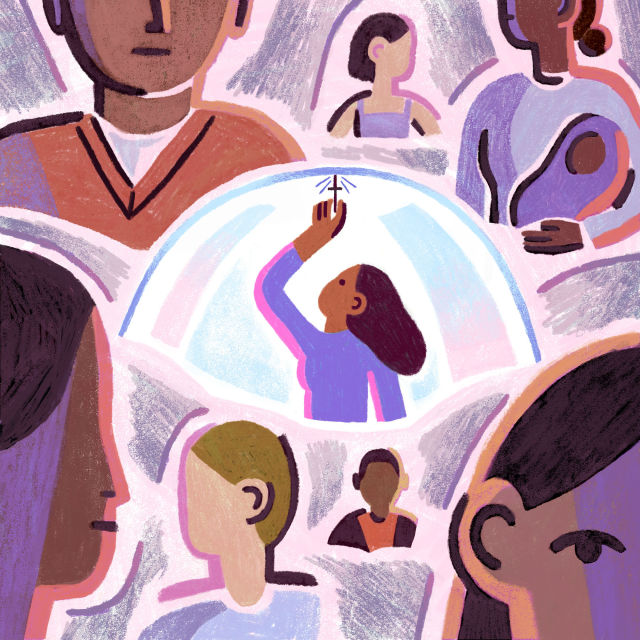
x | | | | | | | | | | | | Does the Church Have the Answer to Our Political Turmoil? | | | | By Natashia Deón | | |
In the mid-1980s, my family's church was in the West Adams District of Los Angeles, a historically Black neighborhood. My brown body felt safe among the precise Craftsmans and broken sidewalks tepeed by tree roots. At six years old, I'd skip to church every Sunday and Wednesday with my patent-leather shoes flung high in pulses, remembering the way as if they had a soul in them.
I'd get to church early so that I could go upstairs, bend myself over the balcony rail, and watch folks fold in downstairs. Empty wooden pews and bare walls transformed into a life-size flower garden — brown people dressed in yellows and blues and whites and oranges, all with matching hats and shoes, their dainty fingers covered in cloth gloves. And on hot days, we'd hold tight to the handles of paper fans, and when everyone fanned at once, it looked like the whole church was blinking.
Black Afros below me, some blonde, moved around the room like the tops of trees, walking. The men would be in three-piece suits, dressed fine, shoes shined. But I would always wait patiently for the skinny brown woman in the blue hat. With my hand over my mouth to stop myself from laughing, I'd anticipate her prayers to Lloyd. "Dear Lloyd …" she'd say, "Oh, Lloyd," she'd say. Because she couldn't pronounce Lord. "Bless us, Lloyd."
I would snort despite my precaution, then get smacked in the back of the head by any adult nearby. This small violence would eventually help me to understand what the mature already knew: be respectful of people no matter what language they spoke or name they called God.
Almost every member of my church was a former Southerner, many escaping the terrorism of the South. My parents, from Alabama, were facing their fears in this new West, seeking new opportunities in the face of police beatings … again, injustices again. And in the 1980s, the civil-rights movement and the assassination of a pastor — Dr. Martin Luther King Jr. — were as close to their memories as 9/11 is to ours now.
I can still see Ms. Hazel Ford, still 80 years old, still smiling full of dentures. Her gray wig framed her face like a silver halo. Six feet tall, she'd look down at me and smile, sneaking me candy during long prayers and hugging me, one-armed, into the softness of her hip, praying for me personally.
I'd reach up and open my hands when we sang, trying to touch something that was just out of reach — a place we all, as Black people, were trying to get to. We had hope that in our continuing struggles, we'd find the peace on Earth that God had promised — peace beyond our understanding. And freedom. To be treated like our American citizenship was first-class, too.
We wanted God things more than good things. To help end hunger and poverty and the symptoms of such: poor education, incarceration, joblessness, poor health care. And we wanted to be good stewards of resources, including the Earth. So for us, engagement in our culture was necessary. Politics was necessary, but it was only a tool, not a paralyzing obsession — fatal, because faith without works is dead.
Recently, I went looking for signs of life in today's church.
I thought I'd felt a pulse when, not long after the murder of Eric Garner — "I can't breathe" — and the deafening silence of the church, a young white pastor out of Seattle, Judah Smith, stood in front of his congregation and said, yes, all lives matter, but all lives were never in question. It gave me hope that I'd again find the religious of my upbringing.
I'd heard about Bishop TD Jakes. He was one of the few pastors risking his platform for change on several issues I cared about deeply. So I wanted to start there, at the 2017 International Pastors and Leaders Conference in Dallas, Texas. I flew in from LA.
Jakes has been known as a controversial leader who runs a mega-church, and to be fair, it does mega-service for the community, especially in criminal justice. I am a criminal lawyer and am hopeful for bipartisan legislation because there is no loss in bargaining for people's lives. Prisons are human warehouses filled not only with the guilty but the poor.
On the first night of the conference, I sat in the audience with thousands of pastors and church leaders, and I was desperate for a Christian people engaged in the issues of our world and our communities. The panel was called "The Polemics of Politics and the Pulpit" and featured spiritual advisers to United States presidents, both Republican and Democrat, both black and white. The moderator was April Ryan, veteran journalist and White House correspondent.
Bishop Jakes sat in the front pew with the audience, listening to panelists answer the first question of the night: "What is the role of the church in this political environment?" He got my full attention when he joined the discussion and said, "When we hitch our wagons to a political position, we are prostituting ourselves saying this is God ordained. When we are so committed to a candidate to say 'This is God's choice,' our integrity is compromised."
I was compromised. But for a different reason. I had lost my patience with people. For some Christians whose hateful rhetoric was cruel and disrespectful, their excuse was "I don't have to be politically correct" — code for "I'm angry, have no self-control, and I don't care if I disrespect you, but you should still respect me anyway."
And I was drowning in religion-splainers — non-Christians, in my case, attempting to mask their contempt for my faith while explaining my religion to me with random, often twisted, Bible verses and stories. Like people wrongly explaining to Muslims that their religion makes them terrorists.
I needed patience.
Especially for moments like this one on the panel when, after arguing over race, poverty, and Flint, Michigan, the panelists responded to this question from Ryan: "How do you redirect people to effectuate meaningful change?"
Paula White, a pastor of President Trump, answered, "Start with education, community leaders, and reaching out. You can never bring a solution without identifying the problem." An audible gasp swept the audience after her next line: "Half the time we don't even understand. Black Lives Matter? People don't understand."
"Are you saying the White House doesn't understand?" Ryan said.
"I'm saying the common person on the street," White said.
"Wait a minute, wait a minute," Ryan said, leaning forward. "People see people shot and dying on the street."
"I'm not talking about in the African American community," White said.
"But you just said Black Lives Matter?" Ryan said.
"There are people in the evangelical community … white community who don't understand all situations," White said.
A virtual silence befell the 10,000-seat auditorium. It was a familiar, hollow sound that often accompanies the baffling blindness that exists in the chasm dividing America right now. "So there has to be education … understanding," White said to the silence. A room asking its own question: How can you not see?
Those of us on the ground, straddling the lines in our offices, with our families and churches, wish we could be some prescription lens for someone, a hearing aid, an aha moment that brings it all together and ends with joyful tears and hugging. But that only happens on YouTube.
"We are polarized," Jakes said, interrupting the silence. People live in a bubble. The birthing of social media allows you to log on to what you want to hear. And the news allows you to listen to who's speaking your language. There is no safe place to get a unified truth that's not diluted with a perspective or spin.
"How can we educate each other?" he asked the church. People are talking about things they don't understand, he said, and you can't understand people you don't sit with. If you can understand the plight in Africa, you can understand this. "I don't believe you can know Jesus and meet some of these people" — like those with loved ones wrongly killed by police — "and not carry their cause all the way to the White House." And yes, the lives of officers matter.
The audience and panel applauded. I wanted to believe that this moment represented resuscitation, an understanding that our rights in this country are defended not only by our military but by plainclothed citizens with families and homemade signs.
I was recently talking to a friend who is a pastor. He's one of the first people I spent time with after I returned to my faith at 32 years old. I had been Buddhist and at one point considered intellectualism my religion, but now I have a different meditation. I said, "If it weren't for getting to know you, I would have been a weapon against the church." Not intentionally. But from the hardening that comes from distance.
In the years apart, I'd learned to apply the wanton hypocrisy and abuse of some in the church to all — an application that's a sign of ignorance toward any community. Had I not spent time with this pastor (and others), I would have settled.
The church has become a weapon because of distance. A weapon wielded and manipulated by politics — a system that is both aware of and shrewd with our "innocent" bubbles. We don't spend enough time in the communities and with the people we direct our rage against, our votes against, our compassionless legislation toward, because despite all of God's signs to the contrary, we think we know. Our news source has already told us.
Abortion became a topic of the night's heated debate. At one point, a priest stood up and wagged his finger as he spoke. Trump's pastor fumbled over sheets of paper that contained alleged statistics about the number of brown babies aborted. And the fact-checkers on the panel shut it down with one simple question: Where do your statistics come from? She didn't know.
And maybe that's the problem. We're all sifting our way through facts, alternate facts, and facts re-titled fake news. And as we do, people are suffering. The lives that are terminated belong to people. People who are suffering outside your window, and mine. Your skills and energy are needed on the ground, and we can't all be "the voice" of change, like a pastor — some must act.
Father Michael, a priest on the panel, may have summarized it best with his impassioned statement that night: "Let me be clear," he said. "I am pro-life and I am against abortion. But we have narrowed what abortion means. We have defined abortion as something that happens in a womb, in a clinic. If we believe that every single one of us has a purpose, a destiny, and a plan ordained by God, then when a child is not allowed to reach her destiny by education, by poverty, by racism, that's abortion. That. Is. Abortion!"
Maybe we have found ourselves in a clinic. Not reaching our potential as a country because of these abortions. Our ideas not fully formed, our thoughts, our actions, our bodies.
When I was six years old, hands raised and singing away the darkness I couldn't yet see, the songs of freedom felt far from me, like water through my fingers. I hadn't yet spent time in our classrooms, our courtrooms, our prisons, and with people who weren't like me. I hadn't felt the freezing that shrinks the hope of those around me. Not like now.
But I'm inspired by the memory that I felt in that church. It's warming me still. So I'll raise my hands in anticipation, pushing forward through closed doors because I won't let go of the life inside me. And I'll keep praying that we'll all finally grow toward the heights we were meant to reach as a country while holding a promise that's coming slowly, like a final chord of a gospel song.
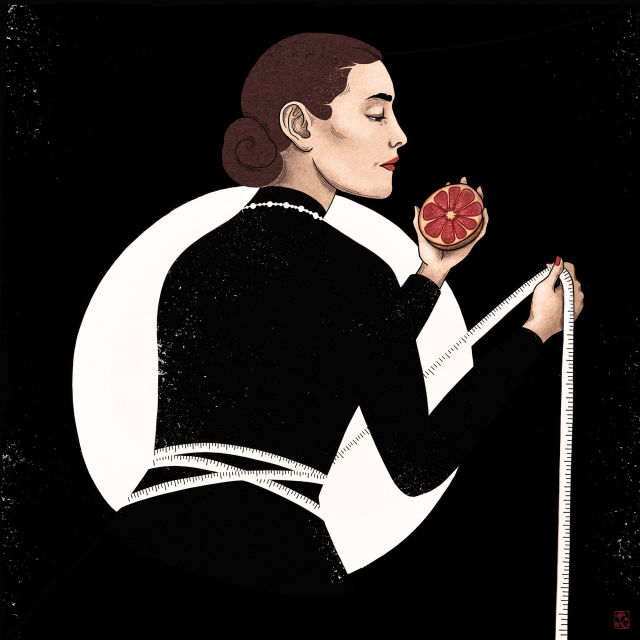
Natashia Deón is a 2017 NAACP Image Award nominee and the author of the critically acclaimed novel GRACE (Counterpoint Press), which was named a New York Times and Kirkus Reviews best book of 2016. A practicing attorney and law professor, Deón is the creator of the LA-based reading series Dirty Laundry Lit. GRACE is now available in paperback. | | | | | | | | | | | | America's First Celebrity Dieter | | | | By Laura Shapiro | | |
Let's say it's the 1920s, and you're one of the richest and most glamorous short-story writers in America. Let's say housewives and shopgirls pounce on everything you publish, the Communist revolutionary Leon Trotsky knows whole passages of your writing by heart, and even critics who can't stand your work end up praising it, out of sheer admiration for the fan base. Let's say you're married to a dashing pianist, and that your friends include poets, novelists, movie stars, and Eleanor Roosevelt. And finally, let's say you're a passionately outspoken feminist who once told the press that nothing was healthier for a woman than to have a job and earn her own money.
"If feminine means dependent and weak, then the sooner they get unfeminine the better."
Now, take a look at this newspaper article about you, an article that you cut out and sent to a friend because you were so thrilled at the way the reporter described you. "Brilliant writer?" "Courageous feminist?" "Role model for millions?" No, none of these. The reporter called you "slender."
I'm trying to get a grip on Fannie Hurst, the prolific author of such legendary melodramas as Back Street and Imitation of Life, who turned her success at losing weight into a new mini-career and became the first celebrity dieter. Her manifesto, No Food With My Meals, appeared as a magazine article in 1926; she kept right on dieting, and eight years later, her figure had changed so dramatically that the same magazine wanted a new version of the article. She produced it quickly and then managed to publish it yet again as a hardcover book. They didn't call it "monetizing" back then, but she was extremely good at it.
But there's a disconnect. Why would a sharp, principled feminist decide her own body was the enemy? Fannie should have been the last person on earth to cave to some arbitrary definition of a correct female shape. She certainly had no trouble rejecting all the other restrictions imposed on women. In 1915, she marched in the New York Suffrage Parade carrying a banner that read "MOVE OVER, GENTLEMEN, WE HAVE COME TO STAY." She was a charter member of the Lucy Stone League, named after the abolitionist and suffragist who refused to take her husband's name. And she was one of the lucky feminists invited to join Heterodoxy, an uproarious Greenwich Village luncheon club described by the labor activist Elizabeth Gurley Flynn as being for "women of the future, big spirited, intellectually alert, devoid of the old 'femininity.'"
In fact, all the progressive issues of her time were hot buttons for Fannie. She spoke out on pacifism, workers' rights, racism, poverty, and, as early as 1935, Hitler. What's more, she wove these issues into her books. Lummox, her second novel, was written from the perspective of one of society's throwaways — a hardscrabble servant named Bertha, whose labor keeps her employers well-housed and well-fed although she earns only condescension, humiliation, sexual assault, and a bare-bones wage. "There's nothing right about the way the world's run nohow," shouts Helga, one of Bertha's fellow servants. "Those that got the drudgery to do get the hard beds to sleep on. Those whose bones are rested from easy living get the soft beds — where's the right of it, I ask you?"
Yet even while Fannie was composing this howl of female outrage, she dreamed of a different body. She was about 5'6", a stocky Midwesterner who had been an eleven-pound baby, a chubby toddler, and a plump teenager before climbing to an adult weight of 185. She did love food. In the diet book, she looks back longingly at the huge breakfasts she was raised on: "Oatmeal in a covered dish was served out with plentiful additions of butter, sugar and yellowish cream. A platter of bacon and eggs. … Toast or hot biscuits or both … hominy or grits or stacks of griddle cakes with apple jelly or molasses. Coffee and plenty of it … and, more often than not, crumb coffee cake, still hot, and thickly sprinkled with cinnamon and sugar."
Dieting was becoming a national fetish when she discovered it in 1922, at the age of 37. Until then, she hadn't worried too much about her size: she was wealthy enough to rely on an exotic wardrobe of draped and swathed fashions that hid her shape. But the '20s ushered in narrow-cut clothes and boyish figures, so she started taking long walks and exercising at home. She didn't change her eating habits, though, until the day she went out to lunch with a "slim and lovely" friend. As the waiter set down Fannie's first course, a bowl of cream-of-celery soup, her friend began to nibble at her entire meal, which was an order of plain spinach. "I died that day," Fannie wrote in No Food With My Meals, "of shame." She studied up on the new science of calorie-counting and launched a meager diet:
Breakfast: half a grapefruit, two poached eggs, coffee
Lunch: 3 ounces of lean meat and a pile of leafy vegetables
Dinner: the same as lunch
Snacks: none
Not surprisingly, it worked. A little protein, low glycemic index — celebrities still promote diets like this. Like millions of women before and since, she fell in love with the way the pounds dropped off and decided to eat even less. Revised diet:
Breakfast: half an orange and black coffee
Lunch: lettuce
Dinner: 3 ounces of lean meat and a pile of leafy vegetables
Snacks: black coffee
Fannie adored her new body and everything that came with it — the compliments, the clothes, the camera-ready public image. She understood that she could no longer consider appetite a pleasure, that she had to approach every meal as a battleground on which there was no such thing as a cease-fire. But she was willing to live that way. Borderline anorexia wasn't a concept anyone discussed in her day, but Fannie may have been a pacesetter here, too. Ultimately, she lost 40 pounds and kept most of them off for the rest of her life.
Maybe it all comes down to the oldest trauma in the old, old story of women and their bodies: a surge of shame so powerful it was enough to fell even the mighty Fannie Hurst. The second-oldest trauma may have been a factor as well. Around the same time as that fateful lunch, according to Brooke Kroeger's biography Fannie: The Talent for Success of Writer Fannie Hurst, she happened to meet a "lean and rugged-faced" Arctic explorer named Vilhjalmur Stefansson, and the two began an affair. (Apparently, Fannie's marriage rolled along unimpeded. She once told the press that a relationship based on trust and a bit of open space was going to be far livelier than one based on the stereotypical "good-wife-and-mother.") Meanwhile, the passion for "Stef" cooled down in time, but the angular figure and the harsh relationship with food were permanent.
I wish they hadn't been. I can understand Fannie's yen for drastic weight loss as she embarked on a midlife love affair. But I wish she had been able to temper her vigilance just enough to become a role model for how to eat rather than how to diet. To her credit, she wished the same thing. She understood that by glamorizing a victory over the pleasure of food she was luring readers into dangerous territory; she tried to get them to look critically at the unrealistic images of femininity all around them. "More and more, today's standards of American Beauty are being set up and authorized by the bizarre little so-called civilization known as Hollywood," she warned in No Food With My Meals. Normal-sized women in good health were no longer considered desirable; instead there was only "the slimmed, the irritable, the hungry woman. … She does not add to the gaiety of the nation or of the home; she is no healthier, she is prettier only according to the frail standards of a papier-mâché city on the west coast …"
This admirable sermon counted for little, however, compared with Fannie's sleek and much-photographed new shape. Celebrity diets have a peculiar life of their own: the celebrities may speak sensibly, but the diets demand lunacy. Oh, Fannie, how could you? You were one of the most delightful and unapologetic feminists of your day, and we need you in the pantheon, but living on lettuce was a terrible idea. Maybe what we have to love you for is your honesty. You never pretended that dieting was fun, and you never implied that being skinny made you morally superior. I'm also mindful that you were never photographed smiling tenderly at a seaweed smoothie. Welcome to the pantheon, Fannie — just don't bring your lunch.
Laura Shapiro is the author of What She Ate: Six Remarkable Women and the Food That Tells Their Stories. | | | | | | | | | | | | I'm Enough | | | | By Troian Bellisario | | |
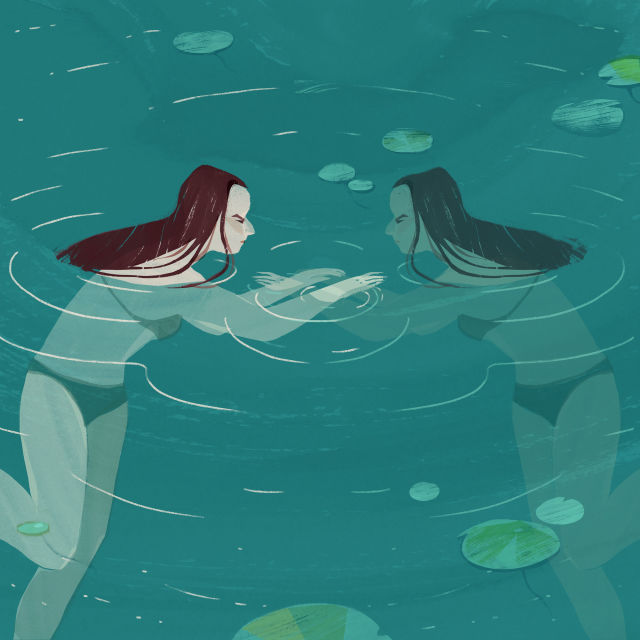
We were swimming our second lap in the lake when I lost the feeling in my toes. When you first jump in water this cold you scream, gasp for air, but immediately laugh because it makes you feel extra-alive. You learn, after a few jumps, you don't have to fear the cold. If you move around, it fades away. Soon, it's as if you're inside a house looking out at a snow flurry as it lightly taps the windows. You know there is cold, all around you, but it can't hurt you.
For a while, this kind of numb makes me feel invincible.
But now, after maybe a half-hour in the water, the cold has returned, and not just outside the window, it's in my skin. Beneath the surface, I probably looked like a chicken breast sitting under plastic in a refrigerator of a grocery store, pale and goose-pimpled. Then it's in my joints, making it difficult to move. Soon, it's in my bones, so much that even though I knew I was kicking my legs, I couldn't tell you where they ended and the water began. I wasn't even sure if I had toes anymore.
Suddenly, I'm in very familiar territory. I know I should get out of the water before I hurt myself or make myself sick, but I just don't. I keep swimming.
Here I am, 31 years old, and I'm still denying my body the one thing it is asking me to do: take care of it.
When I shot the pilot of Pretty Little Liars, it was December in Vancouver, and I was 24 years old. We were shooting a summer scene (the exterior of the funeral for Alison, the Queen Bee of Rosewood), and even though I don't remember exactly how cold it was outside, I can tell you it was too cold to snow. The girls and I were dressed in skimpy black dresses with kitten heels and ballet flats. Later, in editing, they could push the saturation, add a golden filter, and BAM, it would look like we were sweating in July. But while we were shooting, well, it was December in Canada.
"Rolling!" yelled the assistant director, and wardrobe would rush in and apologetically remove the giant down coats from our shoulders. Everyone watched, hoping we could get the scene before our jaws locked or our shoulders unintentionally rose around our ears. Eventually, Leslie, our director, yelled "Cut!,"and the beautiful warm jackets reappeared.
Wanting to be the most professional I could be, I sniffed back the snot that was threatening to ruin every take and forced my shoulders to stay where they were, even though I could see my breath on the air. I looked around: Lucy, Ashley, and Shay all seemed cold but fine; they looked professional, powerful. Was I not cut out for this? I pushed that thought out of my mind. Suck it up, Bellisario, do your job.
There came a point when I mentioned offhand, "Huh, I can't feel my feet." "Stop!"a voice screamed, and an angel in the form of a crew member descended upon me and demanded I follow her inside the church we were shooting near.
She sat me down, removed my shoes, and began to rub my feet. She asked me to let her know when I had feeling in them again. "Don't worry about my feet! They're fine!"I tried to sweetly wiggle away from her, my eyes flitting to the crew that was waiting nearby. I was holding up production, a production that costs thousands of dollars per minute, all for my stupid comment about my stupid toes. I started to panic: Everyone is going to think I'm a diva, that I can't hack it, that I'm a horrible actor, and they'll never want to work with me again.
But the angel remained resolute. She told me that she had worked with people who had lost toes to frostbite, and she wasn't about to see me lose mine. Eventually, I announced (truthfully) that the feeling in my feet had returned, and she let me go.
I braced myself to be yelled at by someone, anyone, in a position of authority. How dare you hold up this massive production? How dare you be so weak? So demanding! But there was no punishment to be found, not even a sideways glance. Everyone just asked me if I felt better and felt ready to return to the scene.
Why did I need a complete stranger's permission to take care of myself?
Seven years later (and wiser?), there I was, swimming in a lake for fun, and still I couldn't do it. My friend and I had casually agreed to try for threetimes around the island in the lake. It was just a fun challenge when we jokingly announced it to the rest of the friends and family. But now, coming around the corner of lap two, I could feel my limbs shutting down. Just like in Vancouver, despite my body desperately needing something, I didn't want to appear weak or let people down. Where was my angel to take care of me now?
So what? You might say. Don't be crazy; you can get out of the water anytime. Who cares?Great question. I ask it of myself all the time. Who cares if I can't swim that long in cold water? Who cares if I need to stop the scene to take care of my toes? Who cares?
I do, said a familiar voice inside my head. Oh, right. You.
My friend is a long-distance swimmer, and she seemed cold but ready to keep going.
"Troian, do you want to stop?"
That voice, that familiar voice in the back of my skull that tells me it cares. It cares if I demand things of a production, it cares if I quit early, if I fail. It is a voice I know intimately; it is my greatest and best of enemies. I know what that voice will say if I stop. I know the trouble I'll be in.
"Nope," I said, my teeth chattering with excitement. "I'm fine!"She wasn't buying it, but matching my determinism, we went around again anyway. When we came in, who cheered for the cold and weary warriors? Who hoisted us up in honor and fed us warm drinks in celebration? No one, because this was a necessary challenge to no one but myself. There was no great competition, except between my body and my head.
As someone who struggles with a mental illness, my biggest challenge is that I don't always know which voice inside me is speaking. My body voice, the one that says, Troian, I'm cold, get out of the lake, or my illness: You told everyone three times, so you can't disappoint them. You are not enough. Who cares about the difference between two times around and three? I do.
There is a part of my brain that defies logic. Once, it completely convinced me I should live off 300 calories a day, and at some point, it told me even that was too much. That part of my brain is my disease, and there was a time when it had absolute authority over me. It almost killed me, and you can see that even though I have lived in recovery for ten years now, it still finds loads of fun, insidious ways to thwart me to this day. It was a difficult journey finding my way back to health. Through hard introspection, intense medical and mental care, a supportive family, friends, and a patient and loving partner, I survived, which is rare.
But I don't want to just survive that part of my life. I want to create in rebellion. I want to stop looking at the clocks. I wanna get paint all over the floor and build a wall of feedback in the amp so loud that it starts a mosh pit as I scream back in the face of my disease: I AM ENOUGH!
It's just not that easy. Sometimes I still find myself being pushed by an invisible taskmaster, working to the point of exhaustion, swimming with numb toes. The voice of my disease is with me every day. I am practiced at ignoring it, for the most part, but it's still there, finding new ways to undermine me. That's partially why I wrote Feed. I wanted to channel that voice into a story and out of myself. I wanted to create a character who also wondered how she could be enough.
Writing, producing, and acting in it helped me to get one more degree of separation from my disease in what I know will be a lifetime of work in recovery. It is my greatest hope that someone watching it, struggling with the same challenges I do, might think, What if I were enough too? So with all the courage I can muster, I give it to you, I give it to that one person, in hopes that it could make them feel enough.
Maybe by the time you see it, I will have gotten out of the cold water and be warming myself in the sun.
Troian Bellisario wrote, produced, and stars in the independent feature Feed, which will be released by Sony Pictures on VOD and on digital platforms on July 18. | | | | | | | | | | | | The Woman Who Fiercely Challenged Brexit | | | | By Rachael Revesz | | | |
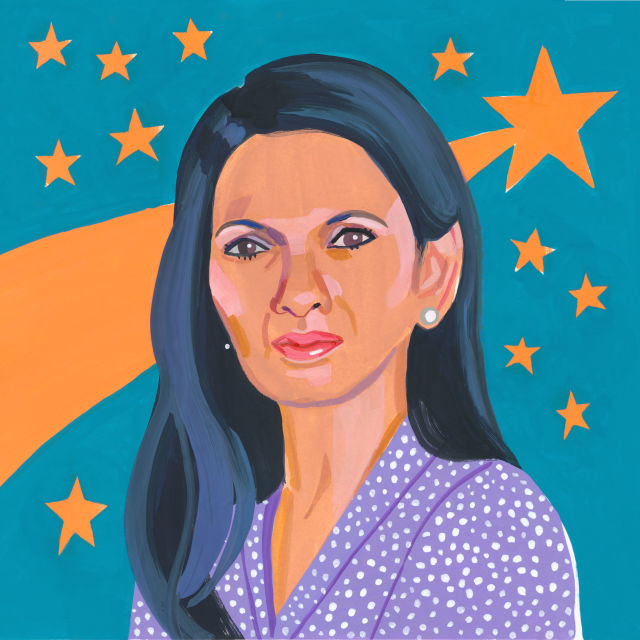
As the United Kingdom set about to become the first country to pull out of the European Union, it came down to one woman with no political background, but plenty of backbone, to force the British government to do its job. That woman is Gina Miller, who made history when she won her lawsuit against the government, forcing it to follow the legal and democratic process in leaving the EU. Her case triggered Article 50, an EU law that defines the proper exit procedure, which the government was attempting to bypass without consulting Parliament.
Newspapers describe her as a "former model" or an "elite hedge-fund manager," yet she runs a charitable foundation, contributes to UK and EU financial regulation, and has helped draft the financial-services section of the UK Labour Party's manifesto. The mother of three also launched a fund-management business with her husband in 2009 and set up the True and Fair Campaign to shine a light on malpractice and high fees in the investment world.
Miller has long been the familiar face at financial-industry events that I frequented as a reporter, where she was the only brown, female face in a panel of white men, arguing her corner. But after receiving a torrent of death threats and abuse, and with the challenge of Brexit far from over, how can she continue the fight?
I spoke to Miller at her office in London about what drove her to take on this battle, how she copes with death threats, and her plans for further legal action.
Rachael Revesz: On March 29, UK Prime Minister Theresa May triggered Article 50 after holding a vote with members of Parliament, as you fought so hard for her to do. How do you feel?
Gina Miller: I feel exhausted because we still have to combat twisted truths that are coming out of the government. They're talking about two years or eighteen months of negotiations — in reality, the main EU legislators are saying that the hardheaded negotiations are not going to happen until the autumn. If you give people false hope or heightened expectations and you don't deliver, they're going to get angry. I know what that backlash feels like.
If you ask a legitimate question or are seen to be attacking the government, you're vilified as being "against the people." I was just asking one, forward-looking question: "What is best for Britain?" It was never about going backwards.
RR: I read that you are planning more legal action because the government is allegedly planning to use the Henry VIII clauses, a 500-year-old legal tool which allows May to decide which of the thousands of EU laws we should keep and which we should discard without consulting Parliament.
GM: If they don't have full a debate in Parliament, then I would seek the courts' advice. The government has blotted their copybook once and seems quite willing to do so indefinitely. But I'm not going to do anything from a legal perspective right now. It's too early. Prior to Article 50, the politicians didn't complain, as they could have been seen as going against the will of the people, but now that Article 50 has been triggered, they can discover their backbone and I won't have to do this.
RR: This last year has been a crazy one for you. But how long can you continue?
GM: Funnily enough, my husband and I had that conversation this morning. He's an incredible person, so respectful of me and the way I work, my principles and motivations. But after the Government White Paper came out [a bill which lays out how the UK government plans to repeal EU laws without consulting Parliament], he said, "If you do this again, what does that mean for our family, and when will we go back to normality?" I said, "Unfortunately, I don't think we will ever fully get back to that place."
But we have to do something. My eldest daughter has disabilities. The government is taking away disability allowance, and it's truly immoral in my view. Imagine if they do that with all these 80,000 EU acts.
RR: Were you not used to the anger, given that you've spent years being this unloved figure, standing up against the finance and charity industries?
GM: That's not a big deal, I was used to that. But Brexit was a whole different level.
Now, I don't go anywhere on the weekend, I don't go out with my children, I don't go on public transport, I have security all round my home. On April 4, a man was charged by the Crown Prosecution Service [Rhodri Colwyn Philipps, for sending racially aggravated hate messages to Miller online. On July 11, Philipps was convicted of two counts of sending menacing messages on a public electronic-communications network and cleared of one count]. The case sets quite a precedent, as the CPS were worried about opening the floodgates. I mean, sorry, there are so many people threatening to gang-rape me and kill me and kill my children — that's not a normal response.
The police have filed two charges, eight cease-and-desist notices, and I think there are a handful more. I have a whole team monitoring it too. I'm not a public person or a politician, so I don't get the maximum security available.
RR: You started the court case shortly after the murder of Yorkshire Member of Parliament Jo Cox, who campaigned to remain in the EU. Did that not go through your mind?
GM: This is why I went to the police. I wasn't on social media. I'd disconnected my switchboard and told my staff to not take any calls. I have a namesake in Texas, and she published all the death threats she was getting that were meant for me. I went to the police straight away. They said, "We were coming to see you. We saw threats saying you should be the next Jo Cox."
My friends and family told me, "You have to go away." But why? Then they will win. I'm sorry, it's just bullying, and I won't put up with it.
My coping strategy is the same now as when I started in London. If they are picking on me and not my argument, then I've won. If the most hateful and violent people are disagreeing with me, I'm happy, as I'd be worried if they agreed with me. And third, I'm happy with myself and what I do. I don't need applause from anyone.
RR: The newspapers gave multiple reasons for your motivation. One was that you and your brother came from Guyana to England at a young age and had to fend for yourselves. Another was your young son cried when the UK voted to leave the EU. And they also said you found strength from walking away from your ex-husband, who faced domestic-violence allegations [he denied the claims].
GM: How bizarre. What does that have anything to do with it? I was married 22 years ago. The abuse was over a couple of years, and I was completely broken. It was a challenge to break me, but when I walked away that was it. I have a very strong survival instinct.
And yes, I was a tough little girl. Scars and challenges shape who you are. That's true for everyone.
RR: What advice would you give to women who are considering fighting for a cause?
GM: You've got to be so strong and so comfortable with who you are. Every single thing in your life will be ransacked. People have sent reporters to my father's village in South America to dig dirt on me. Everybody has skeletons, but you have to be happy for them to come out.
I can't stress this enough, to men, to women, to everybody: you only have your voice, it's the only thing you truly own, and you've got to use it.
This interview has been condensed and edited.
Rachael Revesz is a writer and journalist living in London. | | | | | | | | | | | | Love of a Good Woman | | | | By Regina Hall | | |
I met my best friend when I was three and half years old. She was two, and her name was Pia. She was petite with big brown eyes and super-long lashes. She was quite dainty and loved pink. She wore her hair in bush balls or ponytails and was always so pretty. We did everything together: played, laughed, argued and made up. Every time we saw each other, we hugged for at least five minutes. We loved each other even though we were too young to understand the definition of the word.
We lived four doors apart until my parents divorced when I was almost six and I moved a few miles away. Our parents made sure we still saw each other regularly, which was at least four or five times a week. We always went to different schools, but that never mattered. We were still best friends. Playdates and sleepovers were mandatory. We promised to grow up and live together. She wanted a house made of stone, and I wanted to live in a glass house, so we decided that we would build a house that was half-glass and half-stone.
We learned to jump double-dutch, ride bikes, roller skate, and a million other things together. When I went to my grandmother's house in Georgia for summer breaks, we wrote letters and we talked once every two weeks for three minutes (long distance was expensive then). We'd yell into the phone, "I miss you! When are you coming back?" After enduring summers apart and childhood challenges like bedtime and homework, we eventually became teenagers.
We went to house parties, school dances, and go-gos. Pick-up and drop-off times were carefully orchestrated by our parents. We got haircuts and wore fly sweat suits. We both loved music, especially Prince. We decided we could share him. We discovered boys who weren't rock stars and had our first crushes. Eventually that led to our first heartbreaks. We were there for each other through it all. We were so close we came up with a name for each other. The title best friend wasn't enough, so we called each other "WE." "I'm a her, she's a me, we're a WE." And so it was.
We had other friends. Other best friends, even, but not another WE. And everyone knew it. Our circles blended effortlessly. My memory Rolodex with Pia is too extensive for an article, but highlights include our first Prince concert, a love of beer before we were old enough to drink, late-night phone calls, helping each other get dressed before prom, sneaking out at night, picking each other up when we first got our licenses, high-school graduations, college graduations, the death of my father and the death of hers. Laughter and tears are etched on our beautiful tapestry of friendship. I cried when she walked down the aisle at her wedding. I was her maid of honor. My beautiful WE was getting married! I taught her how to tie her shoes, and we taught each other what friendship and sisterhood meant. And then the next chapter of life was here.
We always knew that distance, new friends, work, husbands, tragedies, and triumphs could never trump the certainty of our bond. A bond formed in Spirit that knows no time and no end. I learned about myself because of Pia, even though we were completely different. Pia was very neat, always coordinated. Her hair was always styled to perfection. I was disheveled and more of a tomboy. We were both fearless, full of confidence.
Maybe that's what made us so perfect, the fact that we allowed each other to be exactly who we were. She doesn't simply know my history. She's a part of it. A part of my evolution. We talked through everything: relationships, health, family, finances, and God. We reminded each other of what we believed in, spiritually and morally. Most important, we reminded each other to laugh through it all.
Pia's theme song was "I Will Survive," and we always did. I learned through our friendship how important it is to have amazing women in your life. I learned that friendships are safe havens, refuge when life and family get overwhelming. I learned that girl power is electric. I learned that it was important to share your friends and vice versa. I learned that God was good and that a friend was like a lifeline of sorts. Maybe even a lifesaver.
We're women now. Pia works in education. She's still funny and adventurous. She's still a hypochondriac (and I'm still emetophobic). She still cares about the world. Her heart is big and she still has a deep desire to make a difference. She's still married and is now a mother of two. Our lives are more hectic now. Our worlds different. Our friend circle has expanded. Gratefully, God has continued to bless me with amazing women who constantly nourish my soul. Women who make me a better woman and make me want to be a better human being. Women who hold me up when I'm weak.
Women who celebrate my successes. Women who lift me up when I feel insecure. Women who remind me of what really matters: love, in all its glorious forms. Love of God. Love of self. Love of others.
That love helped me survive some of the toughest times of life: my father's passing, my mother's stroke, a devastating breakup, my dog's health crisis, career disappointments. All without judgment, but with enduring patience and absolute permission to be still and search for God. Again.
The highest purpose of life and existence is love: both its expression and its receipt. It is the eternal force that creates and sustains all things. The force that enlightens and reveals our connection to Spirit. One of its many beautiful manifestations is friendship. Life is complicated and adulthood is scary, but girl power is magical. A reminder that love is all around and that all is well.
Although distance and time may change things, nothing can break the bond of sisterhood. I know this because I spoke to Pia this morning. We laughed. We reminisced. We decided to plan a trip to Costa Rica. We never did build that house of glass and stone together, but it turns out we didn't need it. We give each other all the shelter we need.
Regina Hall is the star of Girls Trip, which will be released in theaters nationwide on July 21. | | | | | | | | | | | | | | The email newsletter where there's no such thing as too much information.
From Lena Dunham + Jenni Konner. | | | | | | | |  |  | |



No comments:
Post a Comment