If you follow television news closely, you may have absorbed...
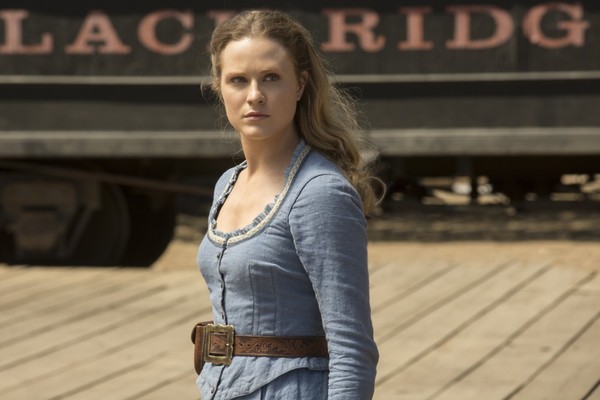
| |  | | | | Alyssa Rosenberg on culture and politics | | | | | | Dolores (Evan Rachel Wood) in a scene from "Westworld." (John P. Johnson/HBO) | If you follow television news closely, you may have absorbed plenty of responses to Thursday’s Emmy nominations, from the lack of love for “The Leftovers” to the absolute murderer’s row of actresses who would have been deserving of recognition. I’m not going to litigate the nominations, since I don’t think awards are actually an ironclad declaration of what’s good and what’s not, and because there’s too much television out there for me to be absolutely certain in my judgments about who should win what. But I did want to take a moment to remark on one trend I’m rather pleased by: the recognition of actresses who play characters who keep a tight control on their feelings. Five of the six nominations for best actress in a drama went to women who play these kinds of parts. Claire Foy was nominated for her performance as Queen Elizabeth II in “The Crown,” Elisabeth Moss for her work as handmaid Offred in “The Handmaid’s Tale,” Keri Russell for her role as deep-cover Soviet agent Elizabeth Jennings in “The Americans,” Evan Rachel Wood for playing robot Dolores Abernathy in “Westworld” and Robin Wright for embodying ice queen Claire Underwood on “House of Cards.” These sorts of roles can be tricky for actors to get recognition for. After all, they require the actor in question to keep a flat affect much of the time, and in some cases, to operate within a limited emotional range all of the time. Maintaining that control can be mistaken for not being capable of conveying a wider range of emotion, which is something that all of these actresses can do. Watching, for example, Foy play a difficult scene in which Elizabeth has an emotional argument with Prince Philip (Matt Smith) in a Range Rover, shot so we can’t hear their voices, the tension and movement in her body tell us everything her words don’t. The contrast between Offred’s still face and her thoughts in scenes from “The Handmaid’s Tale” helps us to see the quivering, furious self that Offred has buried for her own protection. Beyond craft, I think I appreciate these performances because they capture a dilemma a lot of women are familiar with. How much of yourself or your emotions should you reveal, and under what circumstances? What goes into that control? What does it cost to maintain it? All of these series answer those questions in different ways. And no matter what happens at the Emmys, as far as I’m concerned, these actresses (and Viola Davis, who was also nominated, but for a somewhat different role) are all winners. | | | | | | | | | | | | | | | | |






 Twitter
 Facebook
No comments:
Post a Comment