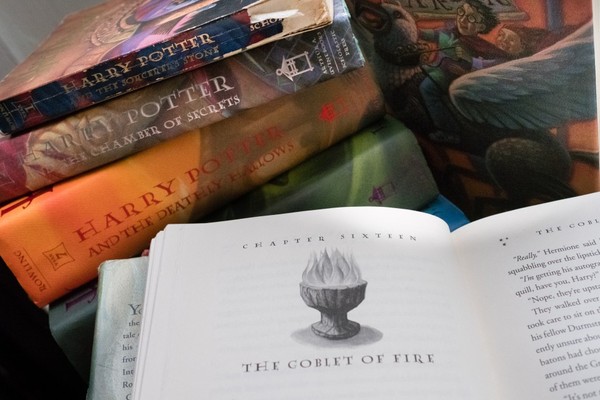
| Every week, I answer a question from the Monday Act Four Live chat in the Wednesday edition of this newsletter. You can read the transcript of the July 10 chat here and submit questions for the July 17 chat here. This week, a reader asks about my philosophy about “doing voices” for characters when reading aloud: When my husband reads a bedtime story, he doesn’t do character voices. His thought is that it’s bedtime, and the idea is to lull a kid to sleep, and that different voices make things exciting. We understand that there are different schools of thought on this. (I’m thinking about Stephen Fry reading “Harry Potter,” or good golly, Alexander Scourby reading “War and Peace.”) Do you have any thoughts on this? I started typing out an answer to this question in the chat, then decided to reserve it for the newsletter, not least because I hoped it would encourage other readers to write in on the subject, which I think is wonderful. As you and your husband have identified, part of the answer lies in what you think bedtime reading is for. As one reader wrote into the chat queue after I posted your question, “Bedtime stories are to get you to think of something else instead of your daily anxieties. They should not be interesting. I find nonfiction works best.” I agree with this argument, and with your husband’s perspective, up until a point: At bedtime, I do tend try to read things that are unrelated to my work or life. When things feel difficult in either sphere, I may reread one of a number of books I find particularly comforting, among them Meg Wolitzer’s “The Interestings,” Katherine Addison’s “The Goblin Emperor” and Kevin Kwan’s “Crazy Rich Asians” trilogy. But when things are fine, I’ll read anything as long as it’s not the subject of whatever big project I’m working on. Right now, it’s David Halberstam’s “The Coldest Winter,” about the Korean War. That said, I think sometimes the full arc of a story can be a relief if you or a child you’re reading to is feeling anxious. The excitement or tension of a good story dramatically read can pay off in greater calm if you go through all the acts of a story and reassure yourself that things turn out all right in the end. When I was small, my parents read to me chapters from Laura Ingalls Wilder’s “Little House” series, and while those anecdotes could be frightening or exciting, the chapters generally ended with some sort of resolution that made it easier to feel that all was right with the world and I could sleep. Which brings us back to voices, of which I say, do them if you feel you can pull them off and enjoy doing them. I am terrible with voices; the only impressions I can pull off with any great reliability are pretending to be Dan Hedaya playing Richard Nixon in “Dick,” and cow, pig and cat noises. As a result, I try to focus on dramatic and emotional emphasis when I read to the children in my life, rather than tailoring voices to characters. Your mileage may vary. But I would encourage your husband to think of bedtime stories as a ritual that winds down a day rather than a method of boring your children to sleep. Reading should never be a sedative, which is not to say it can’t be calming. |







 Twitter
 Facebook
No comments:
Post a Comment