| |  | | | | May 16, 2017 | Letter No. 86 | | | | | | | | | | | | Dear Lennys,
Last Wednesday, the full moon blossomed in Scorpio, and all hell broke lose in our supposed democracy.
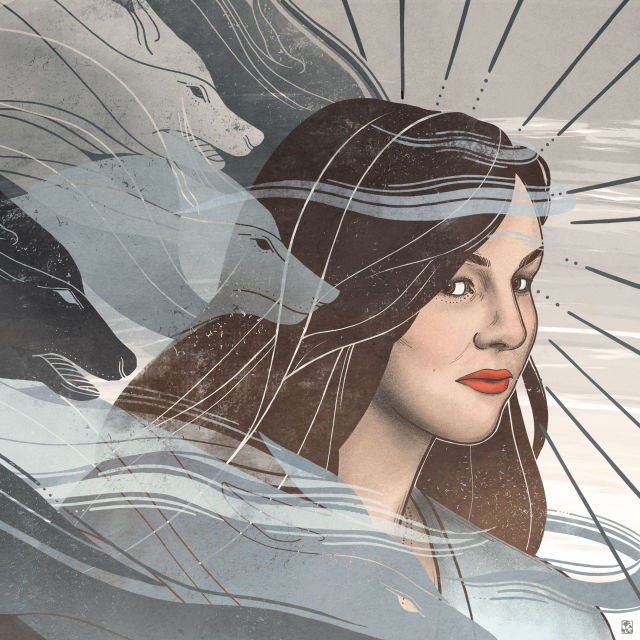
Those two things may not seem connected. But if you've been reading the compassionate, searingly intelligent astrologer Chani Nicholas for the last year or so, you will know that, symbolically at least, these two things are aligned. Last week in her newsletter, noting the "transformative" symbolism of a full moon, Nicholas wrote, "This moon wants to help us clear out whatever keeps us stagnant. Like the pain that has held us back from accepting a situation. Like the events that have made us think that it's safer to deny a part of our reality than to face it. Like the fantasies that we get lost in, keeping us from our potency. Like a president who is anything but presidential." There it was. A confirmation of all the craziness we have been living through. The stars know it.
But Nicholas, as you will discover in our interview with her this week, doesn't let any of us off easy. I think again and again of her advice that "Nothing about our lives or about this world will ever change without our willingness to be relentlessly honest. Especially about our past. Especially about our present. Especially when accepting the truth means that it's time to let something go."
Here in America, we love to talk about dreams. Dreams are inspiring, but they can only get us so far. And if our dreams require us to believe in some fiction of innocence and purity, they turn dangerous. Right after the election, Nichols wrote a horoscope in which she reminded her readers: "There is no one leader who can save us. We can only collectively save ourselves."
This may feel terrifying at first. But it's also liberating. We are the leaders, the organizers, the movers who are going to do the saving. We can't wait for marching orders from someone else. Read Amber Tamblyn's account of making movies, and read about a moment when a person has to decide to trust herself over the stories that she wishes, so badly, could be true. Read our interview with Gavin Grimm, a boy who decided to try to save himself and others by fighting for trans rights — not an easy decision to make, but he made it anyway, because it is right.
And as we figure out strategies of how to save ourselves, read our interview with Sharon Begley for sound advice on how to navigate the daily drumbeat of terror and confusion in social media, designed to distract and dispirit us. Finally, paraphrasing Emma Goldman here, who wants to be part of a revolution if they can't dance? So while we prepare ourselves to shape the brand-new world to come, find the necessary pleasures in life, like the makeovers described by Rachel Seville Tashijan.
As we head into this strange new world, know that transformation and change is inevitable. It's up to us to decide what that change will mean.
—Kaitlyn Greenidge, Lenny contributing writer | | | | | | | | | | | | When Intuition Is Real | | | | By Amber Tamblyn | | |
We were hunting for the perfect place for a rich boy's funeral. It was a particularly hot day in Los Angeles. Two crows perched on a Styrofoam plate in a trash can, and the cement seared the hemp-shoe soles of passing hipsters. I was on foot with several crew members doing a location scout for the film I co-wrote and was about to direct, Paint It Black, based on the brilliant novel by Janet Fitch. We passed a parked car on the street with a young girl curled up like a shrimp in the passenger seat, her face covered by her hands. Her father sat in the driver's seat reading a magazine quietly.
Ms. Fitch's novel tells the story of a young punk artist named Josie who, after her boyfriend takes his own life, falls into a twisted relationship with the young man's wealthy, famous pianist mother, Meredith. It is a story of loss and grief but also a story of class. The funeral is one of the most gripping moments in the book, and I wanted the scene to be equally as visceral in the film. It would be the audience's introduction to Meredith, played by the singularly brilliant Janet McTeer.
The girl in a car. Curled up in the front seat. Head in her hands. Her father.
I love films with brazen emotional intentions, the kind that err on the side of heightened truth. I love films that allow you to feel something diametrically opposing without taking you out of it. Why am I laughing at this brutal murder? Why am I crying while watching some guy eat soup? I wanted this particular funeral scene to be different than most funeral scenes you see in movies. My cinematographer, Brian Rigney Hubbard, and I both knew we had to do something bold. We had to wrap our legs around the fine line between melodrama and drama and straddle it hard.
The girl. The car. Her father.
Brian and I agreed a funeral in a garish mausoleum would be a great place to showcase Meredith's wealthy world and make Josie (played by the magnetic Alia Shawkat), in her tattered fishnets and punk jacket, stick out like a sore thumb. In Ms. Fitch's book, Josie is attacked by Meredith at the funeral, an incredibly captivating and upsetting moment. It had to be equally as riveting in the film. In the book, the attack starts with a choke. In shooting the choking, I wanted the audience to feel both like the villain and the victim at once; to not just witness the violence but also feel themselves violent. The audience had to be Meredith choking Josie, and then be Josie, being choked.
After the choking, Josie, panting and out of breath, tries to run away. In my mind and in our film, Josie would fall to the ground on the red runner carpet that runs up the aisle between the chairs of funeral attendees. I imagined Meredith — with her expensive furs falling from her broad shoulders and her mascara drooling down her cheeks — down on all fours like a wild animal, pulling the thin red carpet toward her like a long tongue, Josie still on it, desperately trying to crawl away.
The girl.
On the day we shot the funeral scene, we started running out of time sooner than we'd hoped. We had a shot list a mile long, and it was becoming clear we would need to cut close to a third of them. Cutting the rug-pulling sequence of shots seemed like the logical and rational thing to do. They could be perceived as luxury items, the types of shots you do after you get what is considered more important shots, like close-ups and wides. But my instinct told me not to cut them, that I had to see this concept through.
Women are taught from a young age not to listen to their instincts. I've been acting for twenty years now, since I was eleven years old, and I have been told many times that what I was "feeling" was wrong. So this decision was a difficult one for me. But I knew that if I got what I had in my head right, it would be the most impactful part of the whole scene and, potentially, the film. No close-up, or wide, swooping crane shot, or insert shot would matter if I got the rug-pulling sequence right. A big if for a first-time filmmaker.
Then I remembered it.
I was thirteen years old, and my dad had taken me to an audition for a big film starring a big-name '90s actor, with an equally big director. There was no real scene to audition, because the character was that of a young girl being attacked by a predatory older man in a bedroom. The scene would only call for the last second of the attack before cops came in and saved the day. So there was just a meeting with the director, who was, obviously, a man — the vast majority of directors are.
I was wearing a dark, wine-colored Betsey Johnson dress. I sat on a chair in the room. The director looked my body up and down. I remember his eyes. I remember he had a pimple on the lid of one of them. He said to me, "You look about the right age. You're starting to get breasts, I can see. That's nice. You're probably wearing a training bra now. Have you gotten your period yet?"
I remember these words verbatim. A deep shame flushed my body. I couldn't explain how I felt, or what I felt then, but I definitely felt it and the shame that came with it. I ran out of the room to meet my dad and wanted to go directly out to the car and leave. I started crying and saying I didn't want to do the movie.
I was a girl in a car. Curled up in the passenger seat. My father next to me.
A woman often misreads her own instincts as anxiety. We are told the phrase "listen to your gut," but then we are punished for doing so, or still told that it is wrong. We are explained to. We are taught from a young age that rational thought is more important than emotional thought, that this "gut" feeling we have should be saved for more womanly jobs like mothering and should not be applied logically. If a man tells you his gut instinct, it's seen as true intelligence. If a woman tells you her gut instinct, it's seen as impending drama.
I was offered the role a few days later. I told my father what happened in that room and he was furious. I didn't do the film.
I did, however, follow my gut and do the rug-pulling shots. I went meta: I went against the instinct to not listen to my instinct. If I was going to fail, I was going to fail on my own terms and by my own vision. I was going to undo the decades of subservience I had experienced as an actress — the powerlessness, the hushing of a deep voice that was begging me to listen.
I have been told the funeral scene in Paint It Black is one of the strongest parts of the film. I agree. I often think about my child self, that young girl who did not yet know her own strength, though she deeply desired it. Directing Paint It Black was more than an experience; it was confirmation of something I'd always known about myself. That I am limitless. And I'll never go back.
Amber Tamblyn is the author of three books of poetry, including the critically acclaimed best-seller Dark Sparkler. She is also the writer-director of Paint It Black, which hits theaters in LA and NYC on May 19, and she is currently starring in Gina Gionfriddo's play Can You Forgive Her? at the Vineyard Theatre. | | | | | | | | | | | | Girl, It's Time for a New Gait | | | | By Rachel Seville Tashjian | | |
So you got dumped. So you moved to another city. So you didn't get the job, or the part, or the No. 7 with extra tomatoes that you ordered. Maybe you're in a rut, and your hair is doing that thing where it just sits on your head rather than animating your best attributes, like a parrot to a pirate's ego.
To quote the gospel of Cher Horowitz: Let's. Do. A makeover.
But wait! A makeover is a tricky thing. Like building a small but sprawling village for two-inch-high dolls, too much enthusiasm can make the whole thing go wrong. A Bowie mullet can take months to grow out, and a closet full of aprons is only going to give you a new look from one angle (which angle is, uh, up to you!). And let's not get started on the makeunder, whose directives are as quixotically simplified as an Ikea instruction manual.
The secret to a successful makeover is a subtle arrangement of the usual instruments — hair, makeup, wardrobe, hobbies — coming together in one simple or harmonious note. It's you, operating at your highest level of you-ness — in a new lipstick!
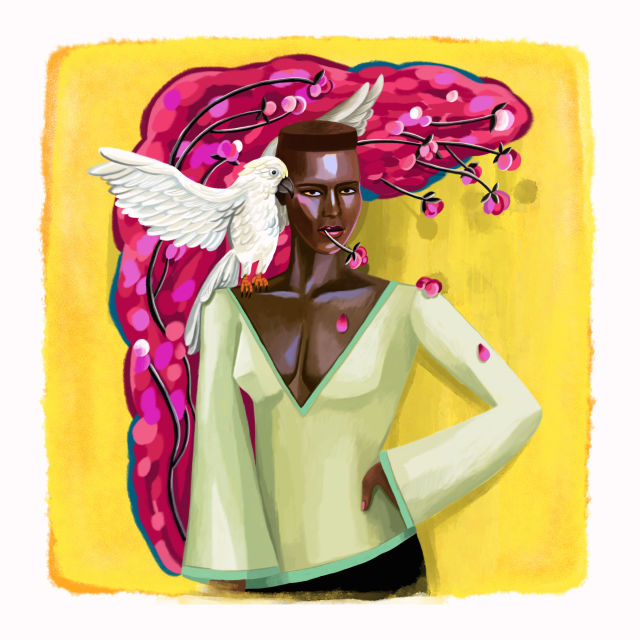
Hair: People always tell you not to cut off all your hair when something dramatic happens to you, and they are lying. Nothing is more restorative than a fresh new crop, well-researched and executed in careful consultation with a trusted, scissor-wielding adviser. Just don't go in all "Linda by Lindbergh for Vogue Italy 1989." A haircut is a mood: "Linda … with a little bit of Winona in that thing where she's nuts … but with a Grace Jones for Goude precision."
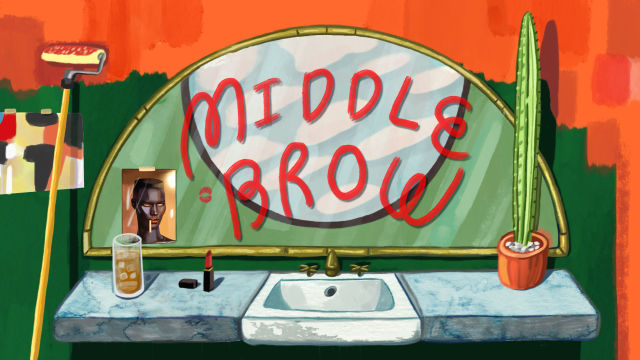
Makeup: We must resist the temptation to go to the mall and ask for a whole new face. We already have a face, so pick one thing to make looking at your mug even more fun. Become a red-lipstick girl. A glitter-eyeshadow babe. A body-oil person. We don't need to slather our faces in BB and CC and foo-foo creams every day for the rest of our lives to get the look. We already have the look. WE ARE THE LOOK!
Bearings: It can be hard, in these double-tap times, to remember that true style comes from the way we move, the way we hold ourselves. (And God, wouldn't you pay a million bucks for Maggie Smith to slam an old-timey walking stick on a hill and yell at you, "Foolish girl, you must walk with an erect carriage!") Maybe it's time for a new gait, a new way to perch at parties, a nouveau pout for your morning commute. Have you ever thought about Marilyn Monroe walking down that train platform in Some Like It Hot? Diane Keaton's Annie Hall hunch? Or just the way Mick Jagger brushed his bangs out of his face in the early '70s, like he knew your hair should always look perfect but when you have something to say, it needs to get out of the way?
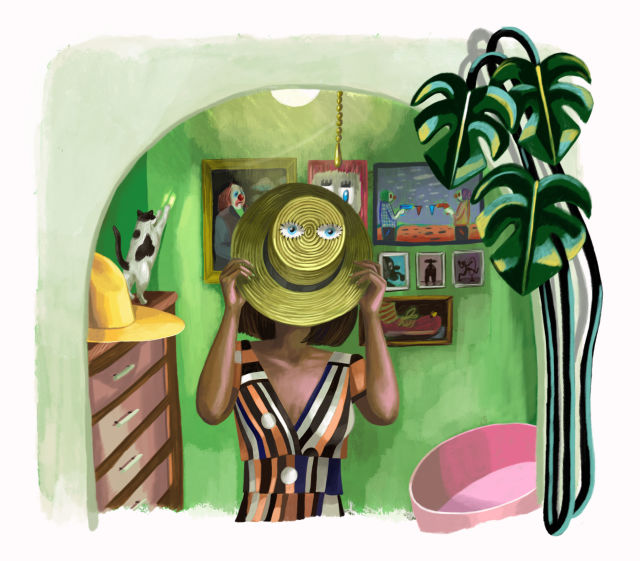
Wardrobe: Here comes trouble, because Hollywood has told us a makeover commands a whole new rack of togs, whether they be Audrey's Hubert de Givenchy or Mean Girls' 1-3-5. Like Lindsay Lohan's tan in the second half of that beloved film, this is fiction. You need one thing that exists on the astral plane of your comfort zone but is entirely smashing. A transformative tunic. A killer cocktail dress. A charming hat. Something that makes us feel cool, not alienating; inviting, not wacky. It must not be trendy. Remember: it took Melanie Griffith's character in Working Girl just one sequin dress — "It's not even leather!" blanched the brilliant Joan Cusack — to transform herself into the business god she was born to be.
New Habits Live Hard: Now is the time to adopt a new "thing," Pink Lipstick Girl in the Black Fringe Dress Who Moves Like a Big Game Cat with No Natural Predators. Have you tried hosting a dinner party? Could you read a different sonnet to yourself under a tree every Thursday at 3 p.m. for the next year? Do you want to go rock climbing on a Tuesday night? I love your clown-portrait collection! How did I not know you've seen every single Agnès Varda movie?!
The Big Reveal: Now you must find someone to receive you dramatically. Perhaps it's a friend or a parent or a coworker or a beloved pet — there's that parrot again! — but if they're really your top banana, they'll meet you at home before some important event, create a dramatic lighting design, put on Salt-N-Pepa's cover of "Upside Down," and allow you to walk dramatically into the room as they applaud. Maybe they should also nod in approval, as that appears to be a movie-magic-makeover motif, and you can even trip, just to remind everyone you're still a novice at this arresting new existence. Except you aren't — the new you was here all along. Or whatever! Have you ever thought about an avocado-green French manicure?
Rachel Seville Tashjian lives in Soho. | | | | | | | | | | | | How Chani Nicholas Made Astrology Her Day Job | | | | By Elizabeth Greenwood | | |
You've never met at an astrologer like Chani Nicholas before. In these uncertain and often terrifying times, Chani is here to help chart our path forward. In addition to her radical approach to self-care, boundaries, and letting go, her horoscopes are politically charged and deeply pragmatic. While other astrologers offer tips on the best days to find love or schedule plastic surgery (if only!), Chani nudges her devotees into fraught emotional territory, urging readers to examine their wounds and to confront themselves — their flaws and dormant talents alike. Her horoscopes tell us to do the messy, imperfect work of trying to be better, not just for ourselves but for each other. I will often read the whole zodiac to get my fix, and once you've gotten a taste of her poetic cadences, it's safe to say you will too.
We chatted over Skype recently, and she offered to take a look at my chart, the astrological equivalent of Marie Kondo asking to peek inside your closet. After a revealing conversation about my Scorpio moon (the best explanation I've encountered yet to explain my magnetism to the macabre), we discussed the derision of astrology as a healing art, the most important advice for people practicing creative work, and the necessity of accessible therapeutic practices, especially in this time of emergency.
Elizabeth Greenwood: You got a very early introduction to astrology. How did your study evolve?
Chani Nicholas: I started reading about astrology at twelve years old, and I've studied it since then. It was really difficult for me to have as a profession in my early twenties, when I didn't have enough healing under my belt. It seemed so unprofessional.
EG: What seemed unprofessional about it?
CN: Astrology is as old as sex work and is still looked upon as a non-profession, without history or an academic framework. It's something that doesn't have a lot of deep thought or meaning.
EG: Do you think that's due to how astrology is commonly conveyed, with horoscopes alongside the newspaper funny pages?
CN: I think it's a mixture of what the institution of the church has done to a large section of the world. I think witch hunts are still very much alive and well.We have been taught, by means of death and destruction over the last couple of thousand years, that we should not value the earth-based traditions that we all originate from, most of which contain some kind of system of divination. There's that desire historically to survive and to distance oneself from ancient healing practices, astrology being one of them.
EG: How do you see astrology as a tool for liberation?
CN: I think that astrology is a way of witnessing the self and the societal reality that we're living through. If I have a tool that helps me to reflect and to heal in some way and to contextualize what's happening in the current climate, then I have a chance to understand myself and the world in a context that's greater than me. Capitalism and patriarchy want to keep us separate, compartmentalized, afraid, and alone, and unconscious to our collective power. Astrology helps us to feel connected to something larger.
That connection tells us that we are a reflection of something greater. If that is true, then a lot of things are true. If there's a system that I can access that can help me to uncover that intelligence, then I am locating my own power and my own agency, and I'm able to say, "You know what? I was made this way. This is the perfect way for me to be." Astrology always tells people exactly who they are and what they already know about themselves.
Within capitalism and a white-supremacist culture, healing is only for a certain type of person. But astrology is free, and it's private. It's leveling something in that space. That's what I need to do. To be disruptive in that way. We have to heal.
EG: I'm really interested in how you compose your weekly readings. What does that look like?
CN: I look at the astrology for the week in books called the ephemeris, which tells you where the planets are all the time, and the Aspectarian, which tells you which aspects you have. I'll pull up a couple of charts, which are snapshots of the sky at any given moment. Then I will superimpose that onto the wheel of each sign's chart. Then there's the writing.
EG: You're writing thousands of words each week. How long does that take?
CN: It takes me two days to write the horoscopes. Two ten-hour days of writing. The full moon and the new-moon pieces will usually take me another full day. So it's two to three days of writing a week just for the site.
Practicing astrology also keeps me going to therapy because I need to keep digging. I need to keep excavating. My wife is also a very deep soul, and so we're always pondering how healing occurs and the wounds that we carry, how our wounds interact with other people's wounds and how we create more trauma from that. Healing and creating go hand in hand.
EG: Can you give me an example of a healing process that you've noticed personally in your life?
CN: I was a particularly tortured, emotionally dense, and melancholy child. I lived in and through a tremendous amount of trauma. I always thought, I have to get out of here. There's another way.
Meeting my step-grandmother at eleven years old, the woman who got me my first astrology reading, was a turning point. I knew her story, which was particularly heinous, and that she had come through it. She was a Reiki master, and she was now helping people to find their own way to heal. The moment I met her, there was a voice that rose up and said, This woman knows how to get you out. Do whatever it is she tells you.
EG: How did you make the shift from having a day job to doing astrology full time?
CN: I taught yoga for eight years, which was difficult for me in a lot of ways because I abhor the yoga industrial complex. I felt uncomfortable teaching from a religious context that's not my own. I felt like I was contributing to the problem of cultural appropriation.
I've always done astrology; I just hadn't done it full time. A couple of years ago, I used to have an online calendar when people could book their own appointments, and I was booked out a month in advance, and then two months in advance, and then six months in advance. I had to shut it down because I just lost control of my life. So I keep changing the business model as I see fit.
EG: When did your site begin to gain a following, and what was that like for you?
CN: I've been doing it for six years, but it gained a critical mass when I met my wife three years ago. Love has a way of doing that. When we got together, the numbers just started to kind of skyrocket up.
EG: Do you sustain the business from private readings?
CN: You can come to me to get a reading, and I'm down for that. But what I really want to do is to give people tools, which is why I teach courses every month. I want to help people develop a relationship to their own chart, because it's about healing being accessible.
EG: Any advice for people who are looking to make creative or healing work their full-time gig?
CN: Take care of yourself, above all else. If you're somebody who wants to create spaces where healing can happen, you will be no good to anybody in the long run if you don't make the care of yourself your number-one priority. By that I mean intensive practices of introspection. Whether that's therapy or something else, somebody has to be holding you accountable. You have to have people who will call you on your shit to make those long-lasting psychological, spiritual, emotional shifts.
EG: Therapy can be cost-prohibitive. What else do you have in mind for that sort of thing?
CN: There are so many avenues to do the healing work. There are medicine men and women and healers within most cultural contexts if you go back far enough. For years, I was just barely making a living, and so I found people that would see me for a reduced rate. One of my Reiki masters used to let you make her cookies or bring her soup. Seek out people who are older, who have life experience and sturdiness. Just worship them.
This interview has been condensed and edited. Elizabeth Greenwood is the author of Playing Dead, a nonfiction book about death fraud and disappearance. | | | | | | | | | | | | Gavin Grimm Isn't Done Fighting for Trans Equality | | | | By Gavin Grimm | | | |
I'm 17, and I'm pretty much like many of the other guys in my senior class. I like video games and hanging out with my friends, I'm waiting to find out where I'll go to college in the fall, and I'm counting the days until graduation. One thing is different about me, however: I'm transgender. It's something I don't think about every minute of every day. I'm just as likely to be thinking about the next episode of Better Call Saul or how I did on the pop quiz I had that morning. But being trans affects me every weekday because of what the Gloucester, Virginia, school board did to me during my sophomore year.
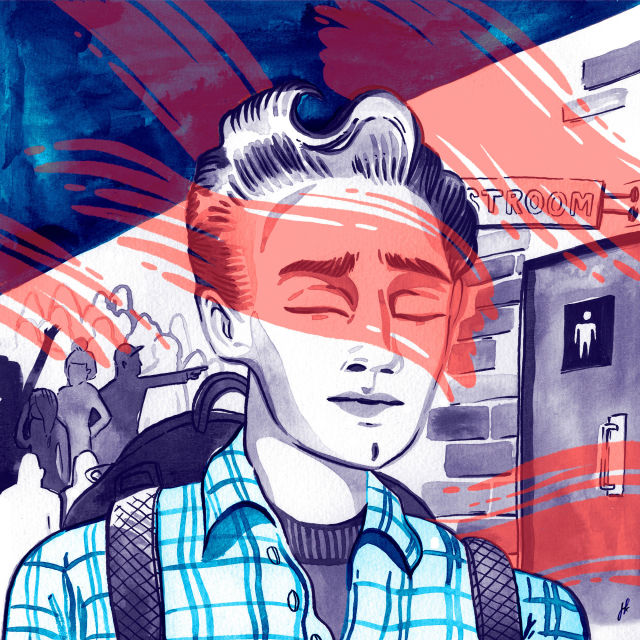
At the beginning of that year, I started school as Gavin. My classmates and teachers called me my name and used the right pronouns, "he" and "him." I spoke to the principal, and we decided it would make sense for me to use the boys' restroom like all the other guys in school. It was no big deal.
For two months, everything was fine. But it didn't last long.
Some parents complained to the school board that their sons were sharing a restroom with me, even though there hadn't been any issues. That's because I go to the restroom, I use the restroom, I wash my hands, and then I leave.
Then the school board held two meetings to discuss my use of the boys' restroom. The board didn't tell me or my family that they'd be talking about me. My mother and I went to the first meeting after we found out about it on social media less than 24 hours before it happened.
Several adults spoke out, including people who don't even have any children at my school. They talked about my genitals and one man even called me a freak. It was alarming and upsetting to be bullied by grown people who didn't know me at all, just because I was a transgender person who sometimes has to go to the bathroom.
With my mom at my side, I pleaded my case to the school board. I told them that I'm a human and just want to use the bathroom like everyone else. But they ultimately decided I would have to use a separate restroom from all my peers.
There are only three gender-neutral restrooms in the school. Two are converted broom closets, andone is in the nurse's office. They are far away from my classes. It often makes me late, running across the whole school just to use the bathroom, which singles me out even more. When I am in that part of the school, everybody knows why I am there. I'll hear laughter or whispers behind my back or catch just enough of a conversation and sidelong glance that I know what it is about. I get stress headaches when I go to school. Sometimes, to avoid all the discomfort and the attention, I don't go at all.
Since then, the ACLU has helped me fight for my rights. We're suing my school district for my right to use the boys' restroom. We were even taking my case to the Supreme Court before the Trump administration interfered and the Supreme Court sent my case back to the 4th Circuit.
Title IX is a part of the Education Amendments Act of 1972, a federal law that prohibits schools from discriminating against students based on their sex. The Obama administration wrote guidance to schools nationwide saying that Title IX should be interpreted to protect transgender students, but the Trump administration has since announced that it disagrees. Now it's up to the courts to decide if Title IX protects trans students like me from discrimination. Because the Obama-era guidance was rescinded, though, my case will take a little bit longer to wind through the court system.
I'm not done fighting yet. And even though my case won't be over before I graduate high school, it's more important than ever that we advocate for transgender equality in schools — and not just because more young people are coming out as trans.
Trans students like me are in real danger as more and more states move toward adopting discriminatory "bathroom bills." In Texas, a bill called SB6 passed the state Senate and is pending in the state House of Representatives; it would make it illegal for transgender people to use the restrooms that align with their gender identity. That means forcing trans girls into men's rooms and trans boys into women's rooms. It would create a situation where thousands of students face the same issue I face at school: being isolated and discriminated against by the very educators who are supposed to create a safe space for us to learn.
Trans people aren't a threat to anyone else in bathrooms. In fact, we're more likely to be harassed, screamed at, and assaulted when we try to use public restrooms. That's part of the reason many trans people report limiting or totally avoiding eating or drinking when in public, just to avoid needing to use the public restroom. I should know — I've done this at school myself.
But of course, bathrooms aren't the real issue. The goal of this bullying, harassment, and discriminatory laws is to keep trans people from living as their most authentic selves. To eliminate us from public life.
We can't let them win.
With the Trump administration taking a clear anti-LGBT stance, states like Texas feel safe proposing and passing laws that discriminate against trans people. If the federal government won't defend us, we need the help of the American people. We need allies to stand up to everyone who tries to bully or discriminate against trans people, from school boards to state legislatures to governors. In my case, I had powerful support from many staff members, most notably a few teachers, the librarians, and of course, the nurses. They all made a space for me to be safe and be myself in an otherwise hostile environment. I could not be this successful without them.
I can never get my high-school years back, but I don't regret starting this fight for my rights, and I'm going to see it through.
Gavin Grimm is a high-school senior and the plaintiff in G.G. v. Gloucester County School Board, a federal lawsuit fighting for the rights of transgender students. | | | | | | | | | | | | Is Your Social-Media Habit a Diagnosable Disorder? | | | | By Courtney E. Smith | | |
You've probably heard a friend describe themselves as "a little OCD." Perhaps you know someone who always cleans the shared kitchen at work and leaves notes for those who mess it up. Maybe your cousin can't put their smartphone down when you go to dinner. All of these are manifestations of compulsion. Compulsion can be an irresistible force, one that surfaces as a response to our own anxieties. It can drive you to shoplift, to count the number of red doors, or to hoard every copy of the New York Times you can get your hands on. Or it can be as innocuous as your need to wipe down your computer keyboard before you start work each morning.
In her book Can't Just Stop: An Investigation of Compulsion, Sharon Begley, who is the senior science writer at the Boston Globe, probes exactly what compels us. Begley searches for the line between acceptable, even helpful, compulsions and diagnosable disorders, following the latest changes in thinking from the American Psychiatric Association. She looks at hoarding, when a person can't stop letting things into their lives until they are fully taken over by their possessions; video games, whose intermittent rewards structure pings our pleasure centers; and compulsive do-gooders, who will put themselves and their families in danger in order to be perceived as a good person.
In conversation with Begley, she breaks down why we try not to "step on cracks" when we know it won't "break our mother's back," how your social-media use is not a mental disorder, and psychiatry's history of over-labeling relatively normal behavior.
Courtney E. Smith: We often throw the terms around interchangeably, but what are the differences between compulsive behavior, obsessive-compulsive disorder (OCD), and obsessive-compulsive personality disorder (OCPD)?
Sharon Begley: I started out with the same question, wondering what counts as compulsive behavior and how you can tell the difference between that and an impulse-control problem or an addictive behavior. The American Psychiatric Association, in its current Diagnostic Manual (DSM-5), for the first time allowed a behavior to be considered an addiction with gambling. That means that suddenly behavior can be either addictive, impulsive, or compulsive. My first round of interviews for this book was asking psychologists, psychiatrists, and experts to explain to me the difference. Long story short: they struggled to explain it.
A compulsive behavior is one that is born in anxiety; in other words, we feel anxious about doing or not doing something and then engage in that behavior to make the anxiety go away. That connects with OCD, which is a well-recognized disorder. It is characterized by obsessions and compulsions. The obsession is an idea in your head, usually an incorrect idea, about the world, like thinking your hands are covered in germs or that you've left the front door unlocked. The compulsion is the behavior that you do to diffuse your anxiety. A person with OCD will wash their hands all the time or get up countless times during the night to check the door lock. It can be completely and totally debilitating. OCPD is a recognized disorder, in the DSM-5, that is characterized by obsessive thoughts that aren't quite as severe as OCD. It is an extreme form of consciousness.
CES: An idea you put forward in the book that caught my attention, because I hadn't previously given much thought to the difference between compulsion and diagnosed disorders, is that we should think of compulsion on a spectrum, in the same way we talk about autism.
SB: That surprised me, too, because we all know people who are a little bit "that way," but there are also people who are so much "that way" that they can barely leave their homes. What I found interesting was that there are degrees of compulsion that are not diagnosable, they do not qualify as mental disorders. The disqualifying element of them is that to be a mental disorder, it has to cause distress and impairment. There are people who have compulsions who are totally functional, sometimes super-functional. One of the most interesting ideas, to me, is that compulsions can be adaptive — meaning they are a way of coping with the world and what it throws at you.
Some forms of compulsion are not only socially acceptable but socially rewarded. [For example], if you're a housewife and your home is immaculate, you might be rewarded for it. Being super-organized at work is also something that's rewarded and accepted.
CES: You tie the idea of compulsive use of social media in the book ultimately to a human need to avoid death and loneliness. It makes it seem like more of an affirmation of humanity rather than a compulsive behavior, which we've all read that our desire to constantly log on to Facebook, Instagram, Twitter, Snapchat, whatever, is. Can it be both?
SB: For some people, it can be both, but for others, it is one or the other — it's impossible to make a generalization. All these amazing new forms of technology and social media fill different needs for different people. To me, the reason it fit with the overall idea of compulsions is when we can't stop looking at it. When we have to check. The major driver for that is fear of missing out, FOMO. You take half a second to check and see if you have a text, or another cool post on Facebook. It's no effort at all. Living with the possibility that you might miss something, whether it has to do with your work or relationships, is very hard for more and more of us to do … so we check. We check when we wake up in the morning and keep checking. We check at the dinner table with people.
The life-affirming part of it, that's how some of us connect. Connection is so central to our self-identities and sense of where we belong in the world.
CES: Does the way the mental-health community thinks about this shift as mass culture embraces it, as everyone starts using it? It seems like a majority of people have at least a mild compulsion to check their social feeds, so can it still be called compulsive behavior?
SB: These technologies aren't that old, but they still have a history even if that is only plus or minus ten years. It was quite interesting and funny to see how psychiatrists and psychologists, most of whom are older white guys, not to put too fine a point on it, were recording the rise of new media. Oh my God, you could just see them sitting there, pulling their hair and wringing their hands as they wondered what these young people are doing and assuming it's a form of mental illness. Suddenly, once the old white guys also start doing it, it's no longer a mental disorder [laughs]. Not to be completely flip — psychiatry has had decades of problems with over labeling things, [but] it's become attuned to that predilection and, to its credit, has become more circumspect before it starts labeling behaviors. If a huge fraction of the population is doing something, you can't call that mental illness. That's not the way things work.
This interview has been condensed and edited.
Courtney E. Smith is a freelance writer based in Texas and the author of Record Collecting for Girls. | | | | | | | | | | | | | | The email newsletter where there's no such thing as too much information.
From Lena Dunham + Jenni Konner. | | | | | | | |  |  | |



No comments:
Post a Comment