| | | A dispatch from Poland's coat hanger rebellion, the magic of novelist Emily Giffin and more. | | | | | | | | | |  | | | | October 11, 2016 | Letter No. 55 | | | | | | | | | | | | Dearest Lennys,
"Children listen to what is being said."
That's a quote from Hillary Clinton — she said it toward the end of Sunday night's soul-sucking slog of a debate. I won't rehash what else happened at the debate here, except to say that by the time Hillary said it, I had reached my limit of personal revulsion and dismay. I must admit that when the news first broke on Friday about Donald Trump's horrifying statements on that bus with Billy Bush, I was watching Twitter like a popcorn-eating GIF, enjoying the cowardly Republican defections. But by the time I went to sleep early Monday morning, any glee had been completely washed away by a tidal wave of disgust. I have never been so grateful to have small children, because they're too young to understand what's going on, and because I have some time before I need to teach them that there are some men out there who barely think of them as human, who thrill to humiliate them publicly, who think their bodies are just property.
But our children are listening, and how we frame this ugly moment in American history is important. We don't have to wallow in the muck with Donald Trump. We can show them that Hillary Clinton is someone who has worked on behalf of their rights — from her post-law-school days at the Children's Defense Fund to helping poor kids get health insurance as a First Lady — for her entire career, unlike Donald Trump, who has only helped children with his own DNA.
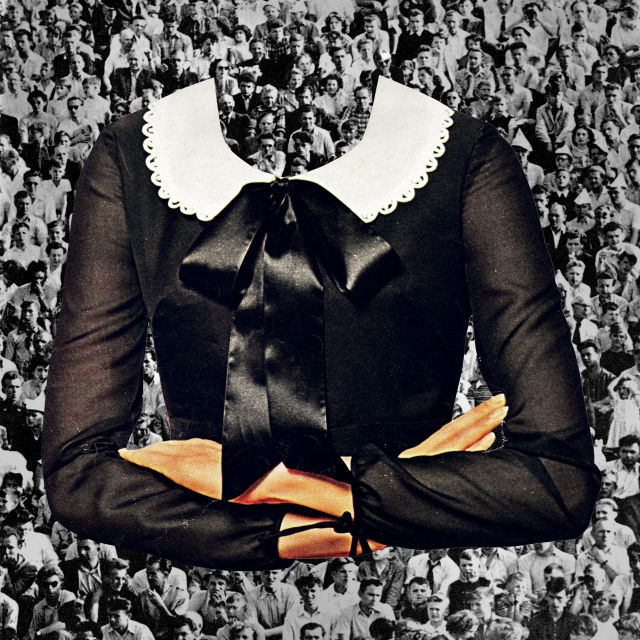
And we can teach them to fight against things that are deeply unjust, the way that Agnieszka "Aga" Guzdek did. Aga is a Polish woman who brought her eighteen-year-old son with her to protest a restrictive abortion law that would have made the procedure completely illegal. Because of the widespread protesting, the measure was voted down in Poland's parliament, though the fight for abortion rights in Poland has really only just begun. The procedure is still illegal except in cases of rape or incest, for the mother's health, or if there are extreme fetal abnormalities. Even then, doctors are allowed to refuse to perform the procedure for religious reasons. In this issue, Polish-American Mira Ptacin interviews Aga, who lives in Krakow, about what it was like on the ground during what's being called "Black Monday" — a reference to the black clothes protesters wore.
Also this week, we have Sadie Stein's delightful profile of the novelist Emily Giffin, whose complicated heroines have made her a fan favorite. We have a piece from Congresswoman Tammy Duckworth, who is running for Senate in Illinois, about how she proved that caretaking is a strength, even when men around her wanted to make it look like a weakness. Then we have an interview with the powerhouse singer-songwriter Melissa Etheridge about her new album, Memphis Rock and Soul, which reinterprets and revives classics from the Memphis record label Stax Records.
Finally, to cleanse your curdled palate after this nastiest of weekends, we have Lena Dunham teaming up with cartoonist Jess Rotter to give you the "Five Times It's OK to Grab 'Em by the Pussy" (spoiler, they mostly involve actual cats).
Another palate cleanser can be to remember that there's a whole world outside our country, where real disasters are happening (not just man-made ones). The death toll in Haiti from Hurricane Matthew has reportedly reached almost 900, and the people there are in desperate need of aid. Here's a list of charities participating in relief efforts there. Action is so pivotal. While children listen to what's being said, more importantly, they see what's being done.
Xx
Jess Grose, editor in chief | | | | | | | | | | | | Poland's Coat Hanger Rebellion | | | | By Mira Ptacin and Agnieszka Guzdek | | |
The last time I saw Agnieszka Guzdek, we weren't quite teenagers. It was summertime in Michigan, and we were sitting on my carpeted bedroom floor, listening to Boyz II Men cassette tapes, eating gummy worms, and playing with the kittens my cat had just birthed. Aga was visiting from Krakow, Poland. I call her my cousin, even though we're not really blood-related. Our mothers were college roommates at Poland's prestigious Jagiellonian University (which is like the Harvard of Poland), and they have been close ever since.
In the 1970s, my mother emigrated from Krakow to the United States. She had her master's degree in physics but didn't speak a word of English, so she worked as a cleaning lady in Chicago before teaching herself the language by watching American soap operas. (Her English now is correspondingly dramatic.) Aga's mother went on to become dean of molecular biology at Jagiellonian and has since retired.
I currently live on a tiny island off the coast of Portland, Maine. Aga lives in Krakow, the second-largest city in Poland. We both have children — mine are under the age of four; Aga's son, Marek, is eighteen. Both Aga and I are working mothers, just like our mothers, and we are raising our children to be feminists, just as our mothers did. That's why when Aga told me that on October 3, she and Marek took to the streets to protest Poland's recently proposed anti-abortion ban, I wasn't surprised. Invigorated, yes. But not surprised. Because if I know anything about Polish women, it's that we are stalwart, we have large heads and big brains, we are peasant-shaped, and we do not take shit from anybody, especially when it comes to our freedom.
Some are calling it the "Coat Hanger Rebellion"; others are calling it "Poland's Black Protests" — Aga and Marek joined tens of thousands of black-clad women, men, and children in a massive show of defiance against Poland's conservative government and all-powerful Catholic Church after a bill was introduced to the parliament that would forbid abortion in almost all circumstances. Under the original proposed law, written by a pro-life group, women in the country of 38 million people who undergo an abortion could also face imprisonment, as could doctors and nurses involved. If this proposed law had passed, Poland — which already bans abortion except in cases of rape, incest, and severe fetal abnormalities, or when the mother's life is at risk — would have had among the most restrictive abortion laws in the European Union.
But the protests have already had a dramatic impact. The ruling political party (PiS) that had championed the law has now voted the legislation down. On October 5, the Polish minister of science and higher education said the fervor and size of the protests "caused us to think and taught us humility."
Still: PiS shows no signs of liberalizing the currently draconian abortion laws and reportedly would still like to ban abortions for women whose fetuses have congenital abnormalities. According to the Guardian, activists say that protests will continue. And according to Aga, "I feel that women know that we have won for now, but this war is not over."
I spoke with Aga — who wants to make clear that she is speaking for herself, not for any organization — about these rallies in the motherland, and here's what went down. (And thank you, Aga, not only for your activism, but for staying up so late to talk to me in my time zone …)
—Mira Ptacin
Mira Ptacin: Can you tell me about the situation regarding women's reproductive rights in Poland right now?
Agnieszka Guzdek: Women in Poland have been given the impression that we have reproductive rights, even though we have some of the most strict abortion laws in the European Union. These laws say that abortion is permissible in three cases: if the pregnancy is a threat to a woman's health or life, if the pregnancy is a result of a rape or incest, or if the fetus has lethal defects and will not survive outside the woman's body. This is the law, but reality looks different. All of us have heard stories about women who learned from prenatal testing that her fetus would not survive outside the woman's body, or its life would be short and painful. Still, those women have to fight for their rights, or change doctors, or find a special hospital to seek help. Sometimes it is too late, sometimes it is unbearable, sometimes it leaves women traumatized for life. I've heard of many stories like that.
You have to understand that our protest on October 3 was not in favor of abortion, as much of the pro-government Polish media tries to describe it. Never. None of us thought that. Our protest was for a choice, for life. We are fighting for fundamental human rights. Our protest was really a strike, modeled after the Iceland Women's Strike in 1975. The date was chosen, and most of us heard about it from Facebook and other social-media tools. We are going on strike!
In the beginning, all the groups had the keyword women in their description. But we realized that this is not only about women's lives. Everybody joined in. Everybody. For me, the most emotional, proud moment of this event was when my eighteen-year-old son came to my room on October 2 and told me that he was not going to school the next day, that he and his friends from school would go on strike too. He gave me four reasons why he would be joining me in the march: (1) No one can take away rights from women. (2) He can't imagine the horror of bearing a child and watching it die in the next minutes. (3) He can't imagine that someone could and would force a raped girl to bear a child. (4) (And this one was a shock even for me, because I did not think about it.) The Polish health and social system is not prepared for this. The waiting lists for the kinds of specialists a baby with severe birth defects needs can be a year long — anyone in this circumstance with money treats themselves outside the national health system. If you are not wealthy and have a struggling baby, the future is very, very grim. What my son said can sound cruel, but raising a very sick child with various birth defects is costly both in the emotional sense and the material sense. I somehow feel different because I am older and I have heard and seen more, but I understand his point of view that no women should be forced to raise a child that will suffer all its life.
A law introduced in 1993 made abortion legal in Poland only under those three exceptions I have mentioned. When the restrictions were passed, the law was billed as a compromise; anti-abortion groups with strong Catholic backing have been fighting to get rid of the limits ever since. The new "Stop Abortion" bill, which would criminalize abortion in any circumstance, was composed by the anti-abortion male activist Mariusz Dzierzawski, who says abortion-rights activists want to "kill the children."
MP: I read this quote in the BBC news: "Whoever causes the death of the unborn child is punishable by imprisonment up to three years. If I have a patient with pre-eclampsia, who is 32 weeks pregnant, I will have to let her and her child die."
AG: The first part of the sentence is a quote from a new law; the second could become a terrifying reality.
MP: How involved is the church in the Polish government?
AG: Poland is a Catholic country ruled by a right-wing party — PiS. People, doctors, nurses are afraid, especially in small towns. Catholic religion is everywhere: in schools, in hospitals; even our Polish president has his own chaplain.
I am a Christian, but I am not Catholic. I am against abortion on demand, but I am for a choice. I don't understand why 460 deputies to the lower chamber of Polish parliament want to tell me what should I do with my body. Here is what they are preparing for Polish women: no abortion under any circumstances. But there is an underlayer of the new law: anyone harming a fetus will be prosecuted and punished with up to three years. One of my concerns is that some prenatal tests are pretty invasive — will doctors still do them? Or will they be afraid?
MP: How does Poland compare to other European Union countries in terms of women's rights overall?
AG: Polish women received voting rights in 1918, and because that was such a long time ago, I have a feeling that many Polish women forgot what rights are, what feminism is. Also, during the Communist era, there was this very strange situation where women were encouraged to work but at the same time they were obliged to take care of the house. After the fall of the Berlin Wall, women gained access to Western culture, and nowadays, we still have one of the lowest pay gaps in the EU. Also, a lot of small businesses are run by women, and Polish women are famous for their entrepreneurship skills.
But we still have a big gap between the city and rural area, where the most important leader is the church, and their rules are out of date and stale. I live in a big city and work on a middle-management level, which probably somehow detaches me from problems of uneducated, underpaid women.
MP: Describe the protests in your hometown of Krakow. Who attended, and why were they protesting? How were they protesting? Are they still protesting?
AG: Before the protests, there was dancing and lots of drumming. It was a big, peaceful crowd. I felt safe, like wrapped up in a blanket. Then we walked in a crowd of 15,000 people on closed-for-traffic streets. Women, men, children, young, old, in groups, families, people with strollers, most dressed in black. The color black was a sign of mourning of Polish women's rights. The march ended on the Main Market Square, here in Krakow — the most beautiful place on earth. All of us there shouting, "We have rights, we have choice!" We do! No one can take it away from us.
Groups in more than 50 cities in Poland created their own events. In many cities there were also marches, and in Warsaw, the capital of Poland, 25,000 people marched. If there will be a need, we will do it again, and again, and again. I want the current law respected so that doctors can't hide behind a conscience clause. I had a female doctor who refused to prescribe an IUD for me because of her faith. Frankly I don't care what she believes in; she is a doctor! Come on! I want easy access to birth control, the morning-after pill, and prenatal testing. I want better sex education. I want access to in vitro fertilization for all — it is currently not covered by our national health care, and so it's only available to the wealthy. I want women who give birth to very sick children to have all of their expenses covered.
Poland is a country where the Catholic Church has such a powerful voice that even for me it is hard to imagine that there will be a pro-choice law in Poland. But I think now we have opened new doors, and women have started to speak with one voice. I strongly believe that this is not the end.
This interview has been condensed and edited.
Mira Ptacin is the author of the abortion memoir Poor Your Soul (Soho Press 2016), which comes out in paperback in December. She would like to dedicate this piece to her aunt, Mary Piergies. Find her on Twitter: @miraptacin.
Follow Agnieszka Guzdek on Instagram. | | | | | | | | | | | | The Difficult Women of Emily Giffin | | | | By Sadie Stein | | |
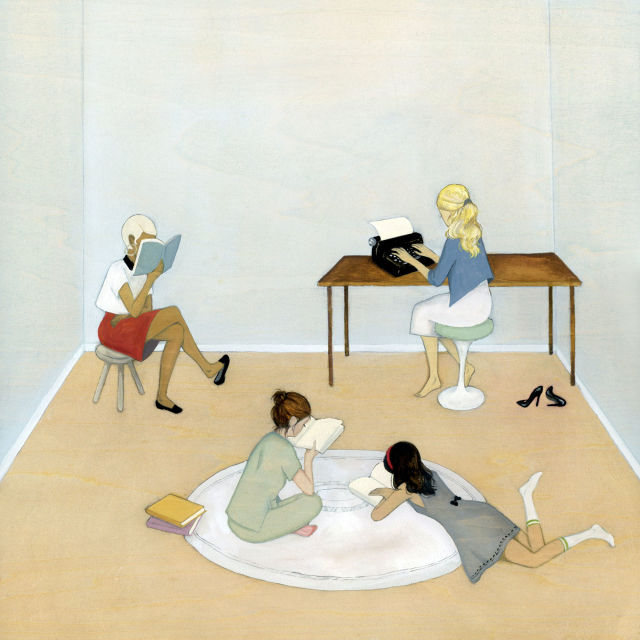
"You're my ATM PIN code!" blurts out one fan as she reaches the head of the line where Emily Giffin is signing copies of her latest novel, First Comes Love.
We are in the Nashville boutique Draper James at a meet and greet that's a part of the successful "Girls' Night Out" series Random House has launched to introduce (primarily, if not mandatorily) female readers to popular writers while simultaneously providing a chance for socializing and, depending on the venue, perhaps some shopping or a manicure. In the past few weeks, between more traditional readings and signings, Emily Giffin has attended a two-day Girls' Getaway Weekend in Charleston complete with Red Door spa events. Tonight's girls' night is sold out.
Draper James is the brainchild of Nashville native daughter Reese Witherspoon. It is a fantasia of southern femininity. "Life needs more sweet tea and sunshine," reads a hand-lettered (or, at least, hand-lettered-ish) sign on the blue-and-white papered wall outside the bathroom. "Southern-girl wardrobe essentials," reads another. "Classic blue gingham shirt, Draper James logo, jean jacket, white denim, cowboy boots, red lipstick."
The shop is a riot of color: buttercup-yellow florals, rampant blue gingham. There are coordinating dog leashes, magnolia-filled glass paperweights, monogrammed luggage tags, floral-print iPhone cases, and orange-blossom-scented candles that waft their perfume through the white-painted room. There are julep cups. To a materialistic alien, it might be described as an uber-girly Madewell, or else a hyper-southern Anthropologie. "Cute" would not be construed as an insult; "bless your heart" most certainly would.
Draper James is filled with excited women long before Giffin is scheduled to appear. They sip prosecco and sweet tea and munch on miniature cupcakes from Sprinkles, a sponsor of Giffin's tour. For the price of admission, each guest has been given a copy of First Comes Love and a coupon for use at the store.
The ladies in attendance are uniformly well-turned-out, most clad in pretty summer dresses and with the sort of well-groomed hair and makeup that seems nothing short of miraculous in the muggy July heat. (A young woman who rushes in late, in scrubs, is an endearing exception.) While the crowd skews mid-twenties, there are several multigenerational groups who have made the trip to meet Giffin together; one such pair has traveled from Pennsylvania. "I got her into Something Borrowed," explains the daughter, Lisa. "Now we read them all together." Another, Anna, has driven from Kentucky. The event ticket "was a birthday present from my husband," she says. "Although I hinted pretty hard."
First Comes Love is Giffin's ninth novel. After several years billing hours at a New York law firm, she moved to London to take a crack at novel-writing, and the rest, as they say, is chick-lit history. On the subject of that term, incidentally, the 44-year-old Giffin is pragmatic: "I don't care if they call it that," she says. "I just don't like it when the term is used dismissively."
When asked which of Giffin's books is her favorite, each reader has strong opinions, and many titles come up repeatedly. "Baby-Proof," definitely, says a woman named Rebecca. "Something Blue," adds her companion. Something Borrowed, the debut, is still beloved. "I remember when I first read it," says Elizabeth, from Virginia, "first I thought it wasn't really the kind of book I would like. I thought it was too much of a beach read. But then I called up my friend, and I said, 'You are not going to believe this. I'm reading a book and I am rooting for the other woman.' And you do not root for the other woman." (Her friend shakes her head vehemently.) "And I thought, If she can make me do that, I'm impressed."
Something Borrowed is the story of a young lawyer who falls into a conflicted affair with her glamorous best friend's fiancé. "I thought, What if you could flip that formula and make that character sympathetic?" says Giffin. "That would be interesting." The book's success — and that of its 2010 film adaptation — encouraged her to pursue other inversions of the traditional relationship themes. Baby-Proof explores the turmoil of a woman who doesn't want to be a mother. Love the One You're With takes on a protagonist's emotional infidelity. Where We Belong involves the complexities of adoption. In many of these cases, Giffin works in subtle portraits of class tensions and social milieus. And while details of the novels may mirror those of her own life — unhappy legal careers, an ambivalent move to Atlanta — the author is adamant that no character is autobiographical. (She does concede that the two sisters who make up the dueling narrators in First Comes Love contain elements of her and her own sister.)
In person, Giffin is warm, attentive, and elegant in an old-school, effortful way that evokes the heyday of back-cover portraits. She is traveling, for this leg of the tour, with her daughter, Harriet, a self-possessed sprite of a girl who clearly has the touring thing down pat. (Giffin's two sons and husband are back in Georgia.) Giffin radiates efficiency and competence — she describes herself as type A — but never impatience. Despite being exactly the way you might imagine (or because of that) she is extremely easy to talk to. We establish that we are both married to bald men. I quickly find myself telling her about a past relationship trauma while she listens attentively. I can't help thinking smugly that the gray-area nature of the story would make for an excellent novel — which, of course, is how her books make you feel about regular situations. We're not used to seeing them glamorized. "I don't judge," she says. And then amends it. "What I do judge is not mistakes, but patterns of self-destructive behavior."
Giffin describes her life as a bifurcated mix of intensely private — the need to buckle down to produce books on a regular basis — and completely professionally social: the high-intensity schedule of appearances, media, readings, and showmanship that comes with the best-selling-author territory. "For these weeks, I'm in it," she says. "And I really enjoy meeting [readers], so much." She says she feels strongly about putting on her glamorous face too. "Even when a makeup artist in a certain town has maybe … gone a little heavy on the eyelashes," she says wryly. "I do want to show I've made the effort too."
"I like to push them," she says of her readers. "I think they're up to the challenge. I know they are." It's often the older readers who are more forgiving about the characters' choices, or mistakes. Take Heart of the Matter, in which a story is told from the perspective of both a wife and the woman with whom her husband is having an affair. "I'd meet with library groups, and while a lot of the young women couldn't feel any sympathy for the husband, older women could say, 'People change, things happen, marriages evolve.'" She admits her own perspectives on the characters can change too. "I started out in the corner of Tessa, the wife," she says. "But by the end, I think Valerie's the one I'd be friends with in real life. I didn't like Tessa's friends." Her personal favorite, however, is Baby Proof's editor heroine, Claudia, who "just seems like a really good person."
The most controversial of Giffin's novels is definitely 2014's The One and Only, in which a young woman becomes romantically involved with her best friend's widowed father. "A lot of people did not like that at all," says Giffin. "It was just too much for some readers. I heard it described as 'incestuous' — which, come on, it just isn't. But maybe there are things I could have done differently … maybe I could have had them meet later in life, not have him know her as a child. When readers can't follow me there, I think of it as my failure, not theirs."
She is equally philosophical about the inevitable online trolls; Giffin has a robust and predictably businesslike social-media presence, and that means — well, we all know what that means. "Here's the thing," she says. "I'm nice. I'm a really nice person. So if I'm angry, you've pushed me really far. It's really just not that hard to be kind in this world."
Giffin's novels have a gloss of comforting beach reads, from their pastel covers to their deceptively sugary titles, but almost invariably resist neat endings. Couples end up in counseling, or divorced. Friendships are irreparably changed, or ended. Exes are not presented as villains, but as complex and worthy of love. "One thing I like about First Comes Love," says Giffin, "is it's not even a love story. It's a relationship story, of course, but that's very different."
Giffin's stories often take place in the milieus where she has lived and worked: the upper echelons of Manhattan and Atlanta. Snobs and bigots are routinely denounced, and the novels often feature gay characters or people of color, but their roles are generally peripheral. While a character considers an abortion — and the narrative does not judge the choice — she changes her mind at the last moment, Juno-style. I suggest to Giffin that her novels are "gently progressive," and she smiles. "I like that," she says.
"I don't love everything in her books," concedes one reader, Christine. "But I like that they're a little bit different, and they make you think. One, I didn't care for at all" — she gives a discreet nod when I mouth the words One and Only — "but I suppose it just wasn't meant for someone like me. And I really do love the others!"
When Giffin takes the stage, however, no such ambivalence is visible. She looks poised and pretty, hair curled and makeup flawless, dressed in a brightly patterned Draper James frock. "Everyone in Nashville is so cute!" she enthuses, and a cheer goes up. There is a brief Q&A with the style blogger Liza Graves, in the course of which we learn that Something Blue has been greenlit (ripples of excitement) and that First Comes Love has reached No. 1 on the New York Times best-seller list.
But the main event is the book signing; a line of readers snakes around the shop, and Giffin spends a long time with each petitioner — posing for pictures, engaging in conversation, smiling unflaggingly. Many women wait for hours — I will admit to getting barbecue during this portion of the evening, and retuning to find only incremental progress has been made. Several women have brought multiple novels for signing.
I spot one lone man in the crowd and make a beeline for this demographic anomaly. It turns out he and Giffin were fellow law associates in New York. "It's really something to see this," he says. "It's a real contrast to her first book party. I think that was her … and me." We look around at the excited crowds, the sweet tea, at Harriet snatching a miniature red-velvet cupcake from a silver tray.
After several hours of signing, when the last reader has departed, the last hug given, the last selfie hashtagged, an exhausted but exhilarated Giffin bids a warm farewell to the bookstore staff, and we all head back to the hotel. She and Harriet need to be up at 4 a.m.: the next day they have a daytime appearance and a girls'-night event at the rooftop bar of a DC hotel. The forecast is a muggy 90 degrees, which makes me wilt even thinking about it, but Southern women are tough.
Sadie Stein is a writer in New York. | | | | | | | | | | | | Caretaking Equals Strength, Not Weakness | | | | By Tammy Duckworth | | |
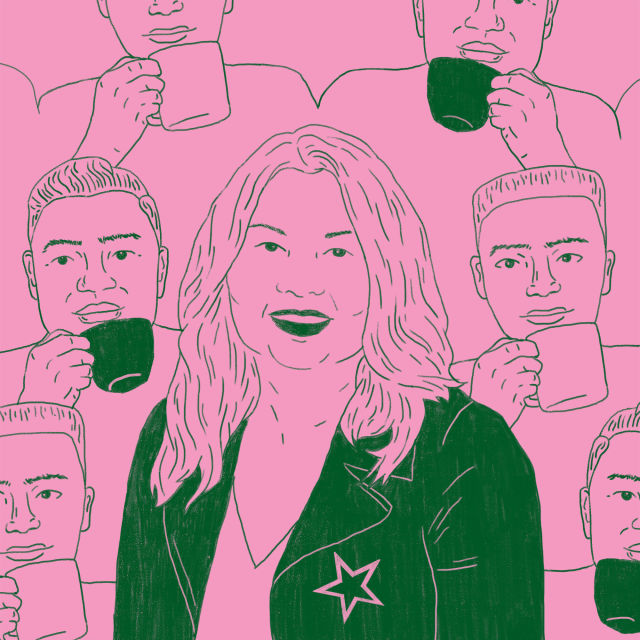
Military service taught me important lessons about what it means to be a leader. Sometimes, those lessons came up when I least expected them — like on one winter day, while I was a lieutenant stationed outside Chicago, when I decided to provide hot cocoa for my platoon.
Back then, I was the only woman serving in my unit — and I was in the habit of avoiding doing or saying anything that would make me appear less tough than the men around me. When I was learning to be a helicopter pilot, I flew more simulation hours than any other student in my class, and as a result, I earned the top score on an important check ride. Even though I'd succeeded because I'd done my homework, one of the guys tried to insist I'd had an easy flight examiner. The class leader, who was a tanker in Desert Storm, spoke up for me and pointed out that unlike my critic, I'd been practicing in the flight simulator every night for the past three months.
Like many women, I felt like I had to work harder in order to be as successful as the men around me. It led to my having a bit of a chip on my shoulder, and I tried to show I could work harder, stay longer, and fly more and tougher missions.
When you fly helicopters like I did, you have to pay attention to the details and take good care of your crew, especially when the weather gets bad. I appreciated their hard work, and as their boss, I wanted to make a tough task a little easier, so I requisitioned hot drinks, including hot cocoa, for them. It seemed like the right thing to do, and I didn't think much of it.
That is, until the name-calling started. Another unit's leader tried to make fun of me, calling me "Mommy Platoon Leader." And, caught up in my own insecurities, I took the insult as an offense. Their words made me feel like I wasn't perceived as being tough enough and, even worse, made me feel embarrassed about doing something that reinforced their stereotypes about women. I didn't want to be perceived as a "woman leader," because I knew that to some, being a woman was synonymous with being weak or just different. So I stopped requisitioning the hot drinks.
But, looking back on the experience, I realized I was missing the point. By listening to the people who called me names and changing my behavior in reaction to them, I was actually being less of a leader. My idea to provide my platoon with uncaffeinated, warm drinks was a good one. I empathized with my crew. As their leader, I thought of a simple way to make a day of hard work a little bit easier.
When I was promoted to the rank of captain and felt more secure, I realized that I needed to do a better job taking care of my soldiers. Instead of making sure they got adequate rest and the support they needed, I'd been too hung up on trying to outdo others, and it was affecting the readiness of my crews. I needed to stop listening to my ego and start sticking with my instincts.
With that in mind, when we went out on trips and members of the group wanted to go out at night, I didn't want to be a killjoy. But I also realized that I wasn't doing any favors for the quieter people in my unit who wanted to get some rest. If the one woman present was out hanging with the guys, they felt like they couldn't "wuss out" by staying in the barracks. So I started insisting on driving at least one of our vehicles back early. I didn't care if others called me an "old woman" or made fun of me — there were always guys who wanted to ride back with me.
When we change ourselves to accommodate other people's false assumptions, we miss out on opportunities to challenge stereotypes and lead by example. In Congress, I've seen women's leadership in action. As a veteran, as a woman, and as a parent, I've been able to advocate for women and families whose voices aren't always heard in the halls of power.
The Army taught me that "rank has its privileges, but also its responsibilities." Loyalty goes both ways, and as a member of Congress, I know how important it is to take care of the people who work for me. I make sure that staffers are able to take time off for illness or for military service. I also instituted paid volunteer days in my congressional office. Women so often volunteer in addition to all their other responsibilities, and I wanted to encourage a spirit of volunteerism among all staff.
After my daughter was born, I found that airports presented one of my biggest challenges as a working mother. It was often difficult or even impossible to find a clean, private space to breastfeed while traveling. So I introduced the Friendly Airports for Mothers Act to ensure that all airports provide a place for traveling mothers to breastfeed or pump breast milk.
This year, I'm running for US Senate because our country needs these perspectives in policy debates more than ever. Taking good care of people and making sure they have the resources they need to do their jobs well is a hallmark of strong leadership. Caretaking shouldn't just be associated with women, and it certainly shouldn't be associated with weakness — it should be associated with strength.
Congresswoman Tammy Duckworth is running to represent Illinois in the US Senate. | | | | | | | | | | | | By the Pussy | | | | By Lena Dunham and Jess Rotter | | | |
Lena Dunham thinks all this pussy talk caused her second period in two weeks, and she is not pleased.
Informed by a deep knowledge and love for the world of 1970s rock 'n' roll, artist Jess Rotter was inspired by her dad's vinyl covers and comic books growing up in New York. Now based in Los Angeles, Rotter's intricate hand-drawn psychedelic illustrations have appeared on everything from public murals to album covers. | | | | | | | | | | | | What's in Melissa's Soul | | | | By Courtney E. Smith | | |
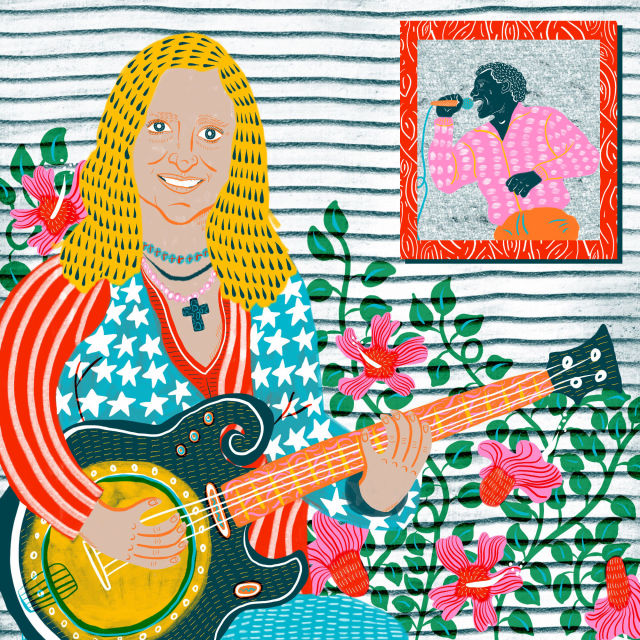
Melissa Etheridge started playing guitar when she was eight years old. She became a gay icon when she came out publicly in 1993, and she accepted GLADD's Stephen F. Kolzak Award in 2006 for promoting equal pay for the LGBTQ community. She's an environmental activist who has toured using biodiesel, and she even wrote an original song for Al Gore's film An Inconvenient Truth. She's won a Grammy and an Oscar. She's also a breast-cancer survivor, a mother, and a wife. In her latest project, she takes on a new role as music historian to the notable Stax Records. Stax was the Memphis-based label best known for its marquee artist Otis Redding, but it was also home to Isaac Hayes, Sam & Dave, the Bar-Kays, Carla Thomas, and house band Booker T & the M.G.'s.
Etheridge scoured through the masters of this label, which was a seminal force in R&B, funk, and soul music during the '60s and '70s, finding songs to reinterpret and bring to a new generation on her latest album, Memphis Rock and Soul. Melissa and I talked about the music that made her into the artist she is, how recording and in some cases rewriting classic Stax tracks impacted her as an artist, and where you can find that Stax influence in the music you listen to today.
Courtney E. Smith: What got your attention about this project?
Melissa Etheridge: I can't help but be really influenced by Otis Redding. I remember hearing him when I was younger, but I was drawn to him as I got older. I began to understand that he was who Janis Joplin was trying to sing like. He influenced so many people. His live performances are what I want to emulate. It's what I think entertainment, showmanship, raw talent, and charisma are about. He has everything. He wrote the songs; he was an amazing musician and singer.
The opportunity to make this record came up with John Burk at Concord Records, who said, "We want to open Stax up again and have you do a record on the label. We'd like it to be music from the Stax catalog." It was an opportunity for me to become a scholar on the history of the label and show where the way I sing came from.
CES: When you think about the other musicians who are influenced by the music of Stax, who comes to mind?
ME: Bruno Mars is the grandkid of Stax. He and his producer Mark Ronson, they're all soulful, and that's exactly where they're coming from. Amy Winehouse, if you asked her, she would have been listening to Stax Records. "You Know I'm No Good" is actually the drumbeat from Otis Redding's "Tramp." And Adele! If you asked any of these people about Otis Redding or Stax Records, they'd tell you it's the gold mine.
When you hear Rihanna sing "I want you to stay," you know that feeling? That's the feeling my generation got when we heard someone like Joe Cocker singing "I get by with a little help from my friends." And that's the feeling he got when he heard Otis Redding sing "I've been loving you too long."
CES: How did you go about sorting through the Stax catalog and picking these songs?
ME: That was probably the hardest part. I started with about 200 songs in the summer of 2015, and I knew I wouldn't be recording until February of 2016. I wanted to record the songs that I felt I could make mine. Songs I could play live and my fans would recognize and want to sing along to at the top of their lungs. I wanted to do the songs that I love that I wanted to sing at the top of my lungs!
In the last few decades that I've made music, I've seen that there's always acceptance of the classic beat and feel of R&B music [in mainstream music]. A couple of years ago when "Uptown Funk" became a hit, I thought, Well, that's a throwback! Mash me some Earth, Wind & Fire and other R&B together and you'll get "Uptown Funk."
CES: You take on "Respect Yourself" by the Staples Singers, which is an incredible, really well-known song. It's also probably the most political song on the album. Does it still mean something today?
ME: When I was looking through the catalog, I started really understanding the history of Stax Records and how they were in the epicenter of the civil-rights movement in the late '60s. The assassination of Martin Luther King Jr., just a few blocks down from the studios, had such a huge effect on the multiracial staff. It made me realize how political Stax became after that, notably with music by Isaac Hayes and the Staples Singers. That album, with "I'll Take You There" and "Respect Yourself," was such a huge political statement by such a nonthreatening group. You can't look at the Staples Singers and think, I'm afraid of them [laughs]. You want to have dinner with them. You want to talk to Pops.
It made a huge impact in the '60s, "Respect Yourself." The original lyrics were very much of the time, when they say "Take the sheet off your face, boy / it's a brand-new day." It's similar to what's happening now, but not as specific. I invited Priscilla Renee, who is an amazing black Grammy-award-winning singer-songwriter, to come write on it. I felt like I'd been given the keys to this important piece of work that held a key to help bring the nation together at the end of the '60s. With my greatest and utmost respect, I wanted to have this song do what it could to bring the nation together in the new century. With Priscilla, we updated the lyrics and made the focus of the song be: the way that we're going to change the world is to respect ourselves. We have to come from that, because when you respect yourself nobody can tear you down. That's the way that we change the world.
CES: Was your idea in updating the lyrics to make it broader so that it wasn't just about race, but embracing LGBTQ rights and feminism?
ME: It is the same message. It's no surprise that we have these issues in our nation today. The song is about feminism. It is about race. Ultimately all of that is the fear of the other and this belief that there is an "us" and a "them." People keep trying to surround themselves to keep "them" out, and that's not the way it works [laughs]. There is no "them." You can't draw a line and say, "This is us, and this is them." The only way we can move ahead is to bring everyone together. The way to do that is to respect ourselves, because if we do respect ourselves we realize there is no other that can come in and take something away from us.
CES: You get pretty sexy on these songs. There's a topical theme running through the selections, and you changed lyrics even. How did that feel to embody?
ME: Delightful! I think we all need to have a little more of that in our life. We all need to take on more of that sexy attitude. There's nothing wrong with it, believe me. The older you get, the better you get. And that's what Stax is about — it was about power, freedom, life, and love. It was about loving and being hurt and wanting and desiring and having — it was about all of that. I'm not going to stop short on any of that if I'm going to pay tribute to what it was about.
You've got horns playing while you're singing "I've been loving you too long …" Come on! You've got to bare yourself open. You have to be willing to own why you feel sexy, because it feels so good.
This interview has been condensed and edited.
Courtney E. Smith is the author of Record Collecting for Girls and a freelance writer. | | | | | | | | | | | | | | The email newsletter where there's no such thing as too much information.
From Lena Dunham + Jenni Konner. | | | | | | | |  |  | | |







No comments:
Post a Comment